
Guwahati, Dec 10: In a breakthrough that places Meghalaya’s traditional medicinal knowledge under the scientific spotlight, researchers from The Assam Royal Global University and the University of Science & Technology Meghalaya (USTM) have identified strong antioxidant and anticancer properties in Anemone rivularis, an indigenous perennial herb that grows wild across the state’s hill ecosystems. The study, published in a Scopus-indexed scientific journal, marks the first research effort from Meghalaya to scientifically validate the plant’s anticancer activity.
Used for generations in parts of Northeast India and the Himalayan region to treat inflammation and tumours, A. rivularis has been a staple in traditional medicine, yet has remained largely unstudied in modern pharmacology. The roots of the plant have been used as an antitumor agent in Chinese traditional medicine.
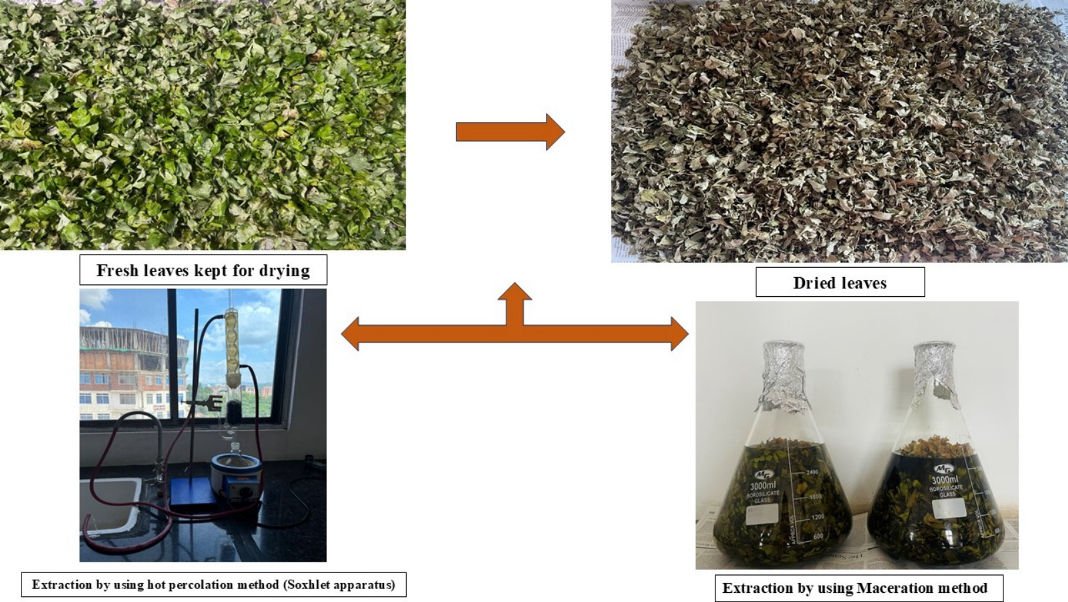
The research team—Dr. Sudarshana Borah, Bhanita Das, Kamallochan Barman and Prof. Pallab Kalita—found that the methanolic leaf extract contains exceptionally high levels of phenolic and flavonoid compounds, recording 155.80 mg/g total phenolic content and 955.27 mg/g flavonoid content, both indicators of strong bioactivity.
In laboratory antioxidant tests (DPPH and ABTS), the extract displayed significant free-radical scavenging ability, suggesting its potential to protect human cells from oxidative stress—a key factor linked to cancer and other chronic diseases. Although ascorbic acid showed higher activity, the herb’s antioxidant capacity remained robust across concentrations.
The most compelling results emerged from the anticancer experiments. When tested on the PA-1 human ovarian cancer cell line, the extract caused a clear dose-dependent reduction in cancer cell viability. At the highest concentration (1000 µg/ml), cell viability dropped to 36%, with an IC₅₀ value of 670 µg/ml, highlighting strong cytotoxic potential. Flow cytometry revealed that the extract did more than merely inhibit growth—it triggered early apoptosis, a regulated form of programmed cancer-cell death.
“This dose-dependent apoptosis shows that the plant could be a valuable natural lead for future anticancer drug development,” the study notes, underscoring its potential significance for pharmaceutical innovation.
The researchers point out that A. rivularis is known to contain triterpenoid saponins—compounds with previously documented anti-inflammatory and antitumor effects—further strengthening its promise as a natural therapeutic source.
“Traditional knowledge remains a valuable foundation for drug discovery, and this research provides scientific support for such applications” the study says.
While the findings are highly encouraging, the authors emphasize that these results are limited to in-vitro testing. They recommend comprehensive in-vivo studies, toxicity assessments and long-term safety evaluations before considering any clinical or medicinal application.