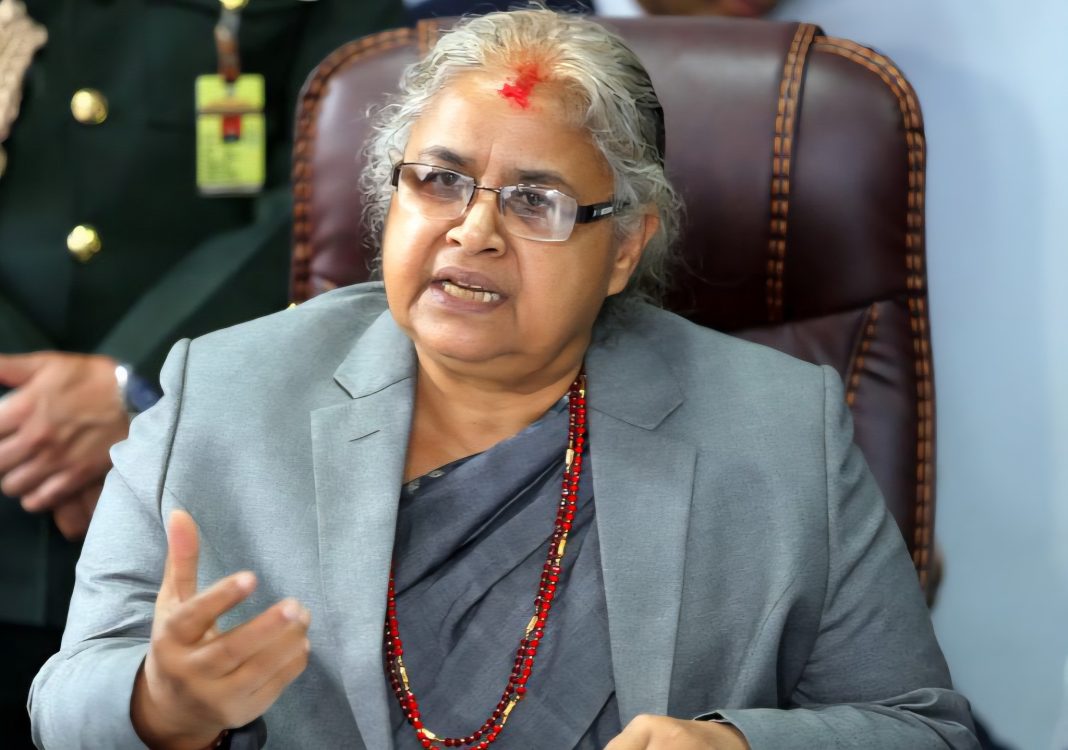

Kathmandu, Feb 19: Nepal’s interim Prime Minister Sushila Karki on Thursday warned that failing to address youth discontent could trigger another rebellion.
Speaking on the 76th Democracy Day celebrations at the Nepali Army Pavilion in Kathmandu, she said democracy must deliver results, protect citizens’ rights and ensure accountability.
Referring to the Gen Z-led protests in September last year that led to the ouster of K P Sharma Oli-led coalition government, Karki said, “That movement sought an end to corruption, nepotism and discrimination. It sought good governance and equitable justice.”
“The state must respond to this not only with generosity, but also with humility and a deep sense of duty,” she added.
She warned that failing to address youth discontent could trigger another rebellion.
“No nation can progress by undermining the youth,” Karki, who became interim prime minister on September 12 last year, said.
“The youth have energy, aspiration for change and moral anger,” she said, adding democracy is “not only a process, but a result-oriented system”.
“We embraced democracy in principle, yet in practice, we continued to foster discrimination. We wrote equality in the Constitution; yet within our structures, we went on protecting inequality,” she said.
Monopoly over power and resources has eroded public trust, fuelling rebellion, Karki added.
Separately, Nepal President Ramchandra Paudel expressed his wish that Democracy Day may help achieve national goals of sustainable peace, good governance, development and prosperity in the country.
President Paudel said that Nepalese people should never forget the 1950 revolution as it was an important foundation for the establishment of the federal democratic republic.
Democracy was established in Nepal through the 1950 revolution that ended the 104-year-old hereditary rule by Rana prime ministers reducing the king to a titular head.
“Democracy Day perpetuates the importance of civil rights and also always reminds us of the immortal story of the martyrs,” the president said.
Meanwhile, former King Gyanendra has said that “if we go for election without addressing the national crisis, it could invite more conflict”. He did not elaborate specifically what he meant by national crisis.
“The entire country has plunged into an unnatural crisis and the people are experiencing threat to the sovereignty of the country,” claimed the former monarch in a video message broadcast on the National Democracy Day.
Gyanendra was indirectly hinting towards restoration of monarchy ahead of the March 5 general election which is evident from the voices raised by different pro-monarchist groups.
“We have to evaluate what we have gained from past movements and changes,” Gyanendra said.
Nepal is set to hold the House of Representatives elections on March 5, the first since last year’s deadly Gen-Z protests that toppled the K P Sharma Oli-led coalition government. (PTI)