
New Delhi, May 21: Several members of Parliament grilled top NTA officials on Thursday, with the agency’s director general telling them that the NEET-UG paper was not leaked through their system and the CBI is probing the matter, sources said.
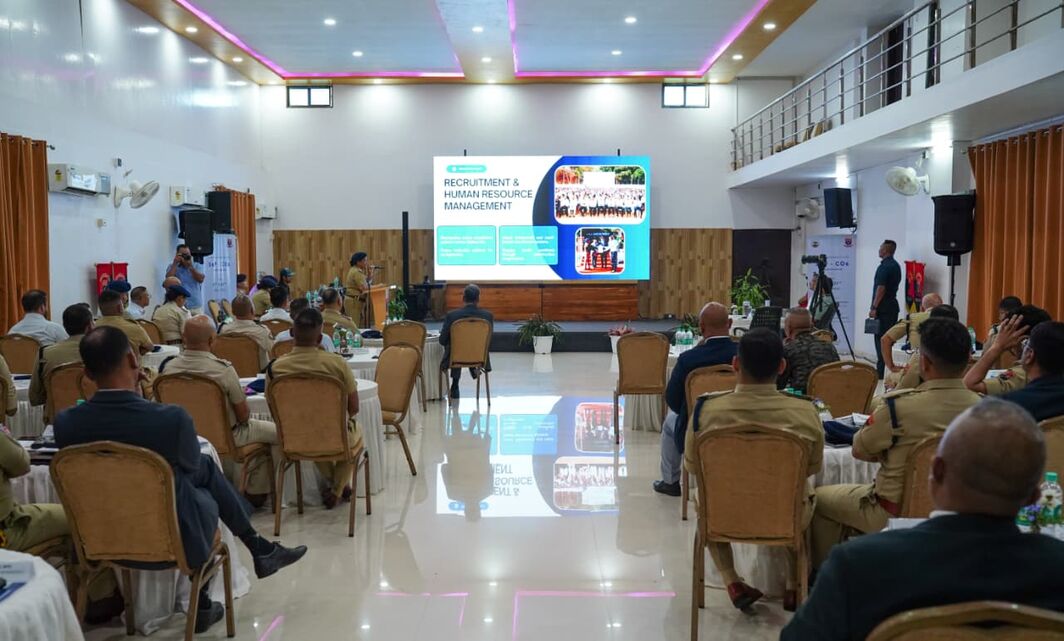
During a meeting of the Parliamentary Standing Committee on Education, Women, Children, Youth and Sports, several MPs questioned the National Testing Agency (NTA) officials on the steps taken by them to strengthen the exam system in order to prevent paper leaks in the future.
The panel had summoned top officials of the education ministry, including Education Secretary Vineet Joshi. The NTA officials, including Chairperson Pradeep Kumar Joshi and Director General Abhishek Singh, gave a detailed presentation on the recommendations of the Radhakrishnan Report on reforms in the agency.
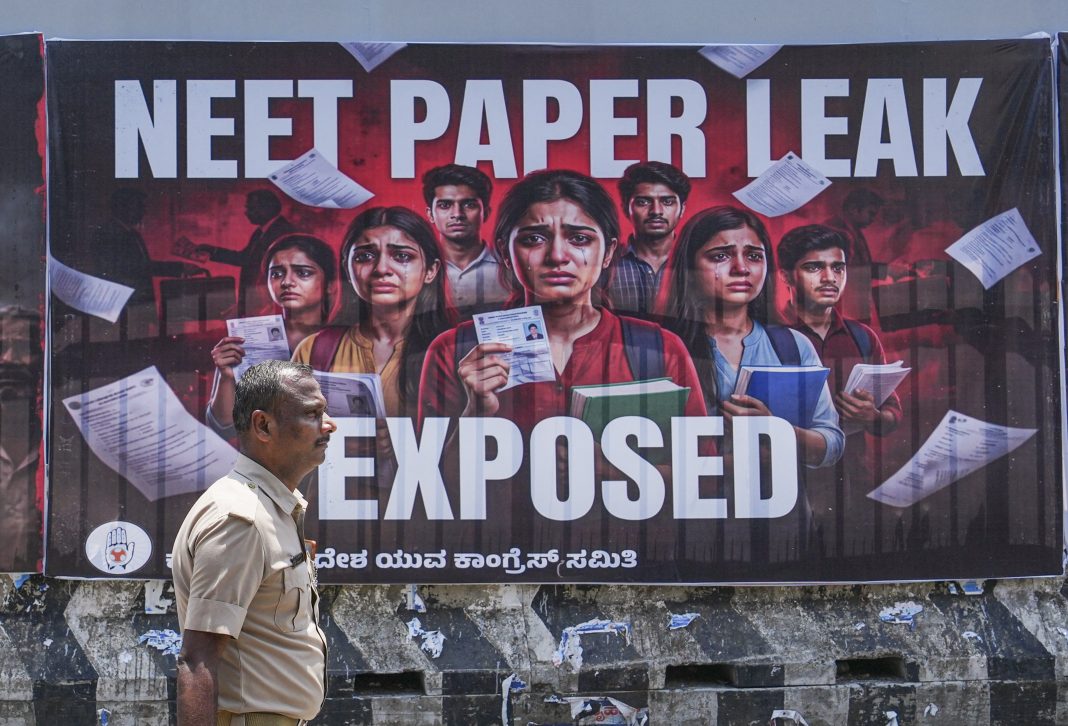
The sources said on queries from the MPs on how the National Eligibility-cum-Entrance Test (Undergraduate) paper was leaked, Singh said it was not leaked through their system.
At this, several MPs asked him then how did the paper get leaked and what was the need to cancel the exam and hold a retest.
The NTA DG had no answer to this and instead, said the Central Bureau of Investigation (CBI) is looking into the matter.
Some opposition MPs demanded that the probe report be presented before the panel, but some of their counterparts from the ruling Bharatiya Janata Party (BJP) objected to this, saying the CBI is an independent body and it should be allowed to do its work.
The sources said Singh gave a detailed presentation on the implementation of the steps recommended in the Radhakrishnan Report on NTA reforms and informed that around 70 per cent of the short-term measures suggested have already been implemented.
The NTA officials told the members of the panel that steps are being taken to evolve a foolproof examination system and a comprehensive review is being conducted. They also said credible people should be involved in the paper setting and distribution system.
The NTA officials said holding the NEET through a computer-based testing (CBT) platform is being considered and future exams could be conducted through this mode.
The MPs are learnt to have raised the issue of staff shortage and filling vacancies in the NTA to ensure that the agency functions efficiently and leakages are prevented.
The sources said the NTA informed the members of the committee that there is a staff shortage of around 25 per cent in the agency currently and steps are being taken systematically to fill up all such vacancies to plug any loophole.
After the meeting, the chairperson of the parliamentary panel, Congress MP Digvijaya Singh, said, “Whatever discussions happen in the parliamentary committee, we are under oath and we cannot discuss it.”
He later said, “The meeting went off very well. We got inputs from all the members. The members expressed their concerns over the NEET paper leak.”
Earlier, listing out the steps taken by the NTA and the government to prevent breaches and malpractices, the officials of the agency said detailed standard operating procedures (SOPs) and checklists for breach management in both PPT and CBT modes have been sent to stakeholders and the collaboration established with the state or district administrations for conducting high-stake examinations and reporting malpractices are being actively monitored on social-media platforms.
The NTA informed the panel that the NEET (UG) 2026 was conducted by it on May 3 at 5,432 centres in 565 cities (including 14 cities abroad). The examination was conducted in 13 languages and more than 22.7 lakh candidates had registered, with over 22.05 lakh appearing in the examination.
The Radhakrishnan Committee has made several recommendations, including harmonisation and unification of entrance tests for undergraduate admissions, a gradual migration towards computer-adaptive testing and the creation of an NTA public test platform and infrastructure.
Among the long-term measures suggested by the high-level committee of experts are a transition from pen and paper to computer-based testing, the introduction of multi-session and multi-stage testing, and the imposition of number of attempts and age limits. These will be implemented in consultation with the Ministry of Health and Family Welfare. (PTI)