
Indore, Jun 10: Amidst the ongoing BRICS Agriculture Working Group meeting in Indore, representatives from member nations were introduced to the nearly century-old organic manure (compost) production method that has brought global recognition to the city.
The working group meeting is addressing topics such as food security, sustainable farming, climate change challenges, and enhancing mutual cooperation in the agricultural sector, officials said.
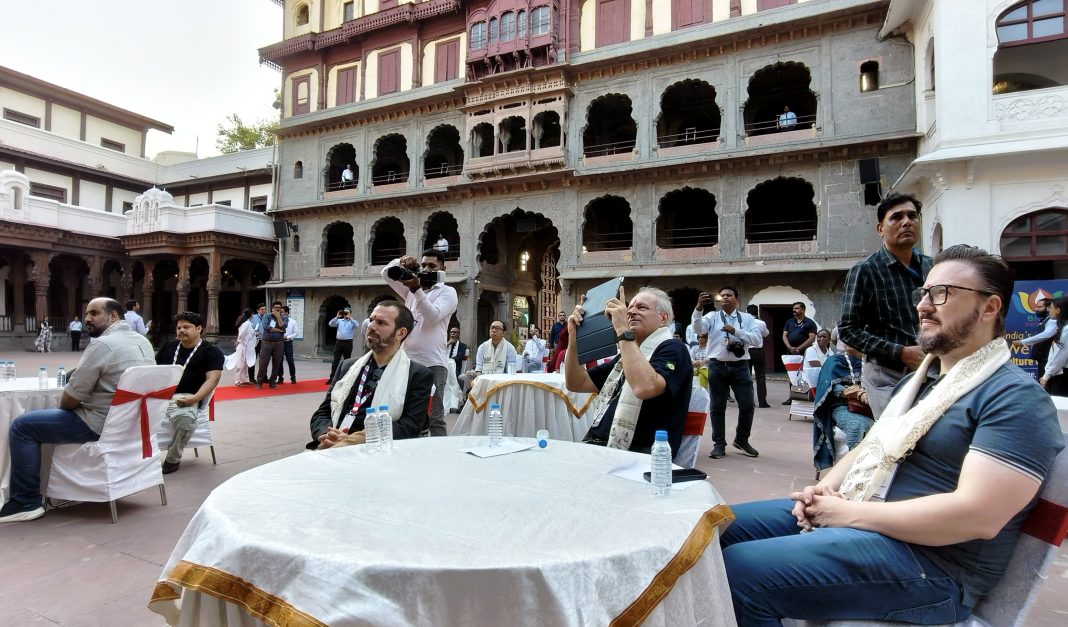
To acquaint them with Indore’s heritage, delegates from Ethiopia, Brazil, South Africa, Indonesia, and other BRICS nations were taken on a tour of the historic Rajwada Palace. During the visit, the administration also provided them with information about the ‘Indore Compost’ method, an organic manure production technique that was subsequently adopted by many countries around the world.
Albert Howard, a British agricultural scientist considered the father of modern organic farming, studied traditional farming practices in Indore during the early decades of the 20th century, officials said.
He observed farmers preparing manure from agricultural residue, cow dung and other organic materials. He then developed a systematic composting method that later became famous as the ‘Indore Method of Compost Making’.
Historian Zafar Ansari told PTI, “The Government Agriculture College of Indore was first established in 1923 as the Institute of Plant Industry. Howard conducted his studies and experiments at this very institute.”
Mahatma Gandhi praised this composting method during his visit to Indore in 1935, Ansari said.
Officials said that this method, based on the use of local resources, is still considered effective for improving soil quality and reducing reliance on chemical fertilisers.
As part of the BRICS Agriculture Working Group meeting, delegates from various countries visited a rural market center (‘haat’), where they were briefed on initiatives related to Madhya Pradesh’s agricultural diversity, natural farming, agro-processing, and rural entrepreneurship.
They also learned about local agricultural products, including value-added banana products from Burhanpur district, GI-tagged Chinnaur rice from Balaghat, and GI-tagged Sundarja mangoes from Rewa.
They also showed interest in traditional crops from Jhabua, rare varieties of ‘Shri Anna’ (millets) preserved in Mandla, medicinal crops from Neemuch, and other products derived from natural farming.
The BRICS Agriculture Working Group meeting, held under India’s presidency, will continue until June 11.
BRICS is a prominent intergovernmental organization. Its member nations include Brazil, Russia, India, China, South Africa, Egypt, Ethiopia, Iran, Saudi Arabia, the United Arab Emirates, and Indonesia. (PTI)