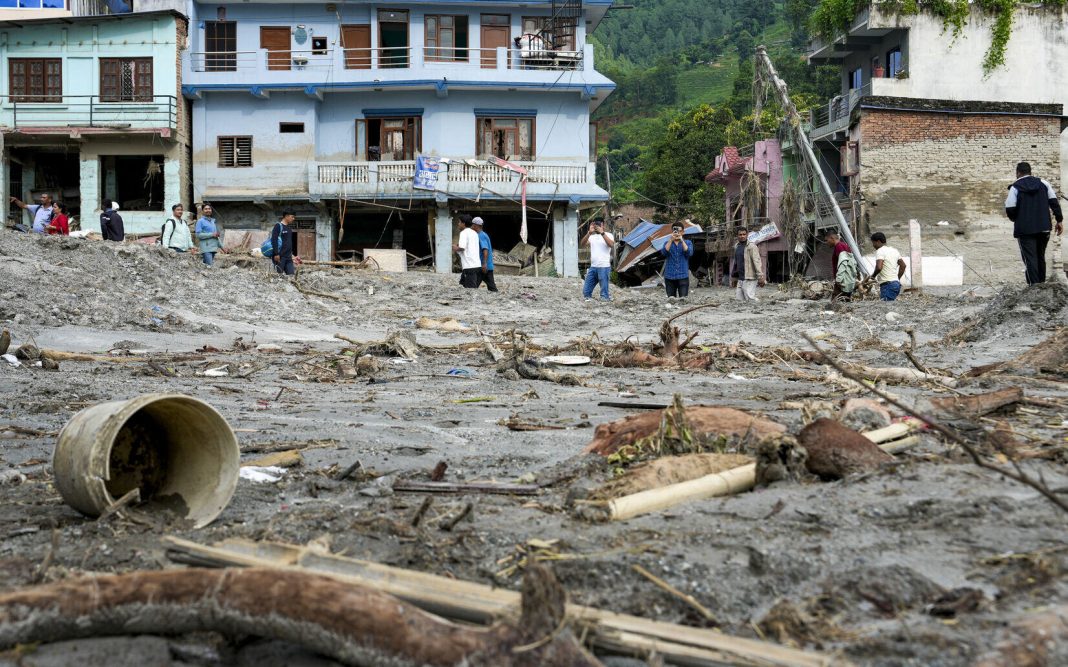

Beijing, Aug 31: China on Monday dismissed claims linking its massive hydropower projects in Tibet to the August 26 flash flood disaster in Nepal, calling them “malicious speculation”.
The flash floods, believed to have been triggered by an ice-rock avalanche near the Nepal-Tibet border, swept through northern and central Nepal last week, killing hundreds, leaving thousands missing and damaging homes, roads, bridges and hydropower infrastructure.
“We noted that experts and official institutions of China and Nepal have made some assessment on the cause of the disaster,” Chinese Foreign Ministry spokesman Guo Jiakun told a media briefing in Beijing when asked about criticism blaming Chinese projects.
“According to their analysis, the mudslide was triggered by a collapse of a high-altitude glacier in Nepal,” he said.
“In the face of tragic disasters, we reject malicious speculation that has no factual basis,” Guo said.
He also rejected criticism that China was understating the number of people killed and missing in the disaster.
“Intensive search, rescue and relief operations are still underway in an orderly manner in the disaster-hit areas. China has been open, transparent and timely in information release. Smear and disinformation are most unwelcome at a time of disaster response,” he said.
On Sunday, officials in Tibet said the death toll from Wednesday’s flash flood at Gyirong Port on the Tibet-Nepal border had risen to 16, while 546 people, including 49 Indians, remained missing.
In Nepal, the death toll from the flash floods rose to 903 on Monday, while 4,247 people remained missing, according to the National Disaster Risk Reduction and Management Authority.
Over the years, China has faced criticism over its hydropower projects in Tibet, including a USD 167.8 billion dam being built over the Brahmaputra River, described as the world’s largest infrastructure project.
Construction of the project began in July last year. It is expected to generate more than 300 billion kWh of electricity annually, enough to meet the yearly power needs of more than 300 million people.
Chinese geologists have also raised concerns over the project, saying it is being constructed over an active fault line, posing potential risks.
China has maintained that it is following the highest industrial standards in constructing the project.
The dam is being built in a massive gorge in the Himalayan region where the Brahmaputra River makes a U-turn before flowing into Arunachal Pradesh and then Bangladesh.
The Tibetan Plateau, known as the “roof of the world”, is prone to earthquakes as it lies in a seismically active region. (PTI)