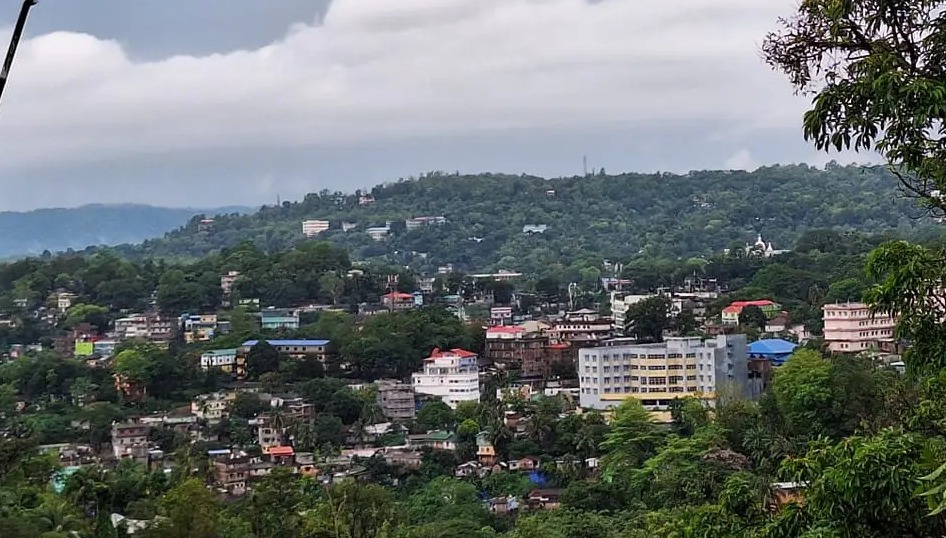

Shillong, Sept 23: As many as three places in Meghalaya is among five in India have recorded lowest annual PM2.5 readings listed in the latest World Health Organization (WHO) Ambient Air Quality Database.
The three places include Tura – Meghalaya’s second largest town after capital Shillong – Nongstoin and Dawki.
These places have recorded some of the lowest annual PM2.5 levels among Indian locations listed in the WHO database, drawing attention to the relatively clean air in parts of the state.
Tura recorded an annual average PM2.5 concentration of 6 micrograms per cubic metre, while Nongstoin recorded 7 µg/m³ and Dawki 8 µg/m³, according to an analysis of Indian entries in the WHO database.
The measurements are from 2021 and form part of WHO’s latest database released in June 2026.
Tura shared the lowest reported PM2.5 reading among the Indian locations highlighted in the analysis.
Nongstoin and Dawki recorded 7 µg/m³ and 8 µg/m³ respectively. Dawki, located near India-Bangladesh border, is also widely known for the crystal-clear waters of the Umngot river.
The clean-air showing extends beyond Meghalaya to other parts of the Northeast. Lunglei in neighbouring Mizoram recorded 6 µg/m³, matching Tura’s reading, while Kolasib recorded 8 µg/m³.
Together, the five locations highlighted for the lowest readings — Lunglei, Tura, Nongstoin, Dawki and Kolasib — are all in the Northeast, spread across Meghalaya and Mizoram, with annual PM2.5 concentrations ranging between 6 and 8 µg/m³.
Lunglei in southern Mizoram is the state’s second-largest settlement while Kolasib lies in northern Mizoram close to the Assam border.
The findings underline the relatively low particulate pollution recorded in several smaller and hilly urban centres of the Northeast compared with many of India’s larger metropolitan and industrial areas.
WHO’s Ambient Air Quality Database Version 8.0 contains annual measurements of PM2.5, PM10 and nitrogen dioxide from more than 8,000 human settlements across 127 countries and territories, with measurements collected between 2010 and 2024.
PM2.5 refers to fine particulate matter measuring 2.5 micrometres or less in diameter.
These particles can enter deep into the respiratory system and are considered an important indicator of air pollution and associated health risks.