
ROOPAK GOSWAMI
Shillong, Nov 12: Meghalaya’s experiment with Village Health Councils (VHCs) is beginning to show results at the grassroots, but a new study from West Garo Hills has found that many of these community bodies are still struggling to function independently and remain heavily dependent on ASHA workers and other frontline staff.
The study, published in the International Journal for Equity in Health, examines whether VHCs are actually helping bridge the gap between rural communities and the formal health system. The study has been carried out by Melari Shisha Nongrum of IIPH Shillong and others.
Meghalaya became the first state in India to transform Village Health Sanitation and Nutrition Committees into Village Health Councils in 2022, with the aim of giving communities a stronger role in identifying health needs, mobilising people and linking villages with the health system.
The findings, based on 13 in-depth interviews and nine focus group discussions involving 85 participants across villages and health facilities in West Garo Hills, present a mixed picture. Researchers found that VHCs can build trust, mobilise communities and improve links with frontline health workers. But unclear roles, limited training, weak coordination and unmet expectations at health facilities are holding them back.
When a village committee becomes a health lifeline
One of the clearest examples comes from maternal healthcare.
The study found that VHCs have used their annual ₹10,000 fund to help pregnant women with emergency transportation, diagnostic tests and other immediate needs.
In some villages, members have started tracking pregnant women and referring high-risk cases to health facilities before delivery.
Researchers recorded one participant saying that home deliveries had declined because VHC members were tracking pregnant women and encouraging them to reach hospitals in time.
In another example, VHCs helped mobilise villagers for immunisation and supported pregnant women who might otherwise have opted for home delivery.
The councils are also addressing issues beyond hospitals and clinics. Some have helped organise adolescent and mental-health awareness programmes, while others have promoted kitchen gardens and vegetable cultivation around schools and homes.
The ASHA worker remains the crucial link
But there is a catch.
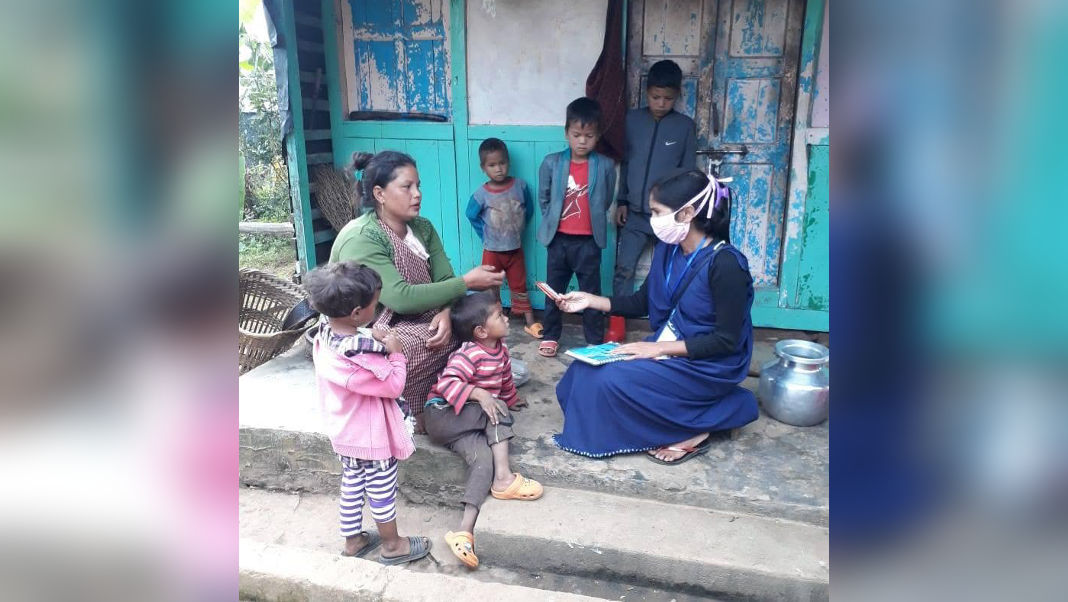
The study found that the VHC system is often only as active as the ASHA worker supporting it.
“If ASHA is not active… then probably the VHCs will also suffer,” one healthcare worker told researchers.
In several villages, VHC members wait for an ASHA, ANM or NGO worker to initiate meetings or activities. The researchers describe this as a major weakness because a body intended to strengthen community ownership risks becoming another extension of the health delivery system.
The problem is compounded by limited understanding of what VHCs are actually supposed to do. Some members had little clarity about their own roles, while some frontline health workers were also unfamiliar with the VHC structure.
From Garo community networks to modern healthcare
This is particularly significant in Meghalaya, where traditional community structures remain deeply embedded in village life.
The study notes that the VHC model has an advantage because it operates within existing community networks. In Garo villages, even the traditional Dakura system—where a person communicates information from the village headman to households—is being used to spread health messages, particularly to people who may not regularly use smartphones.
But researchers caution that community participation does not automatically mean community power.
In some cases, officials were reported to have suggested names for VHC membership, while some members did not even know they had been selected. Decision-making also tended to remain concentrated among presidents, secretaries and a few active members.
The study also points to a more complex gender dimension. Although VHCs are designed to have gender-balanced representation, researchers note that existing social and administrative dynamics can still influence who participates in decision-making.
₹10,000 can help—but it cannot fix the system
Another issue is the use and timely release of VHC funds.
The annual ₹10,000 allocation has been useful for emergency transport, maternal care and other local needs. But researchers found instances where funds had not arrived on time.
‘
At the same time, the study points out that Meghalaya already has the Chief Minister’s Safe Motherhood Scheme, which provides dedicated transportation for pregnant women to PHCs and CHCs. Better coordination between VHCs and the formal health system could therefore prevent duplication and allow the limited VHC funds to be used where they are most needed.
The bigger challenge, the researchers argue, is to move VHCs from being primarily service-delivery and mobilisation platforms to genuinely community-owned institutions.
What Meghalaya needs next
The researchers recommend sustained handholding and capacity building—not just one-off training—for VHC members and health workers.
They specifically suggest strengthening the role of ANMs and Mid-Level Health Providers/Community Health Officers in supporting VHCs, while gradually building the capacity of the councils themselves to take ownership of their work.
The study concludes that VHCs have the potential to improve equitable access to healthcare in rural Meghalaya, but that potential will depend on stronger system-community linkages, clearer responsibilities, better capacity building and more effective use of resources.