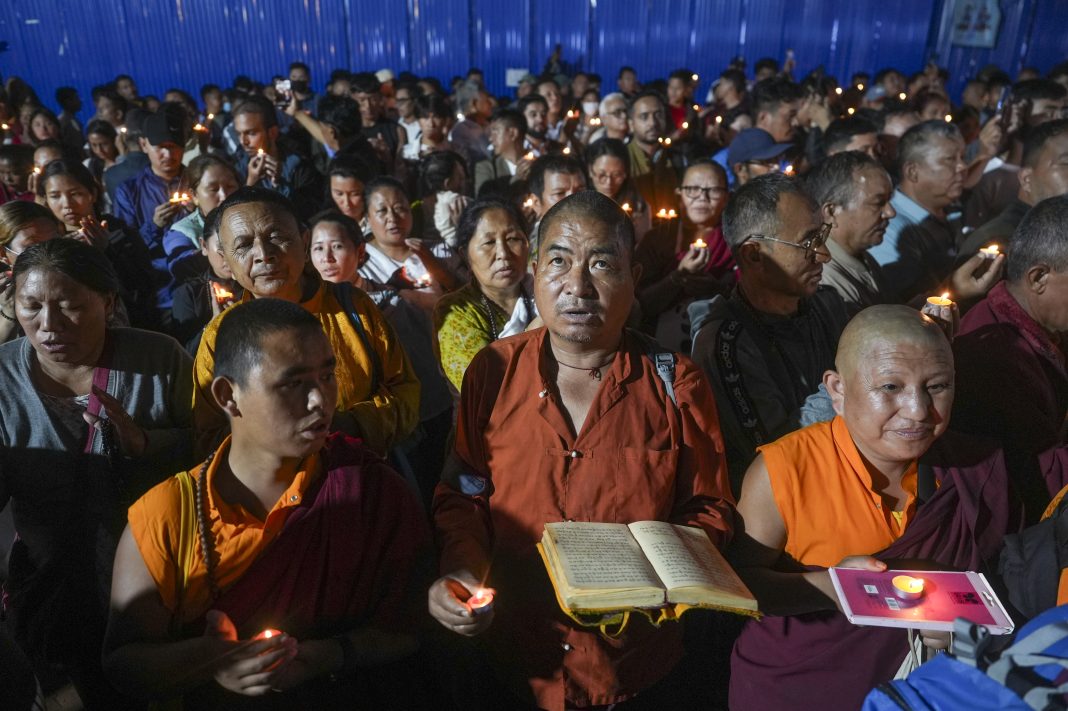

Kathmandu, Sept 3: The death toll due to devastating flash floods in Nepal surged to 1,259 on Thursday, with over 5,000 still missing as families perform symbolic funeral rites for their relatives after receiving no information about them for days.
The flash floods, triggered by an ice-rock avalanche near the Nepal-Tibet border on August 26, devastated towns and villages in northern and central Nepal, leaving a trail of destruction.
According to the data released by Nepal’s National Disaster Risk Reduction and Management Authority(NDRRMA), the death toll from the Bhotekoshi River floods surged to 1,259 on Thursday, with 5,083 still missing.
In Paharebesi village of Rasuwa district, residents have begun preparing to perform funeral rites for missing relatives after receiving no information about their whereabouts for eight days, Onlinekhabar news portal reported on Thursday.
In flood-hit areas, families have begun using effigies made of kusha grass to perform the final rites of relatives who remain untraced, amid diminishing hopes of finding them alive, The Kathmandu Post newspaper reported.
Families said they were turning to symbolic funerals because there was little hope of recovering all the missing and because identifying bodies had become increasingly difficult, it said.
According to NDRRMA, 355 bodies have been recovered from Chitawan district, 218 from Nawalparasi East, 212 from Nawalparasi West, including 18 recovered from India and handed over to Nawalparasi West, and 177 from Nuwakot.
Similarly, 127 bodies were recovered from Rasuwa district, 72 from Gorkha, 60 from Dhading and 38 from Tahanu.
On the Chinese side, the death toll in the flash flood that struck Gyirong county in Tibet near the Nepal border has increased to 21, with 541 others still missing as of Wednesday.
As the upstream areas of the Bhotekoshi River are continuously receiving rainfall on Thursday, there is the possibility of rising water levels in the Bhotekoshi and Trishuli rivers as well as small rivers and rivulets flowing through Rasuwa and Nuwakot districts, said Saraswati Bishta, a technician at the Flood Forecasting Division of the Department of Hydrology and Meteorology.
The people residing in the surrounding areas and downstream of the river are urged to remain vigilant, she said.
There is a middle-level risk associated with flash floods in rivers situated in various districts, mainly those in the hilly region, including Taplejung, Panchthar, Terhathum, Dhankuta, Sankhuwasabha, Okhaldhunga, Udaypur, Chitwan, Gorkha, Tanahu, Lamjung, Manang, Mustang, Myagdi, Kaski, Syangja, Kathmandu, Lalitpur and Bhaktapur, she said.
Similarly, rivers situated in mountain regions including Kalikot, Humla, Jumla, Dailekh, Darchula, Baitadi and Kalikot districts are also swelling, resulting in some risks associated to flash floods, she added.
Meanwhile, Nepal Foreign Minister Shisir Khanal on Thursday called the massive floods that caused widespread devastation in the country a “Himalayan Tsunami” and thanked neighbouring countries and the international community for their support and solidarity during this difficult period.
Khanal’s comments came days after an interview with a private television channel, in which he identified China, the US, and India as the world’s three largest greenhouse gas emitters and said they have a “historical responsibility to compensate vulnerable nations like Nepal”.
Expressing gratitude to neighbour countries, friendly nations and the international community for their support and solidarity, Khanal said on Thursday that “Nepal will continue close cooperation and collaboration with the international community in this regard.”
Even as international and domestic assistance continues to pour in, schoolchildren in Nepal are doing their bit by donating part of their pocket money to the Prime Minister’s Relief Fund.
Children from various schools across Nepal are voluntarily donating their snack money or pocket money for the welfare of those affected by the floods.
Meanwhile, the joint rescue teams led by the Nepal Army have continued their search and rescue efforts on the ninth day, on Thursday.
The floods have changed the landscape of the valleys of Rasuwa and Nuwakot, with helicopter pilots relying on their own discipline and judgement to navigate the steep terrain because riverbanks and familiar landmarks have disappeared, the Kathmandu Post newspaper reported.
The tunnel rescue team from India is working with the Nepali army to carry out the rescue operation in Chilime Power House.
Indian envoy on Thursday visited Syabrubesi, the base of the Indian tunnel rescue team, and said that even though the conditions are tough, both Indian and Nepali teams will continue their work ‘undeterred.’ (PTI)