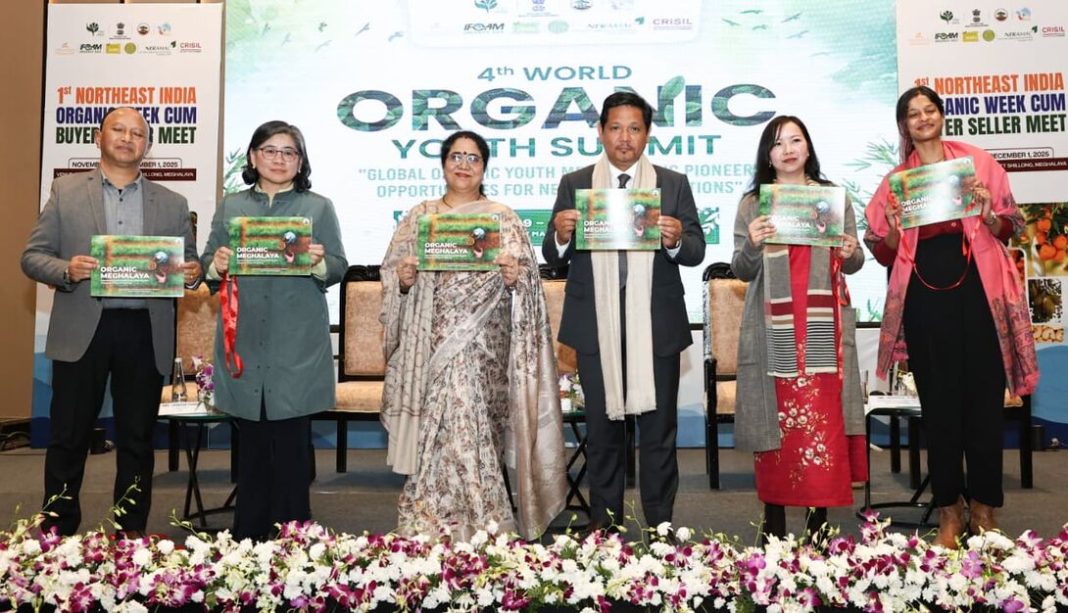

Shillong, Dec 1: Chief Minister Conrad K Sangma underscored that advancing the organic mission requires unwavering and coordinated efforts from all stakeholders.
“Our agenda has always been to uplift the farmers of our state and the region. I urge all stakeholders not to treat this as the end of an event, but as the beginning of a longer journey. For us, farmers continue to be at the centre of policy-making and every programme is target-based and time-bound.”
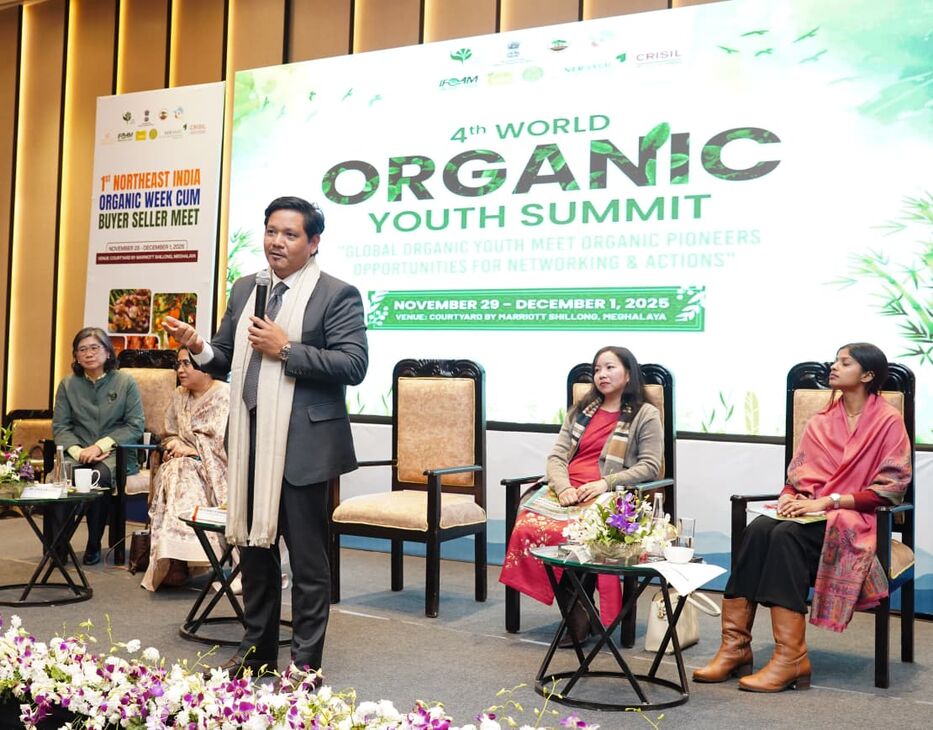
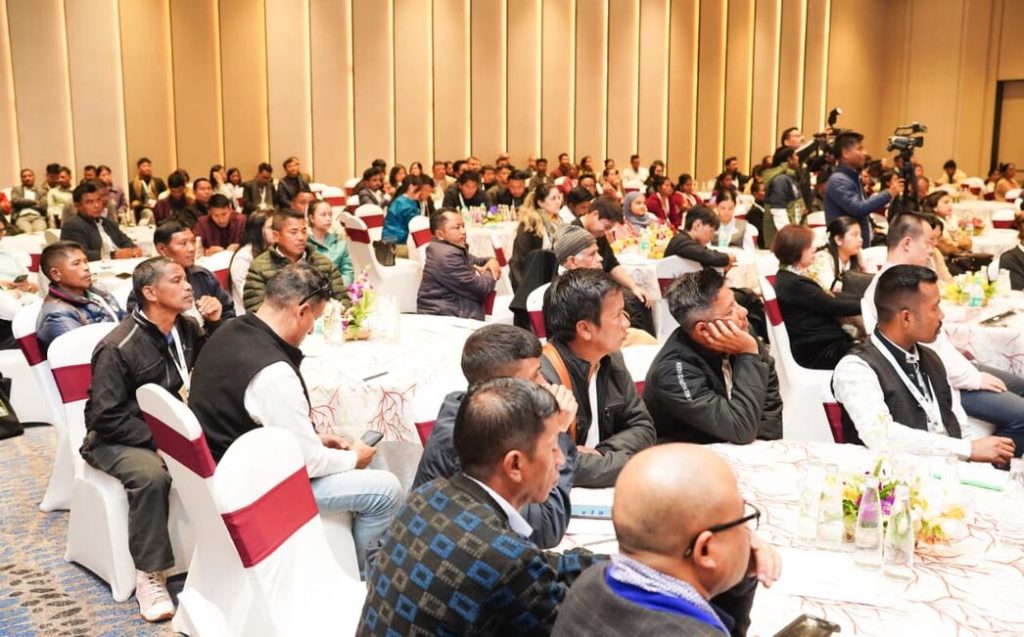
Sangma was addressing at the final day of the 1st Northeast India Organic Week and the 4th IFOAM World Organic Youth Summit held in Shillong on Monday. The event marked the culmination of a four-day international gathering that brought together global buyers, organic experts, youth delegates, farmer groups and key stakeholders from across the region and abroad.
He emphasised the cultural depth of organic farming in Meghalaya, “The word ‘organic’ is more than just a buzzword for us. It is connected to our farmers, our forefathers, and the way our people have farmed for centuries. While the world moved toward new technologies, our traditional practices remained intact-something that today stands as a blessing in disguise. The Northeast as a whole holds immense knowledge that can now be shared with the world.”
The Chief Minister also announced the state’s commitment to expanding organic cultivation, “We are launching an ambitious but achievable target for expanding organic cultivation across agricultural land in the state. This is a humble beginning, but it will significantly support farmers and create a wider impact on society.”
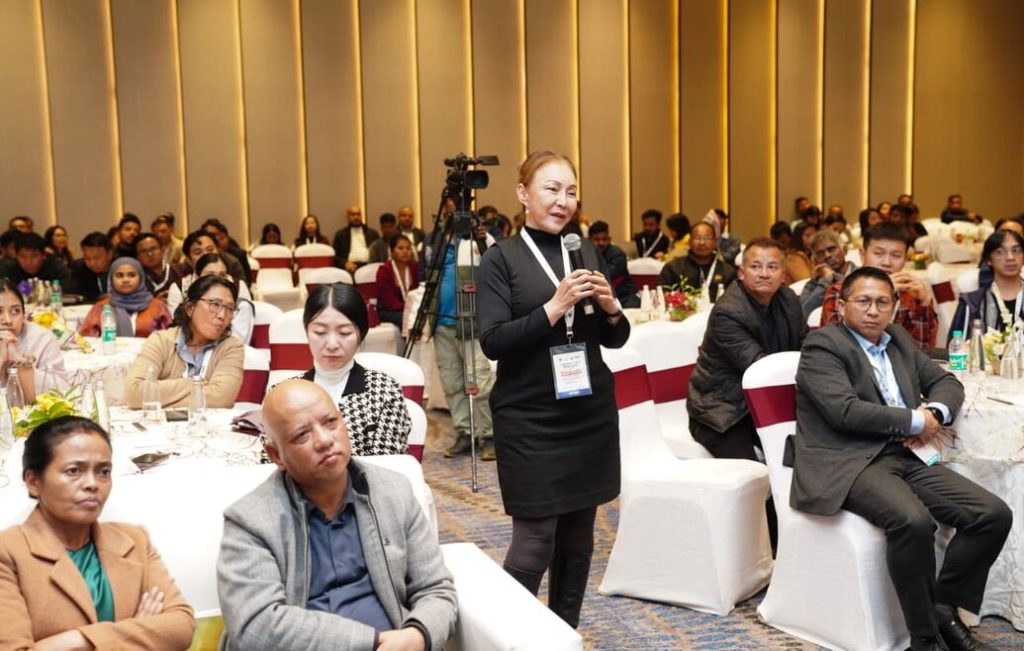
Addressing the logistical challenges in the region, he added, “We all know logistics is an issue, but solving it remains a priority. Strengthening these systems is essential to ensuring that our farmers reach both national and global markets.”
Speaking at the programme, Vinita Sudhanshu, General Manager, APEDA, emphasised the Northeast’s rising prominence in India’s organic sector. She said, “This is the first programme of its kind in the Northeast region, and we are delighted to witness strong participation from farmers, FPOs and stakeholders. Meghalaya has set an inspiring example of community-driven development, where farmers are truly empowered. Initiatives like these are helping local producers while preserving the rich biodiversity and heritage of the state.”
She further added, “APEDA has been consistently organising capacity-building programmes for farmers and exporters. The Buyer–Seller Meet on 29th November enabled direct interaction between farmers, FPOs and global buyers, fostering meaningful partnerships. We are also working on developing sea protocols for citrus fruits to strengthen export supply chains and maintain cold-chain integrity without affecting shelf life. Platforms like World Food India and Biofach Germany continue to generate promising enquiries for Northeast organic produce, creating new opportunities for our entrepreneurs.” She outlined several ongoing initiatives for Meghalaya’s organic value chain and also highlighted that APEDA will support exposure visits for two progressive FPOs from the region to the upcoming Gulfood event where they will get an opportunity to interact with the people, to focus their product and to understand the requirement of the importing country.
Ms Jennifer Chang, Executive Director, IFOAM Asia, lauded Meghalaya as a potential global model for holistic organic development, where agriculture, tourism, and community life seamlessly integrate. Reflecting on her visits to local orchards, she commended the state’s farmers for working in harmony with nature, where crops grow without artificial interference. She also proposed future collaborations, urging the state to champion the upcoming UN International Year of the Woman Farmer, noting that “if you teach a woman, you are raising a nation”. Praising the efficiency of the state government, she encouraged the delegates to build lasting bridges with Northeast India.
Setting the day’s context, Smt. Isawanda Laloo, Secretary, Agriculture and Farmers’ Welfare, emphasised that the state remains naturally organic by heritage, geography, and practice. She detailed the state’s strategic partnership with APEDA, which has already facilitated the export of over 50 metric tons of premium produce, including Khasi Mandarin, pineapples, and ginger, to Gulf nations..
During the sharing of experience session one of the young entrepreneurs of Meghalaya, Smt. Ibalahun Thangkhiew, CEO, Jirang Organic Agro Farmers Producers Company Limited, said her company was established in 2017 with 433 farmers covering 500 hectares of land and 15 villages. She said, “Our vision was simple yet ambitious to unite smallholder farmers through collective farming and promote organic agriculture. And that reflects the rich biodiversity and exceptional produce of Meghalaya.” She recalled that the company began the first consignment of Khasi Mandarin to Dubai in 2022 in collaboration with APEDA and the Department of Horticulture, which is a great opportunity for a small business group to enter the global market.
The programme included a tour of exhibition stalls, interactions with farmers and entrepreneurs, a recap screening of the two-day programme, sharing of best practices by local producer groups, the launch of the Organic Compendium, and the unveiling of the MEGNOLIA website, followed by addresses from senior officials of IFOAM Asia and APEDA.
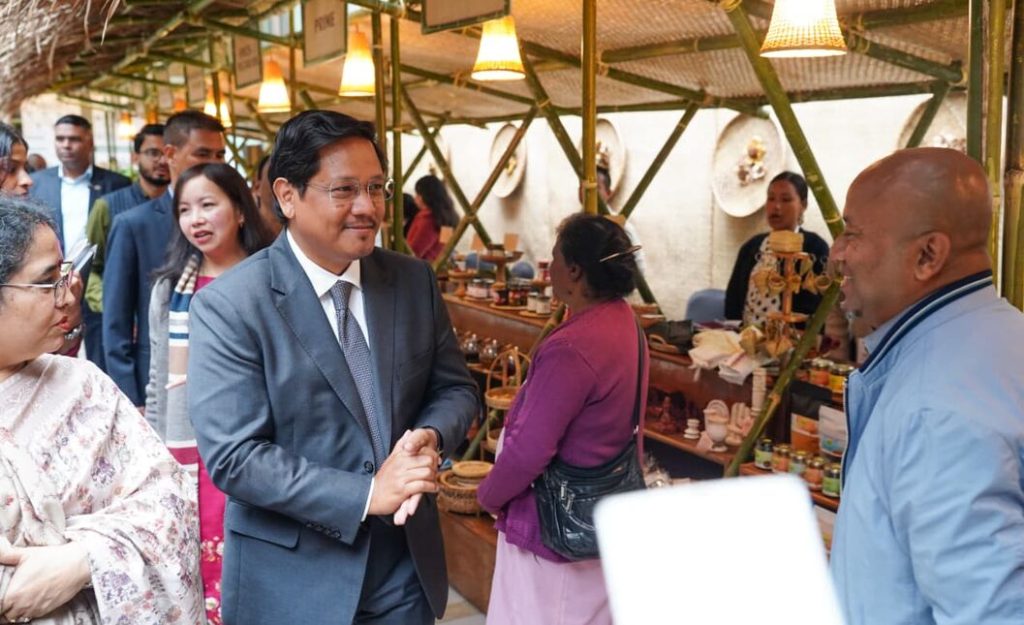
Present at the programme were Ms. Jennifer Chang, Executive Director, IFOAM Asia; Dr. Saswati Bose, General Manager, APEDA; Smt. Isawanda Laloo, Secretary, Agriculture & Farmers’ Welfare, Government of Meghalaya, and other senior officials and delegates.
Jointly organised by the Department of Agriculture and Farmers’ Welfare, Government of Meghalaya, APEDA, IFOAM–Organics Asia, and MEGNOLIA, the summit brought together policymakers, youth leaders, Farmer-Producer Organisations (FPOs), international buyers, exporters, and global experts in organic agriculture.
The event provided a comprehensive platform for dialogue, trade engagement, and knowledge exchange to strengthen Northeast India’s role in sustainable and export-oriented organic agriculture. Over four days, the summit addressed multiple facets of organic agriculture, including market access, value chain development, youth engagement, capacity building, and international cooperation. The sessions emphasised enabling farmers and FPOs to meet global standards, integrate into international supply chains, and enhance competitiveness through certification, traceability, and quality assurance systems.