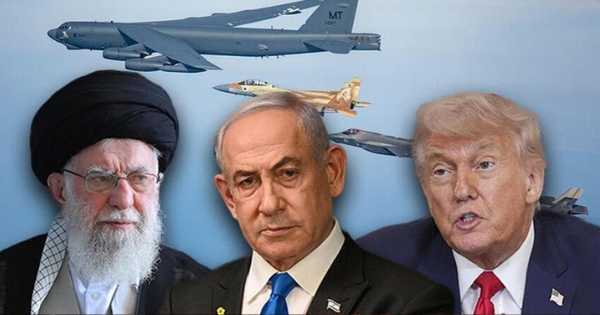

Dubai, Mar 23: President Donald Trump extended his deadline for Iran to reopen the crucial Strait of Hormuz to international shipping, saying Monday that the US would hold off on threatened strikes against Iranian power plants for five days.
In his announcement on Truth Social, Trump also held out the possibility of a resolution to the war — though Iranian officials denied there were negotiations. Trump’s turnaround appeared to offer something of a reprieve after the US and Iran traded threats with potentially catastrophic repercussions for civilians across the region.
Trump later told reporters that Iran wants “to make a deal,” and claimed US envoys have been holding talks with a “respected” Iranian leader. He said his Middle East special envoy Steve Witkoff and Trump’s son-in-law Jared Kushner, conducted talks Sunday into the evening, and that the negotiations would continue.
Trump did not name any official or officials representing Tehran. He said the US has not talked to Supreme Leader Ayatollah Mojtaba Khamenei. Trump said if a deal is reached with Iran, the US will move to take Iran’s enriched uranium critical to its disputed nuclear program.
Shortly after Trump’s social media announcement — hours before the deadline was set to expire — Iranian state television declared that the American leader had backed down “following Iran’s firm warning.”
The war, now in its fourth week, has already seen several dramatic turning points — the killing of Iran’s supreme leader, the bombing of a key Iranian gas field, and strikes targeting oil and gas facilities and other civilian infrastructure in Gulf Arab nations. The conflict has killed more than 2,000 people, shaken the global economy, sent oil prices surging, and endangered some of the world’s busiest air corridors.
The latest threatened attacks could have cut electricity to wide swaths of people in Iran and around the Gulf and knocked out desalination plants that provide many desert nations with drinking water. There are also increasing concerns about the consequences of any strikes on nuclear facilities.
Trump issued a deadline and then extended it
Trump said over the weekend that the US would “obliterate” Iran’s power plants unless the country releases its stranglehold on the Strait of Hormuz within 48 hours — a deadline that would have expired late Monday Washington time.
But on Monday morning, Trump wrote on his Truth Social site that the US and Iran have had “very good and productive conversations” that could yield “a complete and total resolution” in the war.
Trump added that the suspension of his threat to attack power plants was “subject to the success of the ongoing meetings and discussions.”
Trump did not elaborate on the negotiations that had taken place, and the state-owned IRAN newspaper reported that Iran’s Foreign Ministry denied that there had been any.
“Remarks by the US president are part of efforts to reduce energy prices and buy time to implement his military plans”, the newspaper said.
Earlier, Iranian Foreign Minister Abbas Araghchi said he spoke by phone with his Turkish counterpart, Hakan Fidan. Turkiye has been an intermediary before in negotiations between Tehran and Washington.
President Abdel-Fattah el-Sissi also said Monday that Egypt has delivered “clear messages” to Iran focusing on de-escalating the conflict, according to his office.
Iran threatened retaliation
Iran’s paramilitary Revolutionary Guard promised retaliation if Trump made good on his threat, saying Iran would hit power plants in all areas that supply electricity to American bases, “as well as the economic, industrial and energy infrastructures in which Americans have shares.”
Iranian parliament speaker Mohammad Bagher Qalibaf said Iran would consider vital infrastructure across the region to be legitimate targets, including energy and desalination facilities critical for drinking water in Gulf nations.
Iran’s semiofficial Fars news agency, which is close to the Revolutionary Guard, published a list of such facilities, including the United Arab Emirates’ nuclear power plant. Over the weekend, Iran launched missiles targeting Dimona in Israel, near a facility key to its long-suspected atomic weapons program. The Israeli facility wasn’t damaged.
In the wake of Trump’s turnaround, Fars and the Tasnim news agencies portrayed the American president as backing down.
“Since the start of the war, messages have been sent to Tehran by some mediators, but Iran’s clear response has been that it will continue its defence until the required level of deterrence is achieved,” Tasnim’s report said. “With this kind of psychological warfare, neither the Strait of Hormuz will return to pre-war conditions nor will calm return to energy markets.”
With the US deploying more amphibious assault ships and additional Marines to the Middle East, Iran also warned against any ground attack. (AP)