
New Delhi, Apr 16: More than 1.5 lakh close-approach alerts were issued for the Earth-orbiting satellites of the Indian Space Research Organisation (ISRO) last year to help avoid collisions among spacecraft, according to a new report released by the space agency.
Four collision avoidance manoeuvres (CAM) were performed for Geo-synchronous Earth Orbit (GEO) satellites, while 14 CAMs, including one for the NASA-ISRO Synthetic Aperture Radar (NISAR), were performed for Low Earth Orbit (LEO) satellites.
“Wherever feasible, collision avoidance requirements were met by adjusting orbit-maintenance manoeuvres to avoid exclusive CAMs,” the report said.
The analysis, “Indian Space Situational Awareness Report for 2025 (ISSAR-2025)”, was released on April 8.
The sheer number of alerts issued indicates the growing number of human-made objects in space.
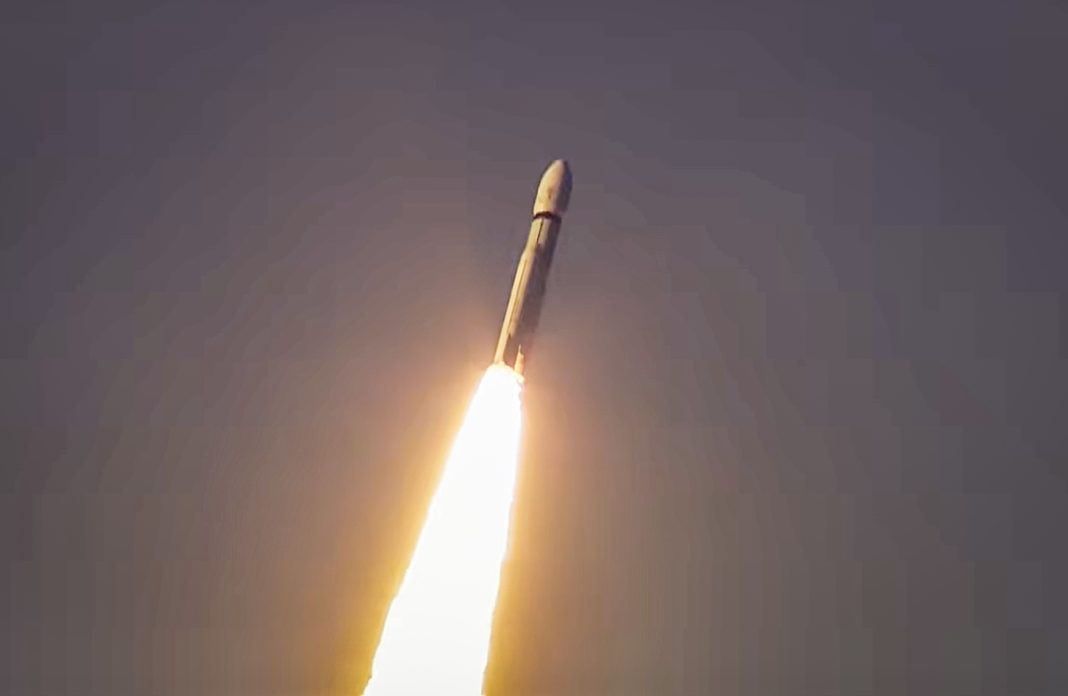
According to the analysis, 328 launch attempts took place globally in 2025 alone — the highest number of launches since the beginning of the space age — of which 315 launches successfully placed 4,198 known operational satellites.
“A total of 4,651 objects were added to the space object population in this year (2025), in a significant rise compared to the previous years — the space object population increased by 2,963 objects from 254 launches in 2024 and 3,135 objects from 212 launches in 2023,” the report said.
Meanwhile, last year, 144 Indian spacecraft were launched, including those from private operators and academic institutions.
“The number of operational satellites owned by the Government of India was 22 in LEO and 31 in GEO. NVS-02 continued to operate in an elliptic Geosynchronous Transfer Orbit (GTO),” according to the analysis.
Previously, Union minister Jitendra Singh had told the Lok Sabha in a reply that a total of 129 trackable space debris originating from Indian satellite missions are in orbit as of March 2026.
He had stated that 23 defunct satellites were in LEO and 26 in GEO.
There were also “rocket bodies remaining in orbit from PSLV (40), GSLV (4) and LVM3 (3), and debris generated due to in-orbit break-up of PSLV C3 rocket body (33)”, Singh had said. (PTI)