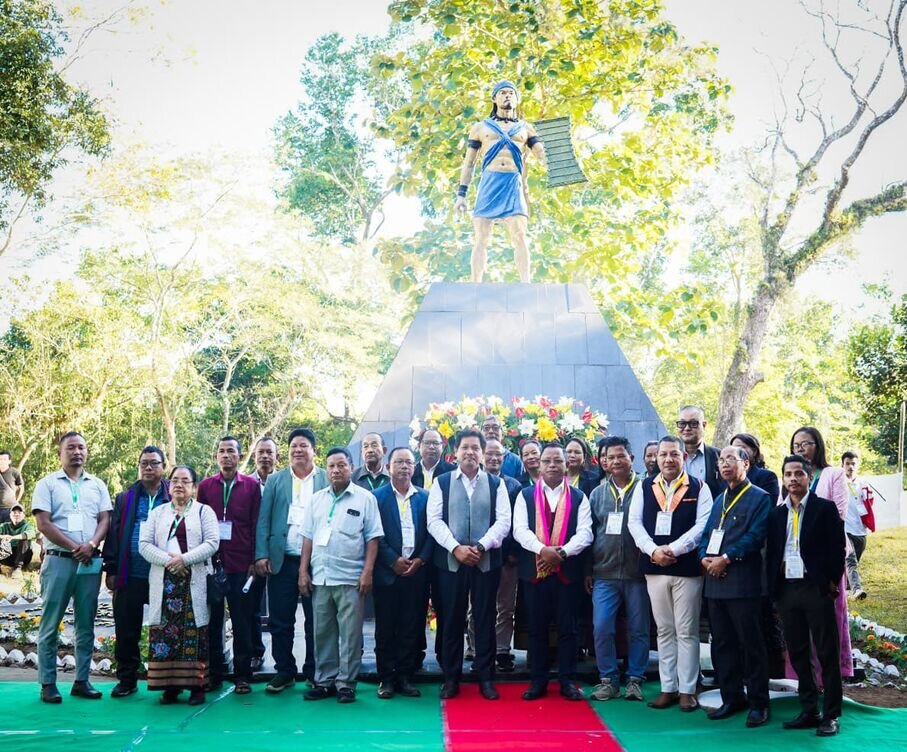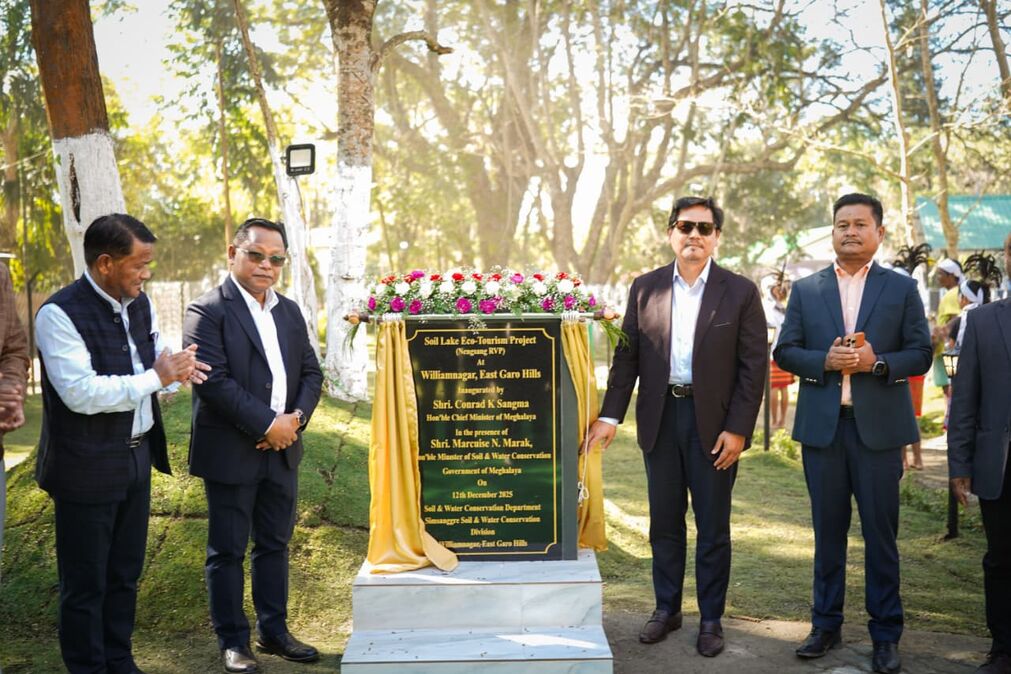

Williamnagar, Dec 12: The race against climate change is turning more challenging with each passing day as streams, rivers and springs across Meghalaya continue to face a severe threat, warns Chief Minister Conrad K Sangma.
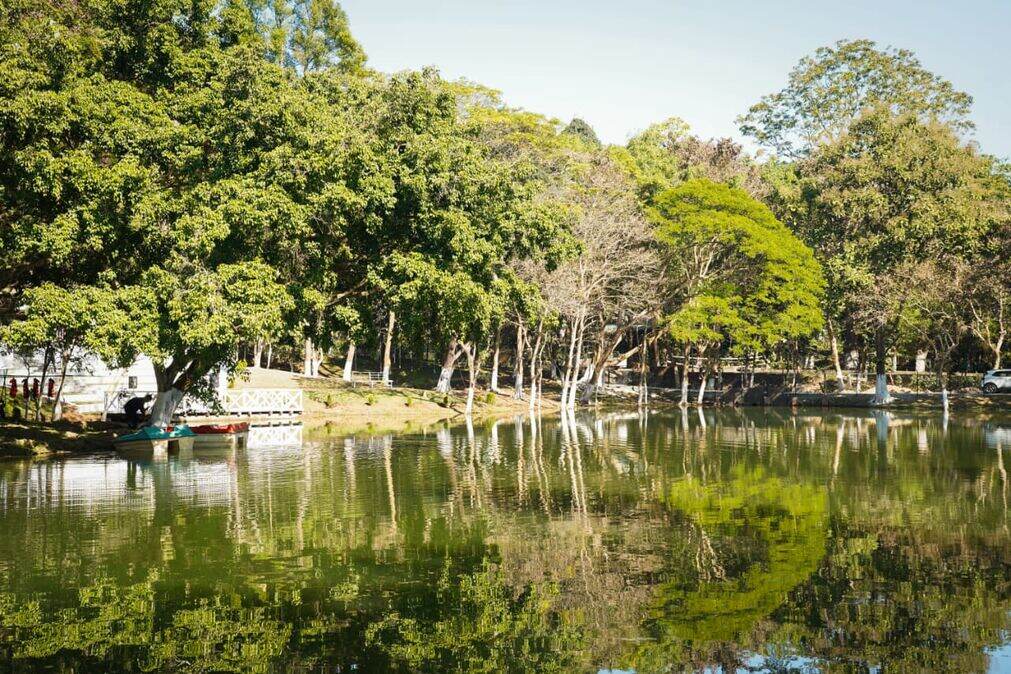
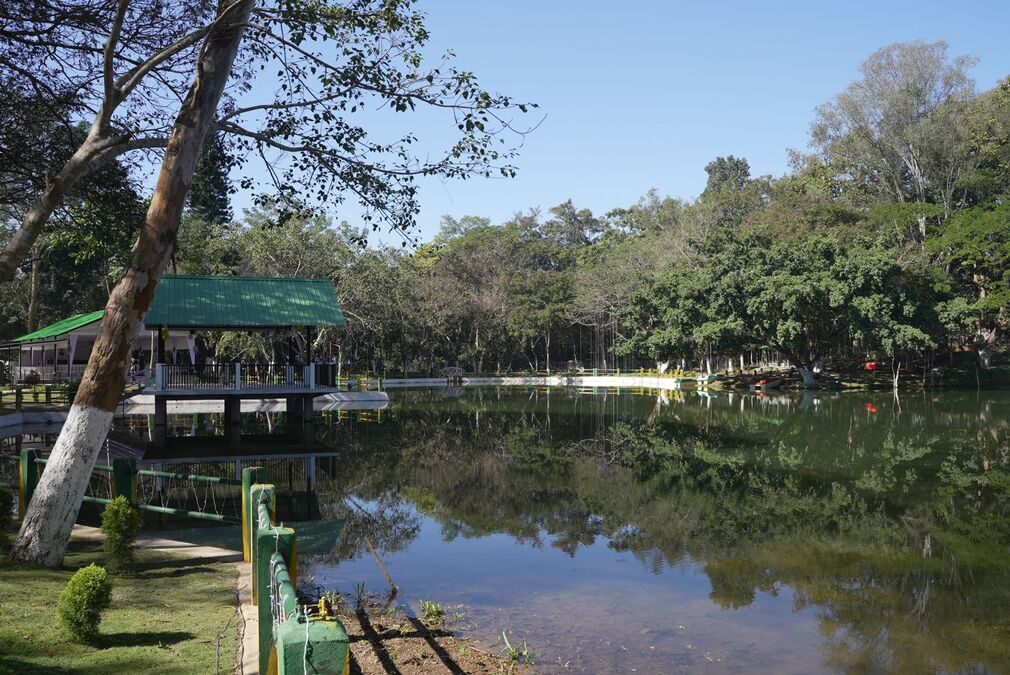
The chief minister said this on the sidelines of the inauguration of a rejuvenated and renovated soil Lake- one of the oldest tourist water spots in the heart of Williamnagar, today.
The lake, an ecotourism initiative under the Nengsang River Valley Project (RVP), will support the conservation and rejuvenation of a vital water body, while promoting tourism and enhancing the beauty of Williamnagar town.
Warning of a looming climate crisis, in a stark and worrisome note citing scientific research papers, the chief minister said that Meghalaya may have already “crossed the tipping point” in the impact of climate change on its water bodies, forests and agriculture.
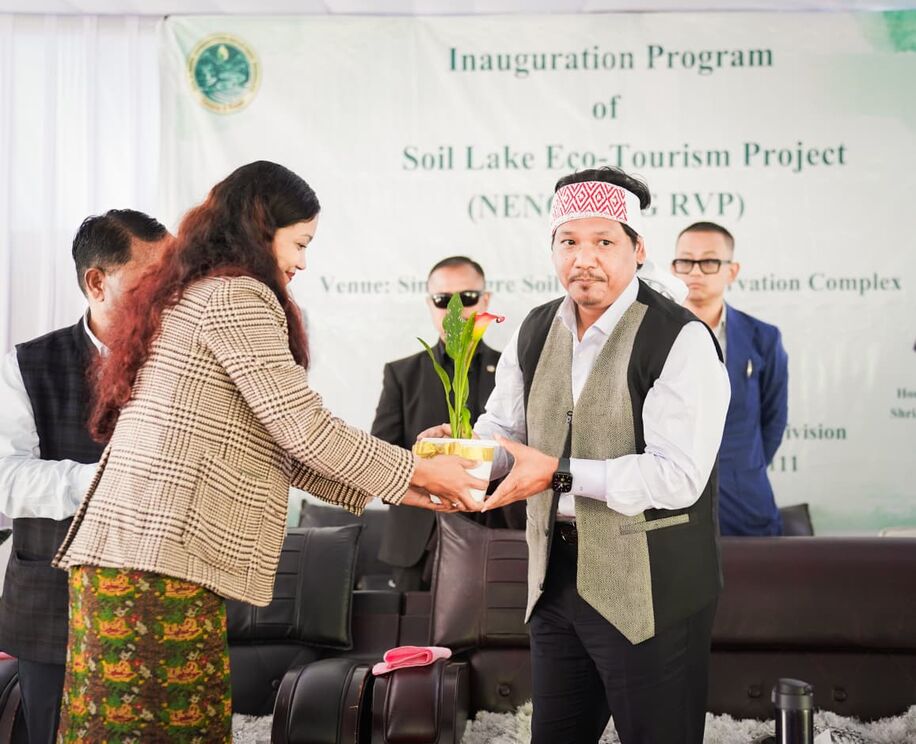
He pointed out that although the effects may not be immediately visible, the coming decade could pose serious challenges. “What we do today will determine how much we can minimize the impact of global warming and climate change, which will inevitably affect future generations,” he cautioned.
Emphasising the government’s commitment to safeguarding the environment, he urged the department to scale up interventions, particularly in rural areas where the majority of the State’s springs are located.
“You have started doing commendable work in many areas, but we need more, especially in rural regions where most of our nearly 70,000 springs are located,” he said. He expressed hope that with strong community participation, Meghalaya would be able to “conserve, preserve, and rejuvenate these water bodies.”
Dedicating the Soil Lake to the people of Williamnagar, the Chief Minister, in the presence of Soil and Water Conservation minister Marcuise N Marak, said that the intervention will add to the aesthetic appeal of the town while ensuring protection and conservation of nature. Sangma described the project as the fulfillment of a long-cherished dream of his father, the late P A Sangma.
“I remember many years ago, late P.A. Sangma had a strong desire to rejuvenate this spring and this lake. Every time he came here, he would mention it to us, during meetings and even after meetings. That was the motivating factor for us to make this a reality today. It was his vision that guided us,” said Conrad Sangma.
Lauding the Soil and water Conservation department for playing a crucial role in preserving the ecology, he said, “The department has been doing tremendous work to rejuvenate our springs, protect our rivers, and safeguard our water bodies.”
Stating that today’s inauguration stands as “another shining example of the true commitment shown by the department’s officials,” the Chief Minister expressed confidence that their efforts will yield results benefiting generations to come.
‘Unity amid divisive social media narratives need of the hour’
Turning to ongoing development works across the state, Chief Minister Conrad K Sangma called for unity amid divisive social media narratives, expressing dismay towards regional divisiveness often seen on social media.
“If a foundation or inauguration takes place in Khasi Hills, someone from Jaintia Hills or Garo Hills will complain, ‘Why only in Khasi Hills?’ And when something happens in Garo Hills or Jaintia Hills, someone in Khasi Hills will ask, ‘Why only in Garo Hills?’” he said.
He stressed that the government’s focus remains on equitable and inclusive growth for all districts and communities.
“Our government never excludes any region, community or group. There are forces trying to divide us, but we must remain resolute and united for the growth and progress of Meghalaya,” the chief minister asserted, reminding the gathering of the unity shown by the state’s forefathers during the struggle for statehood.
He highlighted visible transformation in road infrastructure, education, health, tourism and sports sectors over the past seven years, and reiterated the government’s long-term vision for Meghalaya’s development.
“In the last seven years, roads across different parts of the State have seen a transformation. We are working with a vision to provide the best for the State. We have a vision, and we are working to achieve it.”
‘Conservation of water bodies crucial for future generation’
Soil and Water Conservation Minister Marcuise N. Marak has said that the need of the hour is to ensure we conserve our water bodies for the future generations, and for this the state government is undertaking multiple interventions to protect and rejuvenate the state’s natural resources.
Highlighting Meghalaya’s growing vulnerability to climate change, he noted that the State has witnessed a steady decline in spring discharge, erratic rainfall patterns, and increased soil erosion over the last decade.
“Nearly 70,000 springs sustain our rural households, and many of them are now under threat. Over 40 percent of villages have already reported some level of reduction in water availability during the lean season,” a worried minister said.
Meghalaya Climate Change Council for climate action
The Minister informed that the Government has constituted the Meghalaya Climate Change Council to provide long-term strategic direction and coordinate climate action across departments. “We are partnering with national institutions and international agencies to bring in scientific expertise, community-driven approaches, and sustainable technologies to rejuvenate our water sources across the State.”
He said that the department is implementing several flagship initiatives, such as the Spring Rejuvenation Programme, watershed development projects, and community-based climate-adaptive water harvesting systems. Under the ongoing programme, hundreds of spring-shed management plans have already been prepared, and work is under progress in the most vulnerable villages.
“We are creating large-scale conservation assets, check-dams, recharge pits, water harvesting structures, to improve groundwater recharge and ensure year-round availability of water. Over the next few years, more than 500 new structures will be built to support irrigation, enhance soil health, and mitigate the impact of floods and droughts,” he stated.
Earlier, L. Shabong, Director of the Soil & Water Conservation Department, highlighted that the Soil Lake at Nengsang RVP stands as a “classic example” of how conservation assets can be transformed into sustainable, livelihood-generating eco-tourism spaces. He informed that the water body covers 0.5 hectares and holds nearly 10,000 cubic metres of water, representing not only an ecological resource, but also one of significant economic value.
He informed that the Department has initiated major efforts to address the drying of water sources that supply drinking water under JJM. This includes building a comprehensive database on source discharge and identifying critical sites requiring urgent revival interventions.
He further informed that the Government has begun implementing a climate-adaptive, community-based water harvesting programme under which 533 structures will be created across the State to support lifesaving irrigation, flood control, and, where feasible, micro-hydropower generation.