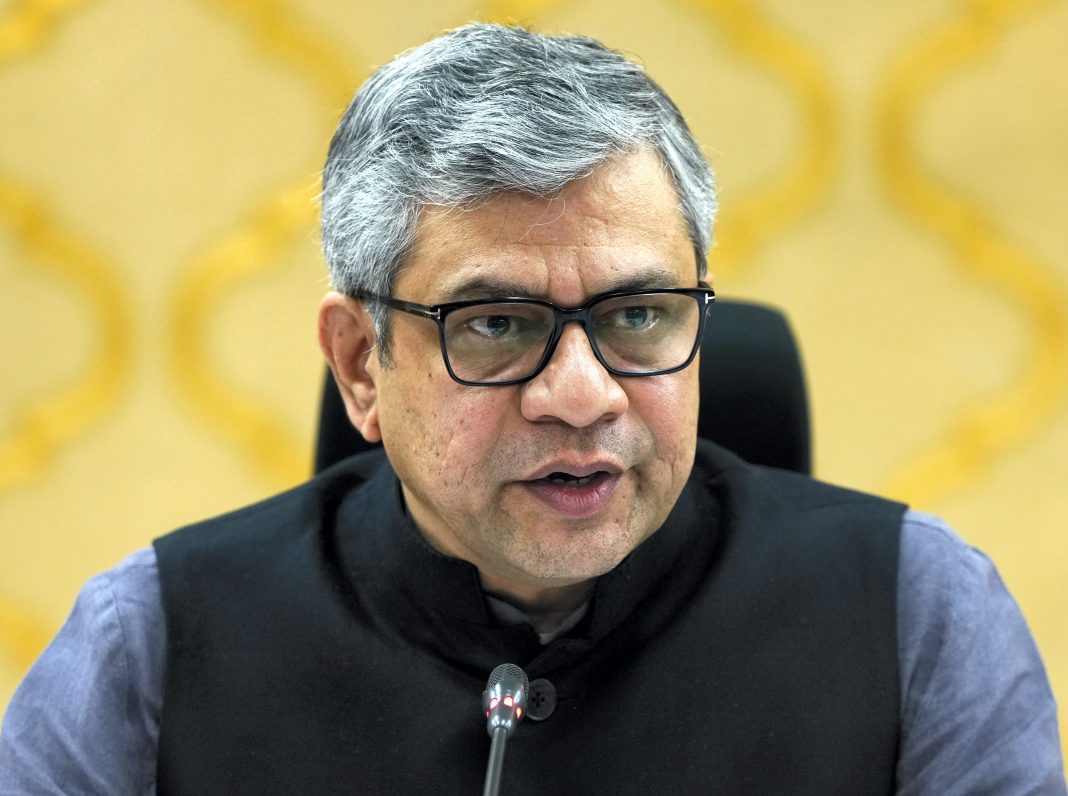

New Delhi, Dec 17: The tough provisions of India’s nuclear liability laws led to “silent phobia” among industry, prompting the government to bring a new comprehensive bill to address their concerns and open up the atomic energy sector for private participation, Union Minister Jitendra Singh said on Wednesday.
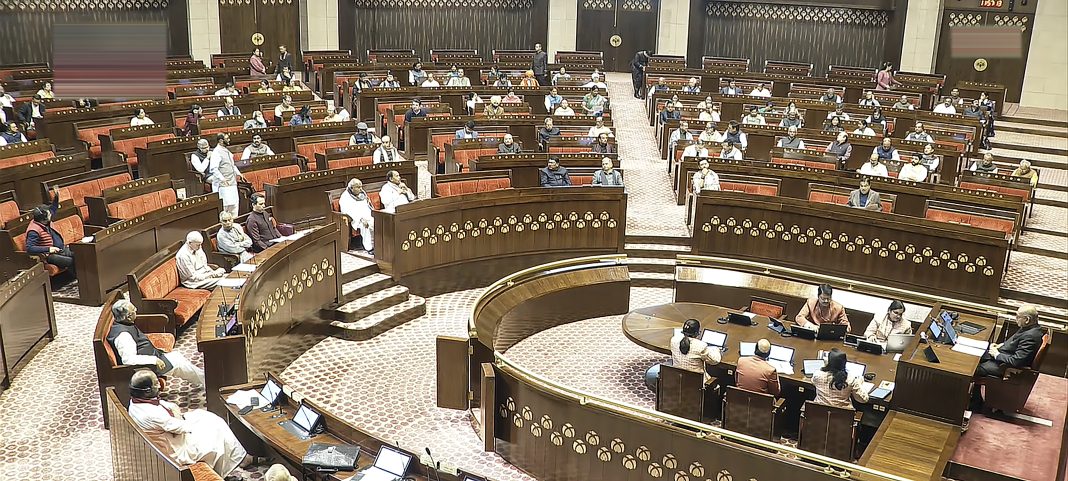
Singh was replying to a discussion in the Lok Sabha that passed the Sustainable Harnessing and Advancement of Nuclear Energy for Transforming India (SHANTI) Bill by a voice vote amid a walk out by the opposition.
The opposition contended that the government was putting citizens in harm by allowing suppliers of nuclear equipment to escape the liability net in case of a nuclear accident.
“The government will deal only with the operator, it is upon the operator to deal with the supplier,” Singh, the Minister of State in the PMO, who oversees the Department of Atomic Energy, told the Lok Sabha.
He said the operator liability has been rationalised through graded caps linked to reactor size to encourage newer technologies such as small modular reactors.
The minister said the bill seeks to ensure full compensation to affected persons through a multi-layered mechanism.
“This includes operator liability, a proposed Nuclear Liability Fund backed by the government, and additional international compensation through India’s participation in the Convention on Supplementary Compensation,” Singh said.
The minister said “supplier” was a very wide definition under the CLND law which prevented suppliers from participating in India’s civil nuclear sector.
“Everybody was hesitant to come forward. This became an unending chain resulting in a silent phobia among suppliers and we lost out on collaboration for the last 10 years,” Singh said.
The minister said the Bill seeks to modernise India’s nuclear framework in line with contemporary technological, economic and energy realities, while retaining and strengthening core safety, security and regulatory safeguards that have been in place since the Atomic Energy Act of 1962
The minister termed the bill a “milestone legislation” that will give a new direction to the country’s developmental journey.
“India’s role in geopolitics is increasing. If we have to be a global player, we have to follow global benchmarks and global strategies. The world is moving towards clean energy. We too have set a target of 100 GW of nuclear energy capacity by 2047,” Singh said.
He said the bill was necessary to address India’s growing energy needs and increase the share of nuclear power up to 10 per cent of the energy mix.
Opposition Congress flagged concerns related to several provisions of the bill and urged the government to refer it to a parliamentary committee for a threadbare examination.
Congress member Manish Tewari opposed the bill, contending that the omitting the clause removing liability on suppliers of nuclear equipment would prove to be harmful for India in case of a nuclear incident.
He opposed the provisions in the bill for the repeal of the Atomic Energy Act of 1962 and the Civil Liability for Nuclear Damage Act of 2010.
The minister argued that the SHANTI Bill was not a new legislation, but comprised modifications to the two laws – Atomic Energy Act of 1992 and Civil Liability for Nuclear Damage Act of 2010.
“Most parts of the bill were already in existence,” Singh said.
The minister said the SHANTI Bill also seeks to grant statutory status to the Atomic Energy Regulatory Board, the sectoral regulator, which was set up under an executive order.
Singh said that safety norms, security controls over fissile material, spent fuel and heavy water, and periodic inspections remain firmly under government oversight, regardless of private participation.
The minister said the bill also seeks to set up an Atomic Energy Redressal Council for settling disputes without having to go to court. (PTI)