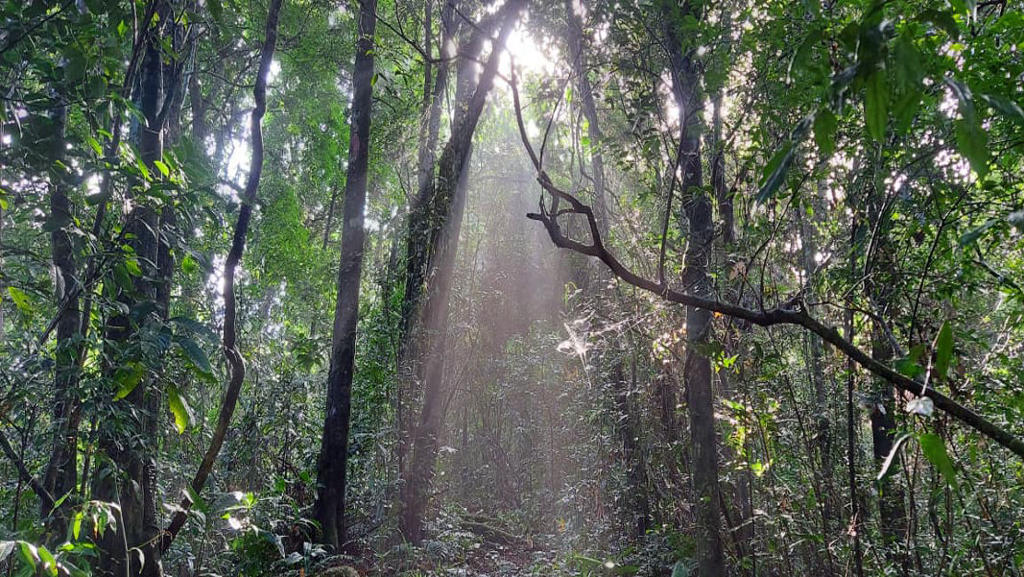

Narpuh Wildlife Sanctuary faces challenges from limestone mining, cement factories, blasting, and pollution in surrounding areas, says researchers
Guwahati, Dec 17: Tucked away in the limestone-rich hills of East Jaintia Hills district, the Narpuh Wildlife Sanctuary—Meghalaya’s only protected area in the Jaintia Hills—has emerged as one of the state’s most ecologically significant yet scientifically under-studied forests, according to a new research chapter published in Biodiversity of the Himalaya, Volume 2.
Authored by Dr. R. Eugene Lamare, Niraj Kakati, and Gautam Talukdar of the Wildlife Institute of India (WII), Dehradun, the study presents the most comprehensive assessment so far of the sanctuary’s biodiversity, conservation challenges, and untapped ecological and livelihood potential.
Declared a wildlife sanctuary in 2014, Narpuh spans 59.9 sq km and represents the last remaining pristine forest landscape in the entire Jaintia Hills. The authors describe it as a critical refuge for endangered and threatened species, including the Hoolock gibbon, India’s only ape species, along with clouded leopards, Himalayan black bears, hornbills, and several rare reptiles, amphibians, and fish species.
“Narpuh is not just another protected area—it is a biological storehouse for Meghalaya and the eastern Himalaya,” the authors note, stressing that its forests hold immense value at both national and global conservation levels.
Despite its legal protection, the study flags intense external pressure on Narpuh, particularly from limestone mining, cement factories, blasting, and pollution in surrounding areas. East Jaintia Hills hosts more than 10 cement plants, and the authors warn that mining-induced vibrations, air pollution, and water contamination—especially in rivers like the Lukha, notorious for turning blue in winter—pose long-term risks to wildlife and local communities alike.
The chapter also highlights threats such as bushmeat hunting, road kills along National Highway-6, illegal wildlife trade, and shortage of forest staff and funding, painting a sobering picture of conservation on the ground.
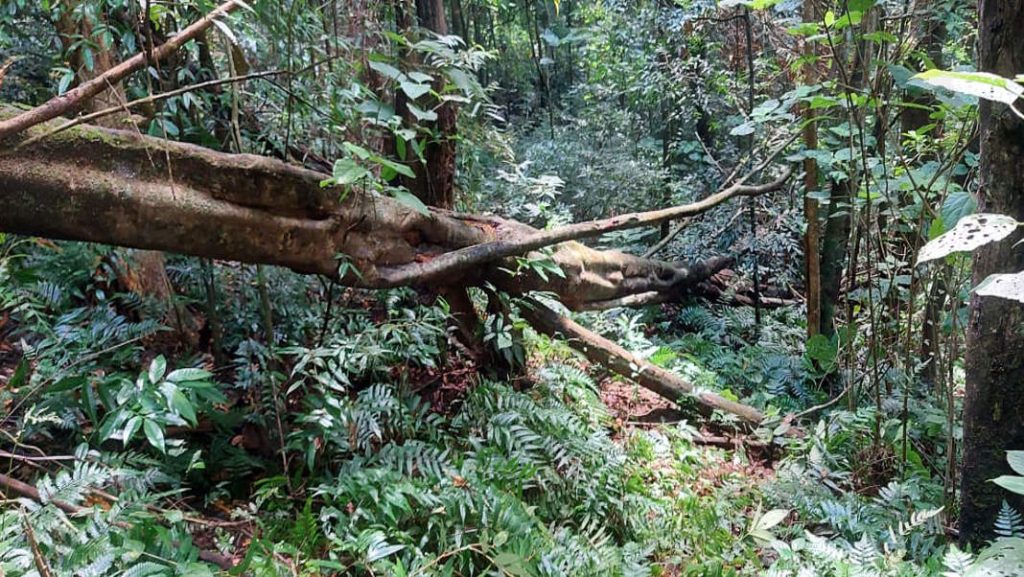
A key insight of the research is the crucial role of local communities, particularly the Pnar villages surrounding the sanctuary. While people depend on the forest for clean drinking water, wild edibles, medicinal plants, and firewood, tensions persist over the Eco-Sensitive Zone (ESZ) notified in 2017, which covers 197.23 sq km and overlaps with privately and community-owned land.
The authors argue that conservation will succeed only if local institutions, Dorbar Elakas, and villagers are meaningfully involved in decision-making, rather than treated as external stakeholders.
Perhaps most striking is the authors’ conclusion that systematic scientific research in Narpuh remains extremely limited, despite early surveys documenting over 60 mammal species, 70 fish species, and rich bird and butterfly diversity. Recent studies also indicate high carbon stock and biomass, underlining Narpuh’s role in climate regulation.
The chapter calls Narpuh a “goldmine for future ecological research”, urging the Meghalaya government to initiate long-term biodiversity monitoring, strengthen protection infrastructure, and conduct a Management Effectiveness Evaluation (MEE)—a process yet to be undertaken for the sanctuary.
As Meghalaya continues to lose forest cover, the authors warn that safeguarding Narpuh is no longer optional. Beyond wildlife, the sanctuary supports water security, soil stability, carbon sequestration, and eco-tourism potential, offering sustainable economic opportunities if managed wisely.