
By Dipak Kurmi
With the Maoist movement now largely dismantled and the country breathing easier after decades of internal security anxiety, it is both timely and necessary to acknowledge the police forces that bore the brunt of this prolonged conflict. For years, the battle against Left Wing Extremism unfolded far from television studios and urban consciousness, deep inside forests, hilly terrain, and remote tribal belts stretching across what came to be known as the Red Corridor. Spanning 126 districts from West Bengal to Kerala and cutting through Odisha, Andhra Pradesh, Telangana, Maharashtra, Madhya Pradesh and Karnataka, this arc of violence demanded extraordinary endurance from those tasked with restoring law and order. More than a thousand personnel of the state police and Central Armed Police Forces sacrificed their lives in this struggle, steadily shrinking the number of “most affected” districts to just three. Their contribution, often unacknowledged, represents one of the most sustained internal security efforts in independent India.
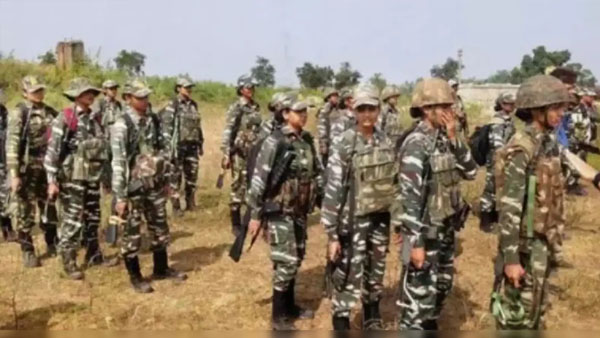
What remains less visible to the public is the pivotal role played by elite police units, specially raised, trained and deployed to counter Maoists, insurgents, terrorists and other anti-national elements. These forces operate in conditions of extreme physical hardship and constant mortal danger, driven by a blend of patriotism, discipline and a quiet fascination with the risks inherent in their calling. Their journey begins with punishing training regimes designed to test endurance, mental resilience and tactical adaptability. Yet training is only a prelude. Once inducted, their lives become an unbroken cycle of intelligence gathering, jungle warfare, ambushes, counter-ambushes and prolonged operations that stretch human limits. Many of them have paid the ultimate price, laying down their lives in defence of the nation’s unity and integrity, far from the public gaze.
Among these elite formations, the Commando Battalion for Resolute Action, better known as COBRA, stands as a cornerstone of India’s counter-Maoist architecture. Raised in 2008 under the leadership of then Inspector General K. Durga Prasad, COBRA was conceived as a specialised force within the Central Reserve Police Force to take the fight deep into Maoist strongholds. Over time, its operational footprint expanded beyond traditional Left Wing Extremism theatres to states like Assam and even to sensitive deployments in Jammu and Kashmir during the Amarnath Yatra in 2023. Personnel selected from CRPF battalions undergo a gruelling twelve-week pre-induction course at the COBRA School of Jungle Warfare and Tactics in Belagavi, where only the most capable are retained for a three-year tenure. The record of this force speaks for itself. From killing top Maoist leader Kishenji in West Bengal’s Jhargram district in 2011 to conducting over 32,500 operations since inception, COBRA has neutralised hundreds of Maoists, facilitated thousands of arrests and surrenders, and recovered massive caches of weapons, ammunition and explosives. The cost has been high, with 71 personnel making the supreme sacrifice, but their bravery has been recognised through an extraordinary number of gallantry awards.
Parallel to COBRA’s efforts, state-level elite units have played decisive roles in turning the tide against Maoism. The Jharkhand Jaguars, initially raised as a Special Task Force in 2008 and later rechristened, emerged as a formidable force in one of the most Maoist-affected states. Drawn from the India Reserve Battalion, Jharkhand Armed Police and civil police, this force grew into a 4,022-strong formation organised into forty assault groups. Initially operating alongside COBRA battalions, the Jaguars gradually acquired the experience and confidence to conduct independent operations. Equipped with modern assault rifles, mortars, grenade launchers and rocket launchers, and supported by trained canines, they became a critical instrument in dismantling Maoist networks. Their sacrifices, including the loss of 21 commandos over fourteen years, underscore the dangers of this fight, while their gallantry medals reflect sustained courage in hostile terrain.
If any force has acquired near-mythical status in India’s counter-insurgency history, it is the Greyhounds of Andhra Pradesh and Telangana. Raised in 1989 by IPS officer K. S. Vyas, the Greyhounds perfected a doctrine of small-team jungle warfare supported by precise intelligence. Their ability to live off the land, move silently through forests and strike Maoist groups relentlessly made them deeply feared by insurgents. The intellectual architect of their training, Narayan Singh Bhati, drew upon his vast experience in jungle warfare to design a regime that tested physical endurance and psychological resolve to the extreme. Between 1995 and 2016, Andhra Pradesh Police neutralised nearly 1,800 Maoists, with Greyhounds accounting for the overwhelming majority of these successes. The price, however, was heavy, including the loss of 163 personnel. Stories of heroism, such as that of Assault Commander Karnam Leela Venkat Srihari Naga Varaprasad Babu, who earned the Ashok Chakra for sacrificing his life to save comrades, exemplify the ethos of this force. Equally tragic was the 2008 Sileru river attack, where 32 Greyhounds lost their lives in a single operation, a reminder of the ever-present risks they face.
In Kerala, the Thunderbolts commandos represent a relatively newer but highly effective response to Maoist attempts at expansion. Raised in 2014, these commandos undergo an exceptionally long training cycle, including stints at specialised Army institutions. While their initial mandate focused on anti-Maoist operations, their role has since expanded to include high-level security duties and urban counter-terror readiness under the Avengers designation. Their successful elimination of Maoist Central Committee member Kuppu Devraj in 2016 and sustained operations in Wayanad and Nilambur forests prevented the insurgents from gaining a foothold in the state. Their presence has ensured that Maoist ambitions in Kerala remain contained and fragmented.
Maharashtra’s C-60 unit offers another compelling example of localised excellence in counter-insurgency. Conceived in 1990 by IPS officer K. P. Raghuvanshi to address the Maoist threat in Gadchiroli, this force capitalised on intimate knowledge of terrain and local language. Trained by Greyhounds and other specialised institutions, C-60 commandos combined kinetic operations with psychological outreach, persuading hundreds of Maoists to surrender through family channels. Their operational successes culminated in the 2021 encounter that eliminated 26 Maoists, including top leader Milind Teltumbde, effectively crippling the movement in Maharashtra. Regular recognition through gallantry awards reflects their sustained effectiveness and courage.
Beyond Maoism, elite police units have been indispensable in combating terrorism, particularly in Jammu and Kashmir. The Special Operations Group of the Jammu and Kashmir Police, raised in 1994, transformed the counter-terror landscape by giving operations a local face. Under leaders like Farooq Khan, the SOG revitalised a demoralised police force by equipping and incentivising local youth to confront militancy. Their coordination with the Army and CAPFs has been exemplary, contributing significantly to the reduction of militancy levels in the Valley. Thousands of gallantry awards testify to their bravery in urban and rural operations alike.
Similarly, Odisha’s Special Operations Group, often called the Kalinga Tuskers, played a decisive role in dismantling Maoist networks in the state. Raised in 2004 and modelled on the Greyhounds, this force relentlessly pursued insurgents, forcing mass surrenders and restoring near-normalcy. Their sacrifices, including the loss of 93 police personnel over two decades, underline the human cost of success. The Ashok Chakra awarded posthumously to Assistant Commandant Pramod Kumar Satpathy and subsequent gallantry awards to other commandos reflect extraordinary courage in the face of overwhelming odds.
Taken together, the story of India’s elite police forces is one of quiet resolve and sustained sacrifice. Operating away from public attention, supported by regular police forces and CAPFs, these commandos formed the backbone of India’s internal security response during one of its most challenging periods. Their contribution extends beyond tactical victories. By restoring state authority in remote regions, they enabled development, governance and democratic participation to take root. As the Maoist threat recedes into history, the nation owes these guardians in the shadows not only remembrance but enduring respect, for their service has safeguarded the Republic in ways that headlines rarely capture.
(the writer can be reached at dipakkurmiglpltd@gmail.com)