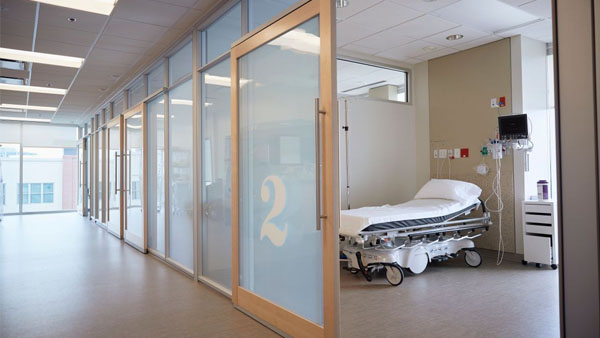

New Delhi, Dec 28 : As India’s healthcare system buckles under a non-communicable diseases (NCDs) epidemic, experts advocated setting up of “micro-hospitals” which they claimed can curb India’s deaths due to NCDs by replacing fragmented tertiary models with specialist-led coordinated care and reduced wait times.
WHO data reveals that NCDs account for an estimated 63 per cent of all deaths in India, they said.
Hospital bed density lags at just 0.55 per 1,000 population — far below the WHO’s 3 per 1,000 benchmarks — leading to overcrowded facilities, long wait times, and variability in care quality.
Experts said that despite India’s world-class technology and infrastructure, the healthcare system is marred by a massive “middle-layer gap” (micro-hospitals) between primary clinics and overcrowded 500-bed hospitals, leading to fragmented care and a growing trust deficit between doctors and patients.
Addressing the HEAL OneHealth Connect Series — a health talk organised to nurture a culture of wellness and preventive care — Dr Jagdish Prasad, former Director General Health Services (DGHS), Union health ministry said, “India has the doctors and the technology, but what we truly lack is continuous, coordinated care.”
And large tertiary hospitals are often designed for acute crises, not the long-term, community-centred management that NCDs require, he explained.
“Micro-hospitals represent a necessary structural correction, bringing consultations, diagnostics and follow-ups under one roof to restore the lost trust between patients and providers,” he said.
The micro-hospital model is emerging as a new blueprint designed to bridge the accessibility and quality gap, experts said.
Unlike smaller nursing homes, micro-hospitals are purpose-built, specialist-led facilities that offer 360-degree care — from advanced diagnostics to surgical interventions — closer to residential communities.
This prevents the ‘patient shuffling’ that typically occurs when patients are forced to navigate multiple laboratories and clinics for a single diagnosis.
Dr Mohsin Wali, Senior Consultant, Medicine, Sir Ganga Ram Hospital, noted the psychological toll of the current system. “Patients today are overwhelmed by the scale and cold complexity of large hospitals. Micro-hospitals bring back the essentials — time, communication, and coordination — ensuring that care is not just delivered efficiently but experienced meaningfully.”
Dr Swadeep Srivastava, Co-founder and President of Pacific OneHealth said, “The future of healthcare is not about building bigger hospitals; it is about building better-aligned systems. Micro-hospitals are not smaller versions of big hospitals — they are a new philosophy of ‘healthcare as it should be’, designed around the family, the community, and long-term health outcomes.”
The HEAL OneHealth Connect Series was organised by Pacific OneHealth in partnership with the HEAL Foundation here this week.
Dr Aijaz Ilmi, consultant physician-metabolic diseases, Delhi, said that many lifestyle diseases develop silently and by the time a patient reaches a tertiary hospital, the damage is often irreversible.
“We need this micro-hospital framework to capture patients in the early stages and provide specialised intervention before it becomes a life-threatening emergency,” Ilmi said.
Seema Wilson, General Manager, Patient Care Experience, Pacific OneHealth, said, “Shorter wait times, clear communication, and personalised care pathways reduce anxiety and improve adherence.
“Micro-hospitals are not smaller hospitals — they are purpose-built around patients and communities, reducing fragmentation and improving access to specialists.” (PTI)