
By Satyabrat Borah
As the world welcomed 2026, the protracted conflict between Russia and Ukraine showed no signs of abating, instead plunging into a phase of heightened tension that threatens to undo fragile diplomatic progress. On New Year’s Eve and into the first days of January, both Moscow and Kyiv exchanged devastating blows, targeting infrastructure and, according to mutual accusations, civilian gatherings. Russia launched over two hundred attack drones across Ukraine, primarily striking energy facilities in seven regions, leaving millions vulnerable to blackouts during the harsh winter. Ukrainian President Volodymyr Zelenskyy described this as Russia deliberately carrying the war into the new year, underscoring the deliberate nature of assaults on power grids that have become a hallmark of Moscow’s strategy. In retaliation, or perhaps preemptively, Ukraine conducted long-range drone strikes on Russian oil depots, refineries, and terminals, including facilities north of Moscow and in the southern Krasnodar region, aiming to disrupt the economic lifeline fueling Russia’s war machine.
Russian authorities claimed a Ukrainian drone attack on a hotel and cafe in the occupied village of Khorly in Kherson region killed dozens of civilians celebrating the New Year, including children, labeling it a terrorist act. Ukrainian officials have consistently denied targeting civilians, insisting their operations focus on military and energy targets, though the fog of war makes independent verification challenging. These reciprocal strikes illustrate a dangerous spiral: each side justifies escalation as a response to the other’s aggression, eroding any remaining trust and complicating efforts to halt the bloodshed. The timing is particularly perilous, coming amid intensive diplomatic maneuvering overseen by the United States under President Donald Trump, who has positioned himself as a mediator capable of brokering an end to the nearly four-year war.
The conflict, now entering its fifth calendar year, has already claimed hundreds of thousands of lives, displaced millions, and ravaged economies on both sides. Russia’s full-scale invasion in February 2022, building on the annexation of Crimea in 2014 and support for separatists in Donbas, aimed initially at rapid regime change in Kyiv. Instead, it bogged down into a grinding war of attrition, with Russian forces making incremental gains in the east at enormous human cost. Estimates from Ukrainian sources suggest Russia suffered over four hundred thousand casualties in 2025 alone for territorial advances amounting to less than one percent of Ukraine’s landmass. Yet Moscow continues to press forward, with orders reportedly issued to seize remaining parts of Zaporizhzhia and consolidate control in Donetsk. Ukrainian forces, bolstered by Western aid, have held firm in many areas, launching counteroffensives and deep strikes into Russian territory to disrupt logistics and morale.
This latest wave of attacks underscores the precarious balance. Ukraine’s drone campaigns against Russian energy infrastructure mirror Russia’s tactics against Ukrainian power plants, creating a cycle of retaliation that inflicts suffering primarily on civilians. In Ukraine, repeated strikes on the grid have left cities in darkness and cold, forcing rationing and emergency measures. In Russia, though less publicized, disruptions to oil facilities could strain the Kremlin’s budget, reliant on hydrocarbon exports to fund the war. Both nations accuse the other of war crimes, with international observers noting patterns of indiscriminate or disproportionate attacks. The New Year’s incidents in Khorly and across Ukrainian regions highlight how escalation blurs lines between military necessity and deliberate terror, further alienating populations and hardening positions.
Diplomatically, the landscape shifted dramatically with Trump’s reelection and his administration’s active involvement. Recent talks, including a meeting between Zelenskyy and Trump in Florida, yielded promises of U.S. participation in post-war security guarantees for Ukraine—a significant concession that raised hopes for a breakthrough. Zelenskyy has spoken of a peace deal being “ninety percent ready,” with remaining hurdles centered on territorial issues, neutrality, and enforcement mechanisms. Multilateral efforts involve European leaders, with meetings scheduled in early January: national security advisors convening in Kyiv on January 3, followed by a leaders’ summit in France on January 6. These gatherings aim to align on security commitments and deconfliction measures to prevent the war’s resurgence.
Yet optimism is tempered by skepticism. Russian officials, including Foreign Minister Sergey Lavrov, have signaled a review of negotiating positions, while Putin has emphasized military objectives over compromise. Claims of Ukrainian attempts to target presidential sites, though disputed and lacking corroboration from Western intelligence, serve as pretexts for continued aggression. Ukrainian troops on the front lines, as reported from positions in Donetsk, express doubt that 2026 will bring peace, viewing survival as the immediate goal amid Russian advances. The war’s prolongation has exhausted both sides: Russia grapples with manpower shortages despite aggressive recruitment, while Ukraine faces ammunition constraints and fatigue.
The dangers of this turn cannot be overstated. Escalation risks broadening the conflict, drawing in NATO allies more directly or prompting desperate measures like further sabotage or even nuclear saber-rattling, though the latter remains rhetorical thus far. Economically, prolonged fighting drains resources, with Russia’s sanctions-hit economy showing strains and Ukraine dependent on foreign aid for reconstruction. Globally, the war disrupts food and energy markets, exacerbating inflation and hunger in vulnerable regions. Politically, it polarizes international alliances, with the Global South increasingly frustrated by the impasse.
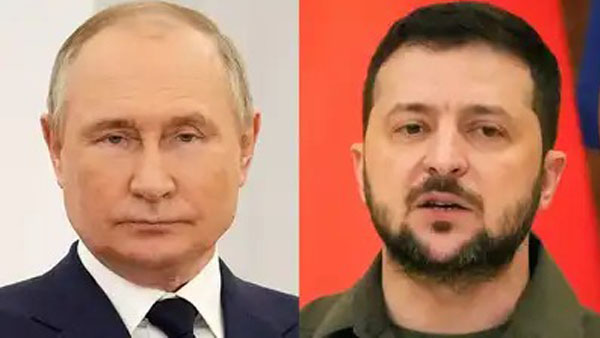
Moscow and Kyiv must recognize that continued escalation serves neither’s long-term interests. Russia, despite battlefield gains, faces unsustainable losses and isolation; pursuing total victory could precipitate domestic unrest or economic collapse. Ukraine, resilient and innovative in asymmetric warfare, cannot indefinitely withstand attrition without decisive support. Both leaders Putin and Zelenskyy bear responsibility for de-escalating. Immediate steps could include mutual restraints on strikes against energy infrastructure, confidence-building measures like prisoner exchanges, and good-faith participation in upcoming talks.
A viable path to peace exists, building on frameworks discussed in U.S.-brokered negotiations. This might involve a demilitarized zone with reciprocal pullbacks, international monitoring, phased territorial resolutions respecting Ukraine’s sovereignty while addressing Russia’s security concerns (short of legitimizing annexation), and robust guarantees,potentially including U.S. and European forces,to deter future aggression. Neutrality for Ukraine could be explored, balanced by integration into European structures. Reconstruction aid, tied to reforms, could incentivize compromise.
The human toll demands urgency. Families shattered, cities ruined, futures stolen ,the war’s legacy will haunt generations. As diplomatic windows open in January, both sides should seize the opportunity to step back from the brink. Moscow must acknowledge that conquest breeds endless resistance; Kyiv, that pragmatic concessions may secure lasting independence. The international community, led by the U.S. and Europe, should press for enforceable agreements, offering carrots and sticks to compel progress. Failure risks not just continued devastation in Ukraine but a more unstable world order.
In this dangerous moment, leadership requires courage to choose peace over pride. The attacks of early 2026 serve as a grim reminder: escalation begets only more suffering. It is time for Moscow and Kyiv to prioritize dialogue, restraint, and compromise, forging a settlement that ends the killing and allows healing to begin. The alternative ,a deeper abyss,is unthinkable.