
By Dipak Kurmi
The first day of 2026 invites the familiar ritual of hope, the collective belief that the year ahead will be more humane, more prosperous and less violent than the one that has just receded into memory. Yet history teaches that hope untethered from understanding is fragile. To read the future clearly, one must interrogate the past and act decisively in the present. The year 2025, now behind us, was not merely another chapter in the post-pandemic global recovery; it was a year that fundamentally reshaped economic assumptions. The dominant global theme was unmistakably the economy, and at its centre stood the United States, whose inward turn under President Donald Trump’s second term sent shockwaves across markets, supply chains and strategic alignments. Tariffs emerged as the defining policy instrument of the year, transforming the global economy into a casualty of aggressive protectionism and unsettling the very foundations of post-war economic cooperation.
Trump’s approach marked a sharp reset of America’s economic relationships with the world. In 2025, tariffs were no longer tactical tools but strategic weapons, wielded with sweeping ambition and little regard for long-standing partnerships. Countries that had once been viewed as indispensable allies found themselves abruptly reclassified as competitors or bargaining chips. India, long considered a natural partner of the United States in balancing China’s rise, discovered that strategic utility could be ephemeral in the face of domestic political calculus in Washington. As tariffs of up to 50 per cent were imposed, India joined Brazil among the most heavily affected economies. The message from the White House was unambiguous: trade would be subordinated to national advantage, and multilateralism would give way to transactionalism.
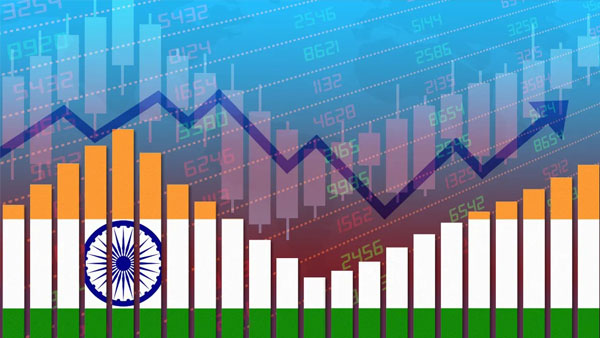
Yet for India, 2025 will be remembered not only for the external headwinds it faced but also for the resilience it displayed in navigating them. Against expectations of severe disruption, the Indian economy demonstrated an ability to absorb shocks without losing momentum. Even as global uncertainty deepened, India retained its position as the fastest-growing major economy in the world. In a symbolic and substantive milestone, it overtook Japan to become the world’s fourth-largest economy, ranking behind only the United States, China and Germany. This ascent was not the result of a singular reform or extraordinary windfall, but rather the cumulative outcome of demographic strength, domestic demand, and policy adaptability honed over the past decade.
The year was, however, far from unblemished. Indian exports to the United States contracted sharply under the weight of punitive tariffs, undermining sectors that had previously relied on the American market as a stable destination. The global investment climate, already cautious, grew more reticent as foreign capital inflows slowed, exerting pressure on equity markets and the national currency. The rupee touched a historic low of 90.74 against the US dollar, a moment that captured the vulnerability of emerging market currencies in an era of aggressive dollar-centric policy. Although the currency later recovered part of its losses, the episode underscored the delicate balance India must maintain between global integration and macroeconomic stability.
What distinguished India’s performance in 2025 was its capacity to fight back through pragmatic choices rather than rhetorical defiance. Access to cheaper Russian oil, secured despite geopolitical complexities, played a crucial role in containing inflation. At a time when many economies grappled with persistent price pressures, India managed to keep inflation near historic lows, shielding its poorest citizens from the harshest effects of global volatility. This buffer proved invaluable in sustaining consumption and social stability. Simultaneously, the government undertook significant restructuring of income tax slabs and Goods and Services Tax rates, aiming to simplify compliance and expand the tax base. These measures, though technical in nature, had a tangible impact, as domestic consumption surged during the festive season, reinforcing growth from within even as external demand weakened.
Beyond these headline measures, the Modi government pursued a series of smaller, often underappreciated policy adjustments that may, in retrospect, define the long-term trajectory of the Indian economy. The redefinition of “small companies” to include firms with turnovers of up to Rs 100 crore extended regulatory relief and incentives to thousands of enterprises that form the backbone of employment and innovation. The implementation of the long-awaited Direct Labour Code, achieved by merging 29 labour laws, sought to rationalise a notoriously complex regulatory environment and improve labour mobility without undermining worker protections. Allowing 100 per cent foreign direct investment in the insurance sector signalled a willingness to open capital-intensive domains to global participation, while sustained efforts to nudge states towards improving Ease of Doing Business reflected a recognition that economic reform in India must be both centralised and federal in character.
In parallel, India moved decisively to recalibrate its external economic engagements. Recognising the risks of overdependence on a single market, New Delhi accelerated efforts to diversify its trade partnerships. Trade agreements were inked with New Zealand, Oman and Britain, while free trade agreements with the European Free Trade Association were operationalised. These moves did not generate the drama associated with landmark liberalisation episodes of the past, yet they quietly expanded India’s access to alternative markets and reduced its exposure to American protectionism. Equally significant was the decision to open the nuclear power sector to private participation, a step aimed at meeting rising energy demand while advancing clean and reliable power generation. In an era of climate constraints and energy insecurity, this reform holds strategic importance well beyond its immediate economic impact.
The broader lesson of 2025 lies in the changing nature of global competition. The Trump era has not only been marked by protectionist trade policies but also by the rapid maturation of artificial intelligence and automation. The traditional model of growth based on cost arbitrage, cheap labour and export-led manufacturing is losing viability. For countries like India, this transition presents both a challenge and an opportunity. Competing in this new environment requires a shift towards productivity, skills, innovation and quality. Industry must become globally competitive not by being the cheapest, but by being the most reliable, adaptive and technologically capable. Citizens, too, must invest in education and lifelong learning to remain relevant in an economy where human capital is increasingly augmented by machines.
As India steps into 2026, the experience of the past year offers cautious optimism. The government’s responses to economic adversity were measured rather than reactionary, grounded in realism rather than nostalgia for a vanishing global order. Yet sustaining momentum will demand consistency, deeper structural reforms and an unwavering commitment to openness in a world that is becoming more insular. The resilience displayed in 2025 should not breed complacency, for the external environment remains uncertain and the global economy fragmented.
The year ahead will test whether India can convert resilience into leadership, whether it can shape rather than merely survive the new rules of global economics. If 2025 demonstrated that India can withstand the pressures of a whimsical superpower and an unsettled world, 2026 must be the year it proves that endurance can be transformed into enduring advantage.
(the writer can be reached at dipakkurmiglpltd@gmail.com)