
By Satyabrat Borah
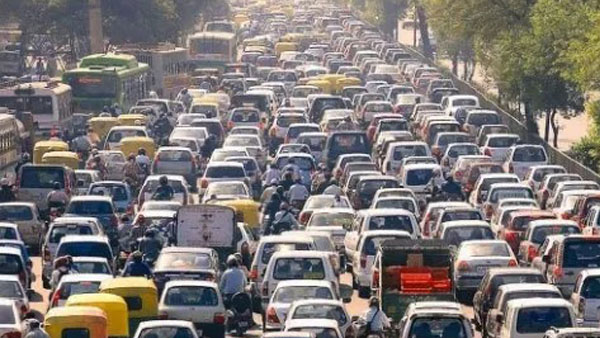
Traffic congestion in Guwahati has evolved from an occasional inconvenience into a persistent daily ordeal that affects nearly every resident of the city. As the largest urban center in Northeast India and the capital of Assam, Guwahati serves as a major commercial, educational, and administrative hub, drawing people from across the region and beyond. This rapid growth, however, has overwhelmed the city’s infrastructure, particularly its road network, leading to severe and frequent traffic jams that disrupt commutes, increase pollution, raise economic costs, and diminish the overall quality of life. What was once manageable now feels like a chronic problem, with commuters spending hours stuck in gridlock on major routes, side streets, and even newly constructed flyovers.
The roots of this crisis lie in the explosive increase in the number of vehicles on Guwahati’s roads. The city has seen a dramatic surge in vehicle registrations over the past decade, with figures approaching or even nearing the total population in some estimates. Around 13 lakh vehicles were registered in the city by recent counts, including a high proportion of two-wheelers and private cars. This growth stems from rising incomes, easier access to financing, urbanization, and the limited availability of reliable public transport alternatives. Every year, thousands of new vehicles join the roads, adding pressure to an already strained system. The population of Guwahati has also expanded significantly, with the metropolitan area projected to reach well over 20 lakh in the coming years according to various planning documents. This demographic shift has concentrated more people and economic activity in a relatively compact urban space, where narrow roads, unplanned development, and geographical constraints limit expansion possibilities.
Geographically, Guwahati faces unique challenges that exacerbate congestion. Nestled along the southern bank of the Brahmaputra River, the city is bordered by hills to the south, restricting outward growth in certain directions. Many older parts of the city feature winding, narrow lanes originally designed for much lower traffic volumes. Major arterial roads like GS Road, Assam Trunk Road, and sections of NH-37 bear the brunt of daily movement, connecting residential areas, markets, offices, educational institutions, and transport hubs. These corridors often become bottlenecks during peak hours, with vehicles crawling at speeds far below acceptable levels. Commercial zones such as Fancy Bazar, Paltan Bazar, and Ganeshguri see intense activity from shoppers, vendors, and delivery services, while areas near educational institutions like Gauhati University experience heavy student commuting. The influx of inter-state vehicles, goods carriers, and tourists further compounds the issue, especially on highways passing through or near the city.
Poor traffic management and enforcement contribute significantly to the worsening situation. Violations such as illegal parking, wrong-side driving, and haphazard stopping by public transport vehicles are common, often turning intersections into chaos. On-street parking in busy markets reduces effective road width, forcing vehicles into single-file movement. Heavy vehicles and slow-moving e-rickshaws sometimes occupy lanes meant for faster traffic, creating additional delays. During festivals, events, or high-profile visits, such as security drills or concerts, temporary restrictions and diversions lead to sudden snarls in unexpected areas. Recent reports highlight gridlocks in places like Chhatribari, Athgaon, Fatasil, Ulubari, and near Maligaon flyover due to breakdowns, unannounced exercises, or festive rushes. Even New Year celebrations or major events at venues like Barsapara Stadium trigger widespread restrictions that spill over into normal traffic flow.
Construction activities, intended as long-term solutions, ironically add to short-term misery. Guwahati has witnessed a flurry of infrastructure projects in recent years, including multiple flyovers at locations such as Noonmati-Ambari, Jalukbari, Six Mile, and Bharalumukh. These structures aim to separate conflicting traffic streams and reduce surface-level congestion. However, ongoing construction disrupts traffic for extended periods, with narrowed lanes, diversions, and heavy machinery blocking paths. Commuters often find themselves stuck beneath or beside half-built flyovers, where the promise of relief feels distant amid the dust and delays. Some completed flyovers, like those at Jalukbari or Six Mile, have not delivered expected improvements because of inadequate enforcement, makeshift bus stands underneath, or induced demand where more vehicles simply shift to the new route until it too clogs.
Environmental and health impacts compound the frustration of traffic jams. Prolonged idling in congestion leads to higher fuel consumption and elevated emissions, worsening air quality in an already polluted urban environment. Noise from honking horns and engines creates constant stress, while exposure to fumes increases respiratory issues among residents. Time lost in traffic translates to lost productivity, with professionals, students, and business owners arriving late or exhausted. Economic estimates suggest significant daily losses from wasted hours, though precise figures for Guwahati vary. For many families, the daily commute becomes a source of anxiety, with parents worrying about children stuck on school buses or workers fearing missed deadlines.
Public transport inadequacies play a central role in perpetuating private vehicle dependency. Despite efforts to introduce CNG and electric buses under smart city initiatives, the fleet remains insufficient for the city’s needs. Commuters often complain of overcrowded, irregular services, uncomfortable conditions, and limited coverage in peripheral areas. Without a robust, attractive alternative, more people opt for personal vehicles, feeding the vicious cycle of congestion. Intermediate options like auto-rickshaws and e-rickshaws help in short distances but add to disorder when unregulated.
The government and authorities have recognized the severity of the problem and initiated several measures. Guwahati Smart City Limited has pursued projects like the Integrated Traffic Management System, involving intelligent traffic signals, CCTV surveillance, and adaptive controls to optimize flow. A more advanced Intelligent City Surveillance System is underway to enhance monitoring, enforce rules, and manage crowds. Traffic police deploy personnel at key points, issue e-challans for violations, and coordinate during events. Infrastructure pushes include flyover completions, road widenings, junction redesigns, and grade separators. Recent announcements highlight progress on projects like the Noonmati-Ambari flyover nearing opening and alternative routes bypassing congested stretches, such as a new short road linking areas near Dibrugarh University to reduce reliance on NH-37. Broader regional initiatives, like elevated corridors elsewhere in Assam, aim to divert through-traffic and ease pressure on urban networks.
Despite these steps, challenges persist in implementation and coordination. Projects face delays due to funding, land acquisition, or environmental clearances. Public skepticism remains high, with many viewing flyovers as temporary fixes that induce more vehicle use rather than addressing root causes. Experts argue for a multimodal approach emphasizing public transport expansion, non-motorized facilities like cycle lanes and pedestrian paths, stricter parking regulations, and better urban planning to discourage unnecessary trips. Promoting carpooling, remote work where feasible, and staggered office hours could help distribute peak demand. Long-term vision requires integrating land use with transport, preventing further ribbon development along highways, and preserving green spaces to avoid heat island effects that worsen livability.
In essence, traffic jams in Guwahati represent more than mere inconvenience; they symbolize the tension between rapid urbanization and inadequate planning horizons. The city stands at a crossroads where continued reliance on vehicle-centric growth risks entrenching the problem deeper. Yet opportunities exist through technology, policy innovation, and community participation to reclaim smoother mobility. Residents endure the daily grind with resilience, hoping that ongoing and future interventions will eventually transform the narrative from one of endless gridlock to manageable movement. Until comprehensive, sustained action matches the scale of the challenge, traffic congestion will remain a defining feature of life in this vibrant yet strained metropolis. The path forward demands collective commitment from authorities, citizens, and planners alike to prioritize sustainable, inclusive solutions over piecemeal remedies.