
By Satyabrat Borah
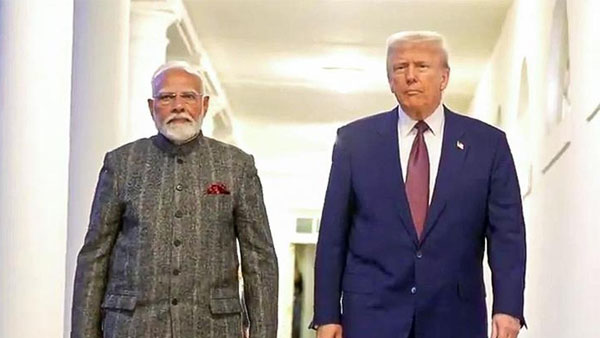
India has received an invitation from US President Donald Trump to join his proposed Board of Peace, an initiative primarily aimed at overseeing the post-conflict reconstruction and governance of the Gaza Strip following the cessation of hostilities between Israel and Hamas. This development, which emerged in mid-January 2026, stems from Trump’s Comprehensive Plan to End the Gaza Conflict, a 20-point roadmap initially unveiled in September 2025 and subsequently endorsed by United Nations Security Council Resolution 2803 later that year. The plan outlines a structured transition involving a technocratic Palestinian committee for day-to-day administration in Gaza, international oversight for security and disarmament of militant groups, and large-scale reconstruction efforts funded through global contributions. The Board of Peace is positioned as the supervisory body for these processes, chaired by Trump himself, with an executive structure that includes figures such as former British Prime Minister Tony Blair and other international personalities experienced in diplomacy and development.
The invitation to India, conveyed through a formal letter dated January 16, 2026, and highlighted by the US Ambassador to India, describes the Board as a historic endeavor not only to solidify peace in the Middle East but also to pioneer a bold new approach to resolving conflicts worldwide. This broader framing has sparked considerable debate, as the original mandate approved by the UN appeared narrowly focused on Gaza’s stabilization, including the deployment of international peacekeepers, economic recovery, and the prevention of future violence. However, the charter circulated to prospective members expands the Board’s scope to promote stability, restore governance, and secure enduring peace in any areas affected or threatened by conflict. Such language suggests an ambition to create a standing international mechanism that could operate independently of or in parallel to established institutions like the United Nations Security Council.
For India, the decision on whether to accept this invitation carries profound implications that extend far beyond the immediate humanitarian crisis in Gaza. New Delhi has long maintained a balanced foreign policy in the Middle East, supporting a two-state solution to the Israeli-Palestinian conflict while cultivating strong ties with both Israel and Arab nations. India’s relationship with Israel has deepened significantly in recent years, encompassing defense cooperation, technology transfers, and intelligence sharing, making participation in a US-led initiative aligned with Israeli interests potentially advantageous. At the same time, India enjoys robust economic and diaspora links with Gulf states, many of which have expressed reservations about aspects of Trump’s plan, particularly regarding Palestinian representation and long-term sovereignty. The Palestinian Authority has been notably absent from key decision-making roles in the Board’s proposed structure, raising concerns among Arab partners about the plan’s inclusivity.
Beyond the regional dynamics, the architecture of the Board itself introduces several layers of uncertainty that India must carefully evaluate. Membership terms appear tiered: countries can join for a renewable three-year period without financial commitment, but a contribution of $1 billion in the first year secures permanent status. Proceeds from such contributions are intended to fund Gaza’s rebuilding, with assurances that funds will be directed toward infrastructure rather than administrative overhead. This pay-to-play model has drawn criticism for commodifying participation in peacemaking, potentially favoring wealthier nations or those willing to make large symbolic investments. For India, which maintains a fiscal discipline focused on domestic development priorities, committing such a substantial sum would require justification in terms of strategic returns, humanitarian impact, and alignment with national interests. Smaller or less affluent invitees might opt for temporary seats, but this could dilute their influence in a body where the chair—Trump—holds significant authority, including final approval on decisions despite majority voting provisions.
The global context in which this invitation arrives further complicates India’s calculus. The international order is undergoing rapid shifts, marked by heightened great-power competition, regional conflicts in Ukraine and elsewhere, and growing skepticism toward multilateral institutions. Critics have portrayed the Board as a potential rival to the United Nations, an American-dominated entity that bypasses traditional Security Council mechanisms and could set precedents for unilateral interventions in future crises. European allies, including France and others, have expressed hesitation, with some questioning the Board’s legitimacy and its departure from UN-centric approaches. Invitations extended to a diverse array of countries—including close US partners like Canada and Australia, as well as Hungary, Vietnam, Pakistan, Belarus, and even Russia—suggest an eclectic coalition that may prioritize transactional alignments over ideological cohesion. India’s participation could position it as a bridge between Global South perspectives and Western-led initiatives, but it risks entangling New Delhi in a framework perceived as bypassing established norms of international law and collective security.
From a strategic standpoint, India has reasons to approach the proposal with measured interest. The country has emerged as a significant voice in global affairs, leveraging its economic growth, military capabilities, and diplomatic agility to advocate for multipolarity. Joining the Board could enhance India’s visibility in Middle Eastern stabilization efforts, potentially opening avenues for greater involvement in reconstruction contracts, infrastructure projects, and humanitarian assistance—areas where Indian expertise in disaster relief, engineering, and digital infrastructure could prove valuable. Moreover, alignment with a US initiative under Trump might strengthen bilateral ties at a time when India seeks to balance relations with Washington amid trade negotiations, technology collaborations, and Indo-Pacific security concerns. Yet these potential benefits must be weighed against risks. Acceptance could strain relations with nations skeptical of the Board’s mandate, including some Arab states and possibly China, which has its own mediation efforts in the region. It might also expose India to domestic and international criticism if the initiative falters or is seen as favoring one side in the Israeli-Palestinian equation.
Caution is particularly warranted given the uncertainties surrounding the Board’s operational effectiveness. The Gaza conflict has left immense destruction, with reconstruction estimated to require tens of billions of dollars over years. Ensuring transparent, accountable use of funds in a politically volatile environment poses formidable challenges. The proposed structure includes country-specific configurations and an executive board, but details on decision-making, dispute resolution, and integration with existing UN agencies remain vague. If the Board evolves into a broader global conflict-resolution body as implied, India would need to assess how its participation aligns with longstanding principles of non-interference, sovereignty, and preference for UN-led processes. Past experiences with international coalitions have taught New Delhi the importance of clear mandates and exit strategies to avoid mission creep or entrapment in protracted engagements.
Furthermore, the timing of the invitation coincides with preparations for high-level gatherings such as the World Economic Forum in Davos, where Trump reportedly plans a signing ceremony for the Board’s constitution. This urgency may pressure invitees to respond quickly, but hasty decisions could overlook long-term ramifications. India has historically preferred deliberate diplomacy, consulting extensively within its foreign policy establishment and with key partners before committing to novel multilateral formats. In this case, consultations with allies in the Global South, such as Brazil and South Africa, as well as with regional stakeholders in West Asia, would be prudent to gauge broader reactions and potential coalitions.
Ultimately, India’s response to the Board of Peace invitation should be guided by a careful cost-benefit analysis that prioritizes national interests, strategic autonomy, and commitment to principled multilateralism. While the humanitarian imperative to support Gaza’s recovery is undeniable, and collaboration with the United States offers tangible advantages, the proposal’s expansive ambitions, unconventional funding model, and potential to reshape global peacemaking architectures demand thorough scrutiny. Engaging selectively—perhaps through observer status, targeted contributions to reconstruction without full membership, or conditional participation tied to clarifications on mandate and governance—could allow India to contribute positively while safeguarding its independence. Rejecting the invitation outright might preserve flexibility but could forfeit opportunities to influence outcomes in a critical region. Accepting without reservations risks endorsing a framework whose long-term viability and inclusivity remain unproven.
In navigating this complex landscape, India would do well to draw on its tradition of pragmatic yet cautious diplomacy. The Board of Peace represents both an opportunity to advance peace in Gaza and a test of the evolving international order. By handling the invitation with care and caution, New Delhi can position itself to maximize benefits while minimizing exposure to uncertainties that characterize this bold but untested initiative. The decision will reflect not only India’s approach to the Middle East but its broader vision for global engagement in an era of uncertainty and shifting power dynamics.