
Recasting the Northeast’s Growth Story Beyond DoNER
By Dipak Kurmi
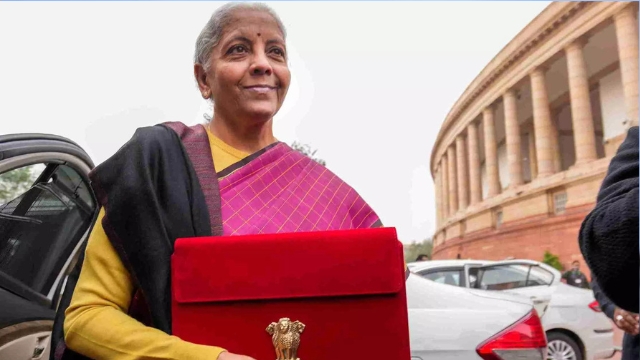
The Union Budget for 2026–27 marks a significant moment for India’s Northeastern region, positioning it not merely as a peripheral beneficiary of national growth but as an integral engine of India’s future development. Presented on February 1, 2026, by Finance Minister Nirmala Sitharaman, the budget outlines a reform-oriented roadmap that seeks to balance infrastructure expansion, human capital development, ecological sustainability, and cultural preservation. While framed within a broader national growth strategy, the budget carries particular importance for the Northeast, a region that is strategically located, culturally rich, and economically emerging, yet historically underserved. Assam, as the largest economy in the region and a gateway connecting South and Southeast Asia, occupies a central place in this vision, reflecting the government’s intent to integrate the Northeast more deeply into India’s long-term economic and geopolitical framework.
A major highlight of the budget is the enhanced allocation for the Ministry of Development of the North Eastern Region, known as DoNER, which has been increased to Rs 6,812.30 crore for 2026–27 from Rs 5,915 crore in the previous year. This year-on-year growth underscores sustained federal commitment and signals continuity rather than episodic attention. Beyond DoNER, the total investment envelope for the Northeast, cutting across central ministries, special schemes, and regional programs, has reached a record Rs 11,486 crore. This unprecedented scale of funding reflects a shift in policy thinking, where the region is no longer approached through fragmented sectoral interventions but through integrated development planning that recognizes its unique geographical, social, and economic characteristics.
Fiscal devolution also features prominently in the budget’s approach to strengthening the Northeast. The region’s share in tax devolution has increased from 3.128 percent to 3.258 percent, enhancing the financial autonomy of Northeastern states and enabling them to undertake development projects tailored to local priorities. This increase is not merely symbolic, as it empowers state governments to improve infrastructure, social services, and employment opportunities without excessive dependence on centrally sponsored schemes. For Assam and its neighboring states, this enhanced fiscal space strengthens institutional capacity and reinforces cooperative federalism, which is essential for long-term stability and growth in a diverse and sensitive region.
Capital investment support under special assistance to states forms another cornerstone of the budget. Assam is set to benefit significantly from the Centre’s expanded capital support window of approximately Rs 2 lakh crore, facilitating the acceleration of major infrastructure projects, urban renewal initiatives, and logistics development. Improved transportation corridors, upgraded urban infrastructure, and strengthened logistics networks are expected to enhance connectivity within the region and with the rest of India. This focus on capital expenditure reflects an understanding that sustainable growth in the Northeast requires strong physical foundations capable of supporting trade, mobility, and private investment.
One of the landmark announcements in the budget is the Rs 500 crore allocation for the rehabilitation of former United Liberation Front of Assam cadres and their families. This initiative represents a rare convergence of economic policy and peacebuilding, as it aims to provide livelihoods, skill development, and social reintegration to individuals affected by decades of insurgency. By addressing long-standing socio-economic grievances and promoting peaceful livelihoods, the program seeks to convert a history of conflict into an opportunity for inclusive development. Complementary allocations under this umbrella include Rs 200 crore for the Karbi Anglong Autonomous Council and Rs 156 crore for the Bodoland Territorial Council, reinforcing decentralized governance and addressing the aspirations of indigenous and tribal communities.
The budget also prioritizes urban transformation, with a dedicated allocation of Rs 5,000 crore for city development across the region. Cities such as Guwahati, Dibrugarh, Silchar, Imphal, and Agartala are identified as emerging urban hubs capable of driving regional growth. Funds are earmarked for public transport systems, waste management and sanitation, digital governance platforms, affordable housing, and smart infrastructure. By strengthening urban ecosystems, the budget aims to create local economic hubs that generate employment, reduce migration to metropolitan cities, and improve quality of life for urban and peri-urban populations.
Infrastructure and connectivity form the backbone of the Northeast’s development strategy in the budget. Recognizing the region’s historical isolation, the budget emphasizes multimodal connectivity through roads, railways, waterways, and digital networks. Strategic corridors extending toward northeastern borders are expected to facilitate trade, tourism, and people-to-people exchanges while also serving national security interests. Projects such as the Guwahati–Siliguri corridor, though nationally significant, are projected to yield substantial regional benefits by improving access to markets and services. Strengthened connectivity is seen not only as an economic enabler but also as a social integrator that can bridge geographic and cultural divides.
DoNER’s targeted infrastructure schemes further reinforce this emphasis. The Prime Minister’s Development Initiative for the North East, with an allocation of Rs 2,300 crore, provides flexible financing for region-specific projects in infrastructure, connectivity, and social development. Similarly, the North East Special Infrastructure Development Scheme, with Rs 2,500 crore earmarked, focuses on water supply, electrification, urban upgrades, logistics nodes, and last-mile connectivity. These initiatives are designed to address basic service gaps while laying the groundwork for future economic activity, particularly in remote and hilly areas where development challenges are most acute.
Agriculture, forestry, and rural livelihoods receive renewed attention in the budget, reflecting the ecological sensitivity and agrarian character of much of the Northeast. The growth narrative of the region is closely tied to its natural resources, and the budget recognizes this by promoting environmentally aligned agricultural practices. High-value crops such as organic produce and agarwood are identified as areas of special focus, supported by expanded horticulture initiatives and market linkages. By promoting value addition, export potential, and sustainable resource use, the budget aims to increase rural incomes while preserving ecological balance.
Tourism and the cultural economy emerge as transformative sectors in the 2026–27 budget. The Northeast’s rich heritage, diverse traditions, and natural beauty are positioned as key assets for economic growth. A dedicated framework is outlined to develop Buddhist circuit tourism across states such as Arunachal Pradesh, Assam, Manipur, Mizoram, Sikkim, and Tripura. Infrastructure support for pilgrimage and meditation centers, accessible visitor services, digital cultural trails, and international linkages is expected to enhance the region’s visibility on the global tourism map. By expanding tourism infrastructure, the budget seeks to generate employment in hospitality, transport, handicrafts, and local services, particularly in rural and remote areas.
Human capital development is another central pillar of the budget’s vision for the Northeast. Investments in skilling and vocational training are designed to align local talent with emerging economic opportunities. Programs targeting youth aim to increase employability in services, improve digital literacy, and support specialized training for sectors such as tourism, healthcare, and creative industries. Enhanced skill financing and placement assistance are expected to reduce migration pressures by creating viable employment closer to home, thereby strengthening local economies and social cohesion.
Education and institutional support also receive expanded attention, particularly in remote and tribal areas. Improved access to quality education, digital learning platforms, and research capacity building are intended to enhance learning outcomes and local participation in emerging sectors. These measures reflect an understanding that long-term development depends on empowering communities with knowledge, skills, and institutional support rather than relying solely on physical infrastructure.
Healthcare access represents a major social investment in the budget. The proposed upgrade of the National Mental Health Institute at Tezpur into a Regional Apex Institute marks a significant step toward addressing mental healthcare needs in the Northeast. Enhanced district and community hospitals, expanded telemedicine services, diagnostic facilities, and preventive care initiatives aim to reduce reliance on distant urban centers. By strengthening healthcare infrastructure, the budget seeks to improve quality of life while also building resilience in a region prone to natural disasters and social stress.
The role of micro, small, and medium enterprises is reinforced as a backbone of the Northeastern economy. The budget strengthens this sector through improved credit access, technology adoption support, market linkage programs, and startup facilitation. Entrepreneurship among youth and women is encouraged through targeted schemes that connect local production with digital marketplaces and logistics networks. The creative economy, encompassing handicrafts, textiles, cultural arts, and eco-tourism services, is positioned as a sustainable growth avenue that leverages traditional skills for modern markets.
Taken together, the Union Budget 2026–27 presents a comprehensive and forward-looking blueprint for the Northeast. It combines enhanced fiscal support, decentralized planning, infrastructure expansion, ecological sensitivity, and human development into a coherent strategy. For Assam and the wider region, the challenge now lies in effective implementation, institutional coordination, and transparent governance. If executed with consistency and cooperation between the Centre and states, the financial groundwork laid in this budget has the potential to transform the Northeast’s development trajectory, turning historical disadvantages into economic opportunities and integrating the region more fully into India’s growth story.
(the writer can be reached at dipakkurmiglpltd@gmail.com)