
By Dipak Kurmi
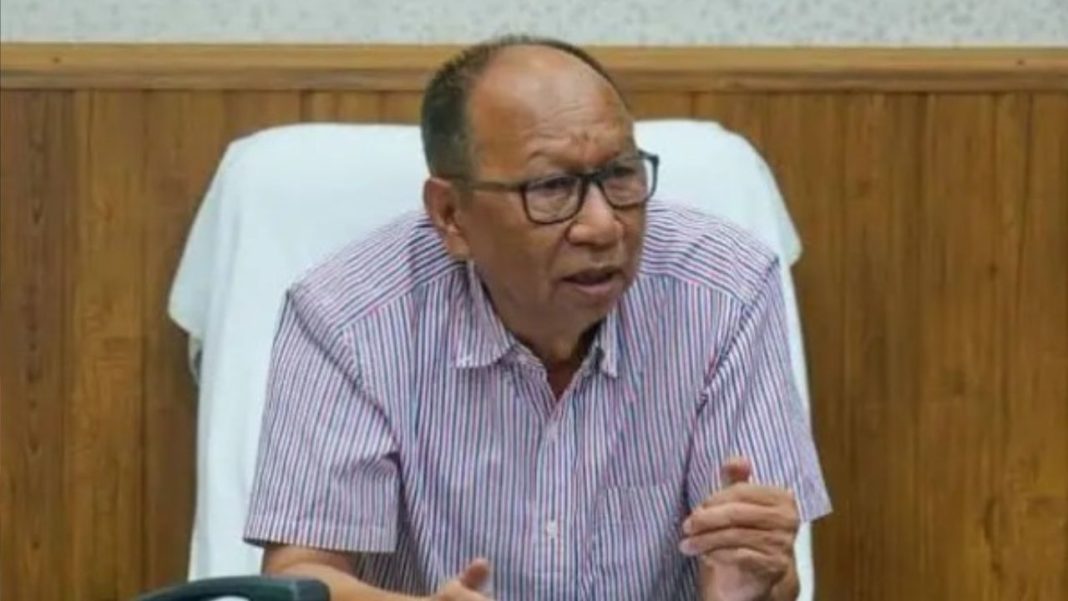
On February 3, in a move heavy with political calculation and symbolic intent, the Bharatiya Janata Party’s central leadership selected Yumnam Khemchand Singh as the leader of its legislature party, effectively projecting him as the next Chief Minister of Manipur. The decision was taken at a meeting of BJP MLAs in New Delhi, just days before the state’s nearly year-long spell under President’s Rule was set to expire. The timing was neither incidental nor procedural; it signalled a deliberate attempt by the party’s national command to shape Manipur’s political trajectory at a moment of acute fragility. In a state battered by prolonged ethnic violence and administrative paralysis, leadership is not merely a matter of constitutional succession but a question of restoring civic faith. Khemchand’s elevation thus represents both a political appointment and an experiment in conflict management under intense national scrutiny.
Significantly, Khemchand does not stand alone in this transition. He is backed by three senior and experienced figures whose presence broadens the representational base of the proposed administration. Deputy Chief Minister Nemcha Kipgen, a prominent Thadou leader with ministerial experience, brings both ethnic legitimacy and administrative continuity. Losii Dikho, a seasoned politician from the Mao Assembly Constituency who has won elections in 2012, 2017, and 2022 and is affiliated with the Naga People’s Front, adds another layer of regional and ethnic inclusion. Govindas Konthoujam, who has secured a remarkable seventh consecutive term from the Bishnupur constituency as a BJP legislator, contributes institutional memory and electoral credibility. Many observers interpret the choice of this trio as evidence that the Centre is serious about expanding community representation within the new government. In a state where political appointments are often read through the lens of ethnic arithmetic, such balancing acts are more than symbolic gestures; they are calculated efforts to lower suspicion and signal inclusivity.
Khemchand himself has cultivated an image of moderation and consensus-building, a rare political currency in Manipur’s deeply polarised environment. Outside his legislative responsibilities, he has sought to be perceived as a bridge between communities rather than a partisan of one. That positioning may prove decisive in a state where social fractures have hardened over years and where political rhetoric has often inflamed rather than soothed tensions. The crisis that has gripped Manipur since May 3, 2023, when violent clashes erupted primarily between the Meitei and Kuki-Zo communities, has devastated everyday life. The violence has led to deaths, widespread displacement, and the destruction of homes, religious institutions, and public infrastructure. Families have been uprooted, children deprived of schooling, and health services disrupted. Trust in institutions has eroded, and fear has become a pervasive presence in daily interactions.
The social fabric has frayed not only because of direct violence but also due to the ecosystem of rumours and digital narratives that have amplified distrust. In an atmosphere already charged with anxiety, misinformation circulating online has triggered fresh incidents even when ground conditions seemed to stabilise. Communities that once interacted in markets, workplaces, and educational institutions now often avoid travel beyond perceived safe zones. Shutdowns and blockades have paralysed transport routes, making it difficult for public services to function effectively. Relief operations face formidable obstacles when roads are obstructed, camps are overcrowded, and security conditions vary from district to district. Internally displaced persons, many of whom remain in temporary shelters, confront pressure and uncertainty as they contemplate returning to homes that may no longer exist or that lie in areas still marked by hostility.
The persistence of the conflict can be traced to several interlocking challenges. Identity politics, intertwined with contested interpretations of political representation and land rights, has deepened suspicion between communities. The presence of armed groups and the circulation of weapons have heightened the risk of sudden escalations, undermining efforts at de-escalation. Gaps in law enforcement, delays in investigation, and slow delivery of justice have fostered perceptions that certain groups remain outside the protective reach of the state. When communities believe that grievances will not be addressed fairly or promptly, alienation hardens into resentment. Meanwhile, humanitarian relief, though substantial in scale, struggles to keep pace with the evolving needs of displaced populations. Without reliable access to livelihoods, education, and healthcare, displacement risks becoming a protracted condition rather than a temporary emergency.
In this context, the restoration of an elected government under Khemchand carries immense symbolic weight. After an extended period of President’s Rule, during which governance was effectively overseen by the Centre, public confidence in democratic institutions requires careful rebuilding. The return to a locally headed administration offers an opportunity to re-anchor accountability within the state. Yet it also revives longstanding debates about the degree of central influence in northeastern politics. Critics argue that when peacebuilding is driven primarily by directives from New Delhi, grassroots perspectives can be marginalised and local political agency constrained. This concern is not without historical precedent. In the past, including under Congress governments, decisions regarding state leadership in the Northeast were often shaped, and sometimes settled, by national party leadership rather than emerging solely from state-level consensus. Given the region’s mosaic of ethnic identities, unstable coalitions, and unpredictable electoral outcomes, national parties have frequently exercised decisive control over leadership choices.
Khemchand’s challenge, therefore, extends beyond managing security; he must navigate the delicate balance between central support and local legitimacy. The central party’s influence can provide strategic direction and political backing, but the durability of peace will depend on state-level accountability and genuine dialogue among communities. Immediate priorities are clear and urgent. Civilian protection must be uncompromising, transport corridors for medical care and essential supplies must remain open, and relief must reach all affected groups without discrimination. Clear and transparent public communication is indispensable to counter rumours and prevent panic. Swift and impartial investigations into major incidents, accompanied by visible legal follow-through, are necessary to restore faith in the rule of law.
Beyond these immediate steps lies the more arduous work of reconciliation and institutional reform. Structured dialogues must include not only political elites but also community elders, women’s organisations, youth representatives, and civil society actors who have borne the brunt of the past two years. Such dialogues should address concrete and contentious issues, including land use, local administrative arrangements, and security frameworks. Written commitments and timelines for review can prevent discussions from dissolving into symbolic gestures. Rehabilitation efforts must move beyond temporary relief packages toward durable solutions: repairing housing, restoring livelihoods, reviving schools, and providing mental health support to traumatised communities. Strengthening local institutions so that future disputes are mediated through lawful procedures rather than intimidation is essential for breaking cycles of violence.
The broader strategic environment underscores the stakes. Manipur’s instability reverberates across the Northeast, a region critical to India’s Act East policy and its connectivity ambitions with Southeast Asia. Persistent conflict undermines investor confidence, disrupts cross-border trade corridors, and complicates regional security dynamics. For the Union government, stabilising Manipur is not merely a state-level imperative but a component of national strategy. Yet stability imposed without reconciliation risks proving brittle. The experience of other conflict-affected regions suggests that sustainable peace requires not only security deployments but also social healing and equitable governance.
As Yumnam Khemchand Singh prepares to take the oath of office, public expectations are intense and layered. He must address the long-running ethnic conflict while simultaneously restoring faith in democratic processes after President’s Rule. His policy decisions, his engagement with civil society, and his capacity to implement inclusive governance will be closely scrutinised both locally and nationally. In a state where divisions run deep and memories of violence remain raw, progress may be incremental and setbacks inevitable. Nevertheless, consistent protection of rights, equal treatment under the law, and sustained dialogue can gradually create the conditions under which peace might endure.
Manipur now stands at a crossroads between prolonged fragmentation and cautious renewal. Leadership alone cannot dissolve structural grievances, yet it can set the tone for engagement and accountability. If Khemchand’s administration can translate representational symbolism into substantive policy and rebuild trust across communities, the state may begin to emerge from its long shadow of unrest. The path forward will demand patience, transparency, and courage. In a landscape scarred by conflict, the true measure of governance will lie not in proclamations from distant capitals but in the everyday restoration of safety, dignity, and shared belonging.
(the writer can be reached at dipakkurmiglpltd@gmail.com)