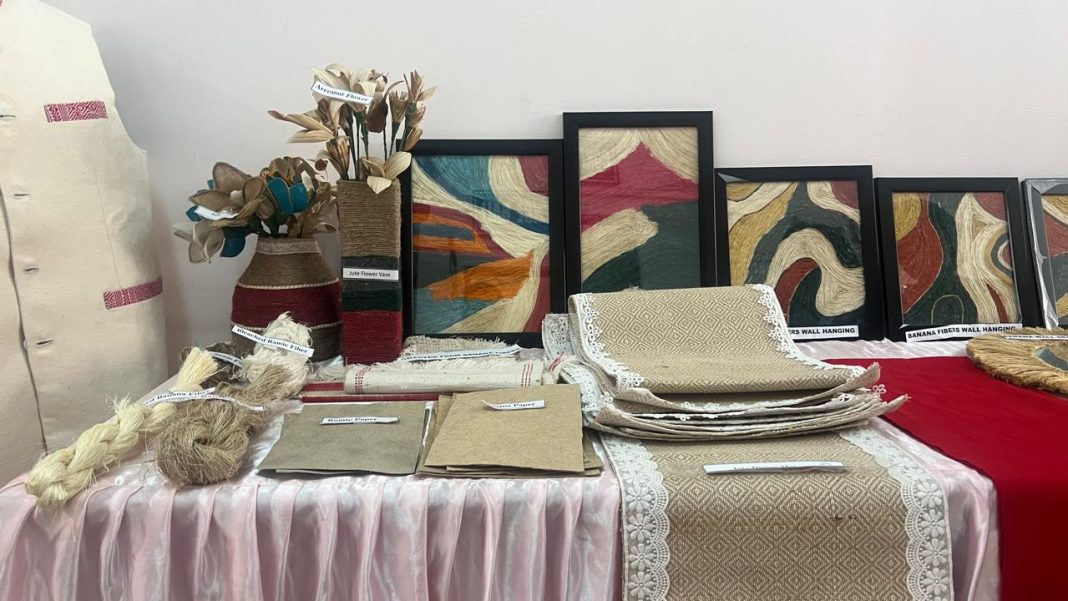

Shillong, Feb 21: What was once discarded as agricultural residue in Garo Hills is now being reimagined as a launchpad for rural textile entrepreneurship under India’s growing focus on “New Age fibres.”
The Department of Textile and Apparel Designing, College of Community Science, Central Agricultural University (I), Tura, organised a 10-day vocational training programme for farmers of West Garo Hills on the extraction and value addition of non-conventional fibres such as banana and ramie.
The training was held in two batches from February 11 to 20 under the NEH component project “Strengthening Livelihood Opportunities for Farmers of Garo Hills in Meghalaya Through Processing & Value Addition of Non-Conventional Fibre.”
The initiative was sponsored by ICAR – National Institute of Natural Fibre Engineering and Technology.
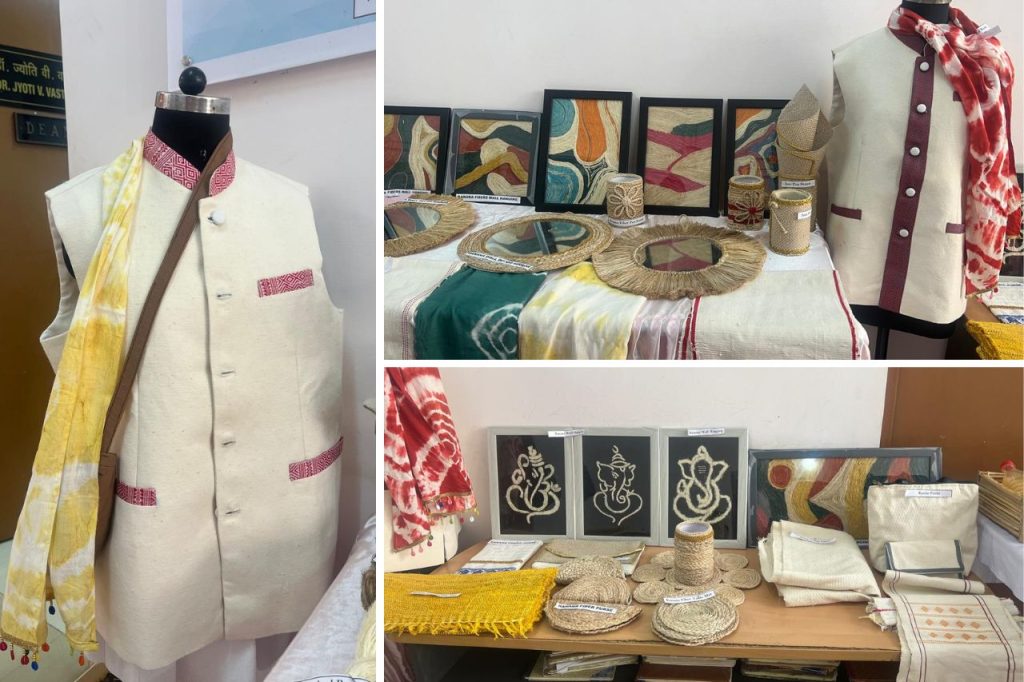
Fibres extracted from agricultural waste — banana, pineapple leaf, arecanut, ramie, mesta and others — are increasingly referred to as New Age fibres, reflecting their potential in sustainable and eco-friendly textile production.
The Ministry of Textiles has been promoting such alternative natural fibres through various initiatives aimed at diversifying India’s textile base and encouraging innovation-driven rural enterprises.
Forty farmers participated in the hands-on programme, learning fibre extraction techniques, yarn making and product development.
For many trainees, the programme was not just about learning — it was about envisioning enterprise.
Drimedryl Sangma from Chokpot described the training as “highly useful,” adding that his stay at the college premises was worthwhile. “I hope to start a small enterprise in textiles and handicrafts after this programme,” he said.
Munni Sangma, in a lighter vein, said she was delighted to learn that the college was located so close to her locality. She shared that she was happy to visit the institution after a long time for such a meaningful purpose.
Dr Jyoti V. Vastrad, Dean of the College of Community Science, revealed that several participants approached her after the sessions with concrete business plans.
“Few participants together came up to me asking about using the fibre extraction facility to start a business, as they have many banana pseudostems in their compounds,” she said. “We will be delighted to extend the incubation facility.”
Banana pseudostems — usually discarded after harvest — are a rich source of fibre. With proper extraction and value addition, they can be transformed into fabrics, handicrafts, ropes, mats and blended yarns, opening up income streams beyond conventional farming.
Dr Mamoni Borah, Assistant Professor organized these programmes under Jyoti Vastrad’s guidance.
Experts say initiatives like this signal a shift from subsistence crops and building fibre-based enterprises from what was once considered waste.