
By Satyabrat Borah
In the late 1940s, as the ruins of Europe were still smoking and millions were trying to rebuild lives shattered by the most destructive war in human history, a powerful belief took hold across much of the world. World War Two, many thought, had been so catastrophic that it would stand as a final warning. The phrase never again echoed through political speeches, international treaties, and public imagination. The creation of the United Nations, the spread of international law, and the moral shock of genocide all seemed to suggest that humanity had finally learned its lesson. War, especially large scale war between major powers, was expected to fade into history.
That hope did not survive reality for very long. Conflict did not disappear. Instead, it adapted. As General David Petraeus and historian Andrew Roberts argue in their sweeping study of post 1945 warfare, the world did not enter an age of peace after World War Two. It entered an age of transformed conflict. Wars became less straightforward, less formally declared, and more deeply entangled with politics, ideology, psychology, and technology. The battlefields multiplied and the meaning of victory itself began to blur.
The introduction of nuclear weapons fundamentally reshaped military thinking. When multiple countries acquired the ability to destroy entire cities within minutes, the idea of total war between major powers became unthinkable. The doctrine of Mutually Assured Destruction dominated strategic planning for decades. The logic was grim but simple. If everyone had the power to annihilate everyone else, no one would dare to start a nuclear war. In this sense, nuclear weapons did succeed in placing an upper ceiling on conflict. They made certain kinds of wars too dangerous to fight.
Yet this ceiling did not create peace. It created space. Below the nuclear threshold, a vast range of conflicts became not only possible but attractive. If major powers could not fight each other directly, they could fight indirectly. They could support proxies, arm insurgents, manipulate governments, destabilise economies, and wage ideological battles without triggering nuclear catastrophe. War did not end. It slipped into new forms.
The Chinese civil war was the first major test of this new reality. Fresh from defeating Japan alongside the Allies, the nationalist forces under Chiang Kai shek appeared strong on paper. They were better equipped, internationally recognised, and backed by the United States. Yet they collapsed before Mao Zedong’s communist forces, many of whom were poorly armed
peasants. Part of the explanation lay in exhaustion. The nationalists had borne the brunt of the fight against Japan. But Petraeus and Roberts point to something deeper. Leadership mattered. Chiang’s rigid, centralised command structure discouraged honest feedback. Surrounded by loyalists who told him what he wanted to hear, he failed to adapt to realities on the ground. The war was lost not just in battles, but in decision making.
This pattern repeated itself in Korea. General Douglas MacArthur was a military icon, celebrated as a hero of the Pacific War. His confidence bordered on myth. Yet that very aura made him resistant to criticism. When China entered the Korean War, MacArthur was caught off guard. The conflict escalated rapidly, cost millions of lives, and ultimately froze into a stalemate that persists to this day. Korea revealed a new truth of the post nuclear world. Wars could be limited, unresolved, and endlessly prolonged. There would be no neat conclusions.
Vietnam pushed this lesson even further. For the United States and its allies, the war became a symbol of frustration and failure. For communist regimes, it sent a different message. The drawn out conflict created an impression that liberal democracies lacked the patience and political will to sustain long wars. Public opinion mattered. Elections mattered. Media scrutiny mattered. Autocratic systems, insulated from internal dissent, appeared more capable of enduring prolonged suffering. This perception shaped global strategic thinking for decades.
History since 1945 also shows that regimes without strong internal opposition are often more willing to initiate surprise attacks. North Korea’s invasion of the South in 1950 and Saddam Hussein’s invasion of Kuwait in 1990 were both calculated gambles. Autocrats can act quickly, without parliamentary debate or public resistance. But while surprise can deliver early gains, it rarely guarantees long term success. Initial victories often provoke overwhelming international responses or expose the aggressor’s deeper weaknesses.
Another major transformation of warfare unfolded through guerrilla tactics. Vietnam demonstrated that underfunded, irregular forces could defeat technologically superior armies by blending into civilian populations, exploiting terrain, and turning time itself into a weapon. Modern armies trained for conventional battles struggled against enemies who refused to fight by conventional rules. War became less about firepower and more about legitimacy, morale, and endurance.
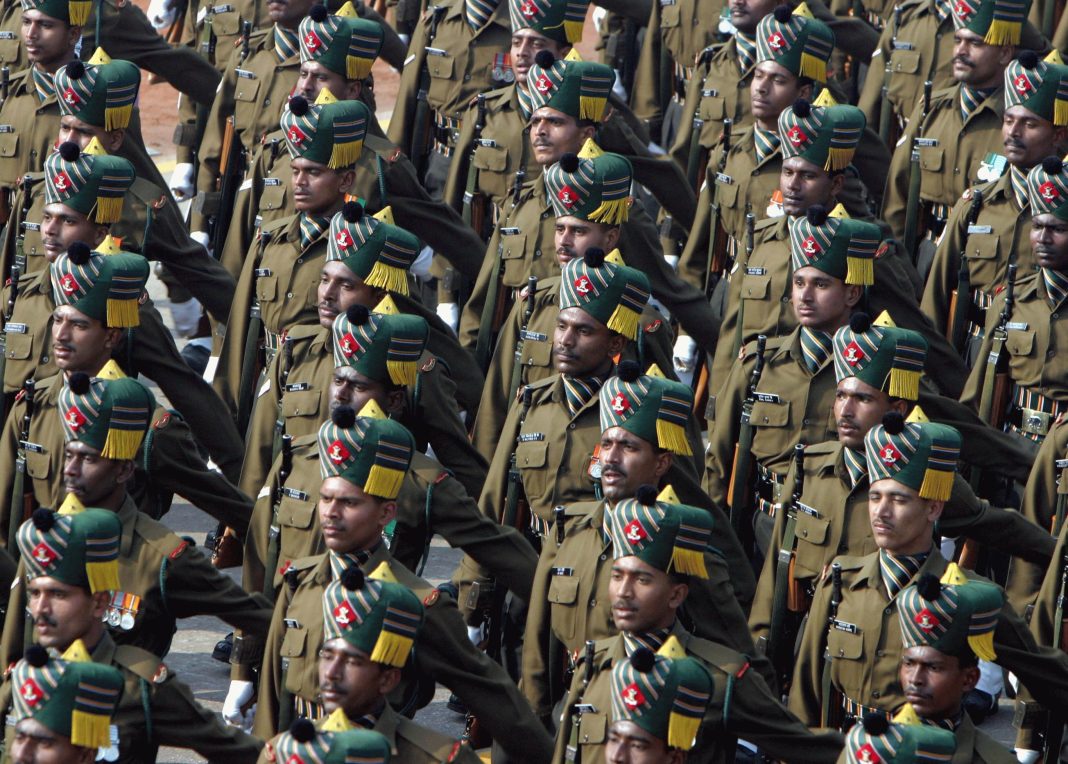
India’s experience offers a contrasting lesson. In Kashmir in 1947, and in the decades that followed, India faced insurgency, cross border interference, and repeated wars with Pakistan. Yet through a mix of military restraint, intelligence operations, political engagement, and control over escalation, India managed to prevent low intensity conflict from spiralling into full scale war. Even during later confrontations in 1965, 1971, 1999, and more recently in operations like Sindoor, escalation was contained. This showed that counter insurgency, when combined with strategic patience, could limit conflict rather than inflame it.
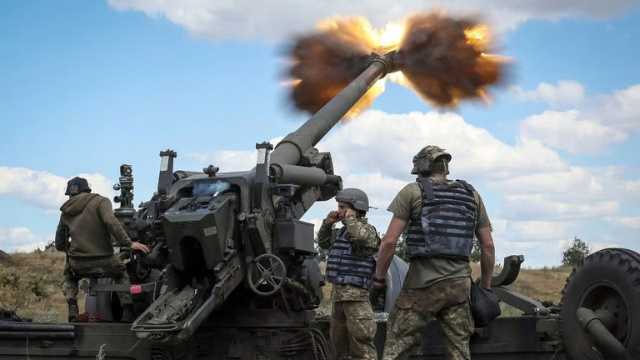
The twenty first century has exposed new failures of adaptation. Russia’s invasion of Ukraine revealed how dangerous outdated assumptions can be. Moscow underestimated Ukrainian resilience, believed its own propaganda, and attempted a campaign shaped by twentieth century thinking. What it encountered instead was a highly motivated society, real time intelligence sharing, drone warfare, and a global information battlefield. Tanks and artillery mattered, but so did social media, sanctions, currency stability, and international opinion.
In Gaza, Israel faced a different shock. Despite its technological superiority, it underestimated Hamas’s ability to plan and execute a complex attack using both terror tactics and military coordination. The conflict highlighted how non state actors have learned to exploit intelligence gaps, civilian cover, and media narratives. Power no longer guarantees security. Control no longer guarantees deterrence.
All of this points toward a future where warfare becomes increasingly multi dimensional. Battles will not be confined to land, sea, and air. They will be fought through financial systems, cyber networks, energy supplies, and public perception. National currencies can be destabilised. Elections can be influenced. Truth itself can be blurred. Victory will no longer mean total defeat of the enemy. It will mean temporary advantage in an ongoing struggle.
Technology accelerates this shift. Artificial intelligence has the potential to weaponise data, automate decision making, and reduce the time available for human judgment. When machines react faster than people can think, the risk of escalation grows. At the same time, AI enables surveillance, prediction, and psychological targeting on a scale never seen before. Every smartphone becomes a sensor. Every citizen becomes a participant, willingly or not.
In this emerging world, the line between war and peace grows thinner each day. Sanctions replace bombs. Disinformation replaces invasion. Cyber attacks replace air strikes. Yet the human cost remains real. Lives are disrupted, societies polarised, and trust eroded. War becomes continuous, low level, and omnipresent.
The tragedy is that this evolution was not inevitable. It emerged from choices, fears, and failures to address root causes. The promise of never again was sincere, but it was shallow. The world tried to outlaw war without dismantling the systems that produce it. Inequality persisted. Power remained concentrated. Pride outweighed humility. Security was defined as dominance rather than cooperation.
Wars will not end because they adapt faster than our ideals. They survive by changing shape, language, and methods. They hide beneath thresholds, behind proxies, and inside algorithms. They endure because humans still seek control, fear loss, and struggle to imagine security without superiority.
Yet understanding this evolution matters. It strips war of its illusions. It reveals that modern conflict is not an accident or a sudden breakdown of order, but a continuation of unresolved tensions through new means. If the world is indeed entering an era of continuous war, then the challenge is not to dream of permanent peace, but to reduce harm, limit escalation, and preserve human dignity within conflict.
The real question is no longer whether war will return, but how deeply it will seep into everyday life. And whether societies will recognise that in an age where everything can be weaponised, the greatest defence may not be military strength alone, but resilience, transparency, and the refusal to let fear define the future.