
By Satyabrat Borah
The past twenty four hours have unfolded like a chapter torn from a dark political thriller, except this is not fiction and the consequences are painfully real for millions of people. News alerts, official statements and social media claims have collided at high speed, leaving the world struggling to understand what is actually happening between the United States, Israel and Iran. At the center of the storm is a claim by United States President Donald Trump that Iran’s Supreme Leader Ayatollah Ali Khamenei was killed during a massive wave of United States and Israeli strikes. Iran immediately rejected this, insisting that its leadership remains safe and sound. Between these two sharply opposing narratives lies a region on edge and a global audience watching with a mix of fear, disbelief and exhaustion.
The name Iran has long been associated with tension, sanctions, threats and proxy conflicts. Yet even by the standards of decades of hostility, what is being described now feels different in scale and intent. President Trump has framed the attacks as part of a direct effort to overturn the government in Tehran. That alone represents a dramatic escalation from containment and pressure to open endorsement of regime change through military force. Such language carries enormous weight, especially when it comes from the leader of the most powerful military in the world. It also raises memories of past interventions that reshaped entire regions with consequences that still echo today.
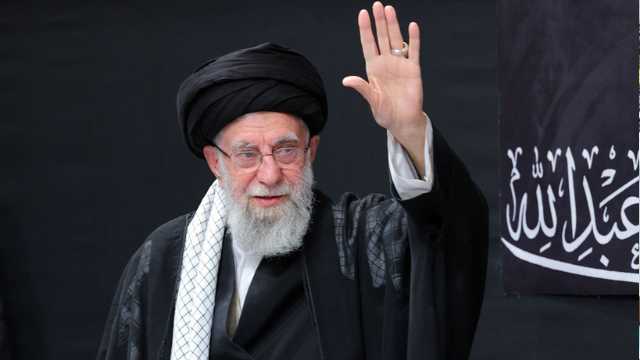
The claim that Ayatollah Ali Khamenei has been killed is perhaps the most explosive element of all. As Iran’s Supreme Leader, Khamenei is not just a political figure but a symbol of the Islamic Republic itself. His authority spans the military, the judiciary and key media institutions. If he were truly dead, it would mark one of the most consequential assassinations in modern history. Yet no independent confirmation has emerged, and Iranian officials have moved quickly to deny it. In an era of information warfare, where truth is often the first casualty, many observers are treating all statements with caution.
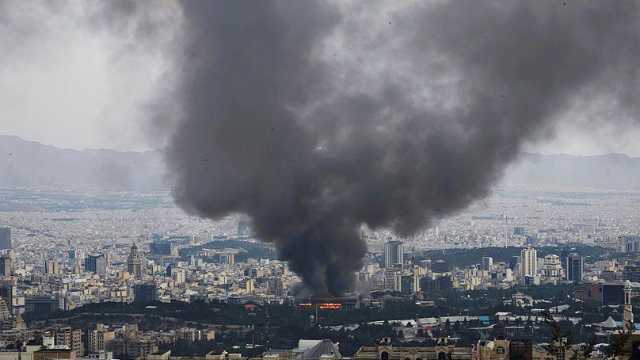
What is not in doubt is that Iran has been hit hard. According to Iranian state media, one of the strikes struck an elementary school in southern Iran, killing scores of students. The images and accounts circulating online are harrowing. Parents searching for children, classrooms reduced to rubble, and a sense of shock that transcends politics. If verified, such an incident would constitute a grave tragedy and potentially a serious violation of international law. Civilian casualties, especially children, have a way of cutting through ideological divisions and forcing the world to confront the human cost of military decisions.
From Washington, the tone has been defiant rather than restrained. President Trump has suggested that the bombing will continue throughout the week, signaling that this is not a one off operation but a sustained campaign. Support from Israel, long an adversary of Iran, is portrayed as both strategic and necessary. Israeli leaders have for years warned that Iran represents an existential threat, particularly because of its nuclear ambitions and support for armed groups across the region. For Israel, striking Iran directly has always been framed as a last resort. Now that threshold appears to have been crossed.
Iran’s response was swift and unprecedented. Missiles and drones were launched toward United States military bases, Israeli territory and other targets across the Middle East. Sirens sounded in multiple countries, and residents of densely populated areas rushed for shelter. Airports suspended flights, oil shipments were disrupted and global markets reacted nervously. While the United States military reported no combat related American casualties, the psychological impact of seeing bases under fire was significant. For many Americans stationed abroad, this was a stark reminder that geopolitical decisions made far away can have immediate personal consequences.
The Middle East as a whole is feeling the tremors. Countries that have tried to balance relations with both Washington and Tehran now find themselves under intense pressure. The United Arab Emirates described the moment as historic, a striking choice of words that suggests both gravity and uncertainty. By saying that world leaders have failed to ensure stability, the statement reflects a growing frustration among regional actors who feel caught between great power rivalries and long standing regional disputes.
There is a deep sense of unease among ordinary people. In Iran, families are grappling with fear, anger and grief, unsure of what the next days will bring. Internet access has reportedly been disrupted in some areas, adding to the sense of isolation. In Israel, civilians are once again living with the reality of incoming fire and the knowledge that escalation could bring even heavier retaliation. In neighboring countries, people worry about spillover violence, refugee flows and economic shocks.
Allies of the United States are quietly questioning both the objectives and the endgame of the operation. Overturning a government of more than eighty million people is not a simple task, and history offers few examples where such efforts have led to stable and peaceful outcomes. Critics argue that even if Iran’s leadership were weakened or removed, the power vacuum could unleash chaos far worse than the status quo. Supporters counter that Iran’s current system is inherently destabilizing and that decisive action was overdue.
Information itself has become part of the battlefield. Conflicting claims, dramatic headlines and rapidly spreading videos make it difficult for anyone to form a clear picture. Some footage circulating online is later revealed to be from past conflicts or unrelated incidents. This fog of war feeds anxiety and mistrust. Journalists face enormous challenges verifying information while access to affected areas remains limited. For the public, separating fact from propaganda requires patience that is often in short supply during crises.
The humanitarian dimension cannot be ignored. Even if military targets were the stated aim, the reality of modern warfare in populated regions means civilians inevitably suffer. Hospitals, schools and homes are rarely far from strategic sites. Aid organizations are warning that if the fighting continues, shortages of medicine, food and fuel could quickly worsen. Iran already faces economic hardship due to years of sanctions, and intensified conflict threatens to push vulnerable communities further into crisis.
Diplomatic channels appear strained but not entirely closed. Some world leaders have called for immediate de-escalation, urging restraint from all sides. Others are waiting to see how events unfold before taking a public stance. The United Nations has expressed concern and called for respect for international law, though its ability to influence the situation remains uncertain. Behind closed doors, frantic conversations are likely taking place, as governments try to assess risks and protect their interests.
The most troubling aspect is the apparent normalization of extreme measures. Talk of regime change, targeted killings and sustained bombing has become almost casual in some political rhetoric. This language can desensitize audiences to the real human suffering involved. It can also lock leaders into positions that become harder to walk back without appearing weak. Once escalation begins, stepping away requires political courage that is often in short supply.
There is also the question of precedent. If major powers openly pursue the overthrow of rival governments through force, what does that mean for the international system? Smaller states may feel increasingly insecure, believing that might make right. This could encourage arms races, including the pursuit of nuclear weapons as a deterrent. In that sense, the current crisis is not just about Iran or the Middle East, but about the future norms governing state behavior.
The claim regarding Ayatollah Khamenei’s death remains unresolved, and its eventual verification or debunking will significantly shape the next phase of events. If he is alive, Iran’s leadership may seek to project resilience and defiance, using the attack to rally domestic support. If he is indeed dead, internal power struggles could emerge, creating unpredictability at a moment of extreme external pressure. Either scenario carries serious risks.
Ordinary people across the world are left watching, refreshing news feeds, and wondering how close the world is to a wider war. Many feel a sense of helplessness, aware that decisions made by a small number of leaders can alter countless lives. Others feel anger, convinced that this crisis was avoidable and that diplomacy failed long before the first missile was launched.
It is worth remembering that behind every headline are human stories. Children who should be worrying about homework instead of air strikes. Soldiers who signed up for service but now face the reality of combat. Families who have lived through previous wars and fear they are about to endure another. These stories rarely fit neatly into political talking points, yet they are the true measure of what is at stake.
Whether this confrontation escalates further or gives way to a tense pause will depend on choices made in the coming days. History suggests that once violence reaches this level, resolution becomes harder, not easier. Still, moments of crisis have also produced unexpected breakthroughs when leaders recognized the cost of continuing down a destructive path.
Uncertainty reigns for now. Claims and counterclaims continue to fly, bombs fall, and retaliation answers retaliation. The world watches, hoping that cooler heads will prevail before the damage becomes irreversible. In the meantime, the unfolding events serve as a stark reminder of how fragile peace can be, and how quickly rhetoric and rivalry can turn into tragedy when the machinery of war is set in motion.