
By Dipak Kurmi
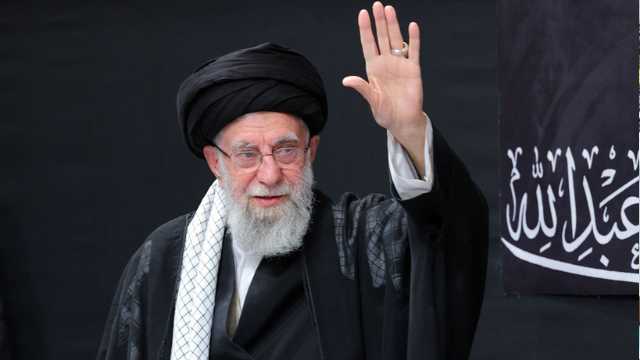
The international system appears to be drifting toward a troubling moment in which power asymmetry increasingly substitutes for rule-based restraint. The perception gaining ground in many strategic circles is that a hegemonic power can now strike a weaker state with relative impunity, while the forces meant to resist or regulate such behaviour remain fragmented, hesitant, and largely rhetorical. Recent developments—from the Israeli military campaign in Gaza to the controversial American action against Nicolas Maduro in Venezuela—have fed this narrative of eroding deterrence. The latest and most consequential episode is the reported joint US-Israeli strike on Iran and the announcement that its Supreme Leader, Ayatollah Ali Hosseini Khamenei, has been killed. Whether every operational detail is eventually verified or contested, the strategic signal is unmistakable: the boundaries that once constrained interstate coercion appear increasingly porous. The question now confronting policymakers worldwide is not merely about legality but about systemic stability in an era where enforcement mechanisms look visibly weakened.
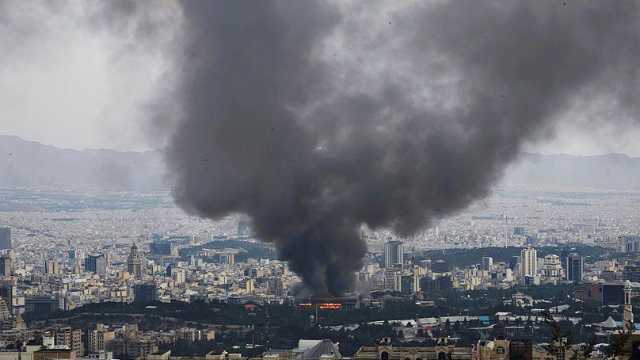
According to emerging accounts, the United States and Israel launched a coordinated military operation codenamed Epic Fury, targeting multiple Iranian military, energy, and political installations. Tehran has responded with retaliatory strikes against US bases across West Asia and against Israeli targets, indicating that the confrontation has already moved into a dangerous escalatory phase. Reports of explosions in the United Arab Emirates, Bahrain, and Kuwait suggest the conflict’s geographical footprint is expanding beyond the immediate battlefield. Casualty figures remain fluid and contested, but early indications point to significant losses on multiple sides. In volatile regional theatres, wars rarely remain geographically contained; the interlocking network of alliances, proxy forces, and forward-deployed assets creates pathways for rapid horizontal escalation. Epic Fury, far from being a discrete punitive strike, risks becoming the opening act of a much wider confrontation.
At the political level, both Donald Trump and Benjamin Netanyahu appear aligned in pursuing an ambitious objective: regime change in Tehran. Trump has been unusually explicit, declaring the launch of a major combat operation and openly calling for the dismantling of the existing Iranian power structure. The apparent logic is familiar from earlier interventions—decapitate the leadership, degrade the military, and hope internal unrest finishes the job. Yet the historical record offers little comfort for such expectations. Regimes rarely collapse solely under the weight of aerial bombardment. Durable political transformation typically requires either sustained internal revolution or prolonged ground occupation. The American public’s well-documented aversion to another large-scale ground war in the Middle East significantly narrows Washington’s options. Without troops on the ground or a coherent domestic partner ready to assume authority, regime change risks remaining more aspirational than operational.
Iran’s internal resilience further complicates the calculus. Since the 1979 Islamic Revolution, the state has constructed a layered security architecture designed precisely to survive external shocks. The military establishment, supported by powerful parallel institutions, has long prepared for scenarios involving high-intensity conflict with technologically superior adversaries. While anti-regime sentiment does exist within segments of Iranian society and has surfaced periodically in protest movements, this should not be conflated with support for externally engineered political change. Iran’s deep civilisational identity, strong political nationalism, and long historical memory of foreign intervention have produced a public psyche that is often wary of outside-imposed solutions. Even citizens critical of the ruling establishment may resist the idea of a political order perceived as externally manufactured.
That said, Washington is unlikely to ignore internal fissures within Iran. Various dissident networks, disgruntled minorities, and exile figures could become instruments in a broader pressure campaign. Among the most frequently mentioned is Reza Pahlavi, the son of Iran’s last shah, who continues to advocate political change from abroad. However, the assumption that he could emerge as a consensus national figure remains highly speculative. Iran’s political landscape is far more complex than a simple restorationist narrative would suggest. Moreover, exile leadership has historically struggled to translate external visibility into domestic legitimacy. The coming weeks will reveal whether Epic Fury has meaningfully weakened the regime’s internal cohesion or, conversely, strengthened hardline consolidation.
Another critical variable is the succession question. Anticipating the risks surrounding his position, Khamenei reportedly designated Ali Larijani as a de facto interim authority, effectively bypassing President Masoud Pezeshkian in the event of leadership disruption. If this arrangement holds, it could provide the regime with short-term continuity and blunt the shock Washington may have hoped to generate. Authoritarian systems with institutionalized succession mechanisms often prove more durable than expected. Much will depend on whether elite cohesion within Tehran holds firm or fractures under sustained external and internal pressure. The early signs will be watched closely not only in Washington and Tel Aviv but across every capital with stakes in regional stability.
On the military front, Iran retains meaningful retaliatory capacity despite the technological superiority of its adversaries. Its missile forces and drone programmes have been steadily developed over the past decade precisely to offset conventional asymmetry. While Iran’s overall military power does not match that of the United States or Israel, it possesses enough capability to impose costs and complicate operational planning. The reported strikes on American installations in West Asia underscore this point. Should Iran succeed in inflicting credible damage on US assets, the conflict could enter a far more dangerous feedback loop. Washington would then face the classic dilemma of escalation dominance versus strategic overextension, a balance that has historically proven difficult to maintain in Middle Eastern theatres.
For India, the unfolding crisis presents a multidimensional diplomatic and economic challenge. New Delhi’s immediate priority must be the safety of the vast Indian diaspora spread across West Asia. More than nine million Indians live and work across the Gulf and the broader region, forming one of the largest overseas communities and a critical source of remittance inflows. Any widening of the conflict could necessitate large-scale evacuation operations similar to those India has undertaken in past regional crises. Such contingencies require advance logistical planning, diplomatic coordination, and constant situational monitoring. The humanitarian dimension alone would demand sustained attention from Indian policymakers.
Equally concerning is the potential shock to global energy markets. With crude prices already hovering around $70 per barrel, even limited disruption in the Gulf could trigger a sharp upward spike. India, heavily dependent on imported energy, would face immediate fiscal and inflationary pressures if supply routes through the Strait of Hormuz were threatened. Past conflicts in Iraq, Afghanistan, Libya, and Syria demonstrate how regime-change wars often generate prolonged instability rather than swift political resolution. The resulting vacuum has historically contributed to radicalisation, militia proliferation, and transnational terrorism. There is little evidence so far that Iran would prove an exception to this pattern.
The broader lesson emerging from Epic Fury is that military decapitation strategies carry profound uncertainty when applied to deeply institutionalized regimes. Tactical success can coexist with strategic ambiguity, and initial battlefield dominance does not guarantee favourable political outcomes. If the conflict expands or drags into protracted confrontation, the United States risks being drawn into yet another Middle Eastern entanglement from which clean disengagement becomes politically and militarily difficult. For the region, the danger is prolonged instability; for the global system, it is the further erosion of already fragile norms governing the use of force.
Whether the present crisis stabilizes quickly or spirals into a wider regional war will depend on decisions taken in the coming days by all principal actors. What is already evident, however, is that Epic Fury has pushed the Middle East—and perhaps the international order itself—closer to a threshold where power politics increasingly overshadows institutional restraint. In such an environment, the costs of miscalculation rise sharply, and the space for diplomatic recovery narrows. The world is watching not only the battlefield but the precedent being set, one that may shape strategic behaviour far beyond the immediate theatre of conflict.
(the writer can be reached at dipakkurmiglpltd@gmail.com)