
571 Integrated Village Cooperative Societies have been formed against a target of 450…
Shillong, March 22: In an encouraging development in livelihoods sector, Meghalaya’s Livelihoods and Access to Markets Project (Megha-LAMP) has exceeded several of its targets, reaching over 5.2 lakh people, according to a report prepared by International Fund for Agricultural Development (IFAD).
The IFAD report says Megha-LAMP has been instrumental in significantly expanding market access and income opportunities for rural households.
It also notes that over 1.72 lakh households have been covered under Megha-LAMP so far, while over 1.82 lakh households have been linked to value chains.
The figures go well beyond initial projections.
Biggest push of the project, which was launched in 2014 with funding support from IFAD and state government, has been through community institutions.
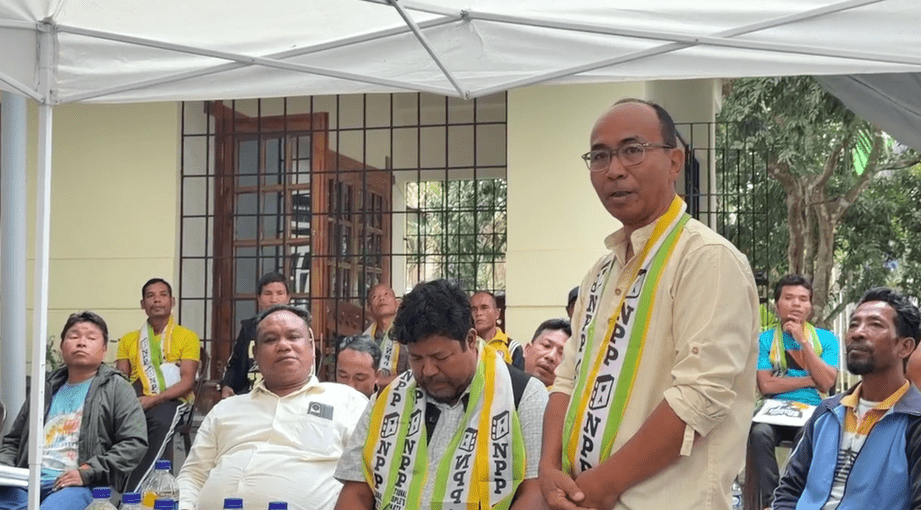
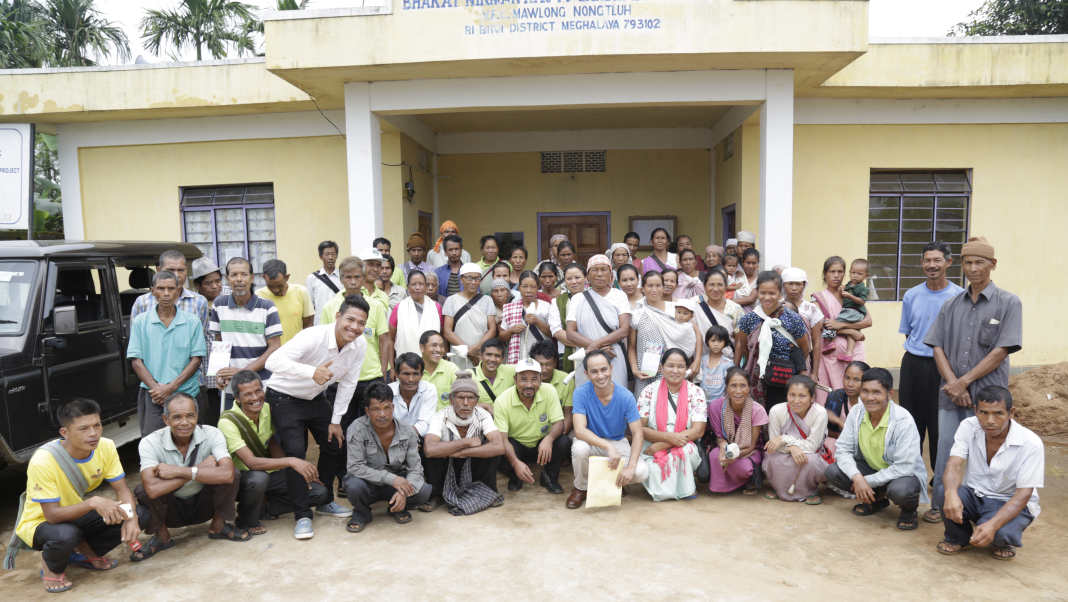
As many as 571 Integrated Village Cooperative Societies (IVCS) have been formed against a target of 450, along with over 13,000 producer groups bringing together more than 1.5 lakh farmers.
These institutions are now handling aggregation, credit access and marketing, and in several cases, linking farmers to buyers outside the state.
The report also points to steady progress in natural resource management, with plans prepared and implemented across 1,350 villages.
Interventions such as irrigation support, water conservation and soil management have improved productivity and reduced climate risks, especially in hill farming systems.
At the same time, investments in infrastructure—ranging from farmer markets and warehouses to collective marketing centres—are beginning to strengthen supply chains, though some of these facilities are still being completed.
Access to finance has expanded alongside these efforts. Village cooperatives have facilitated bank credit of around Rs 167 crore so far, apart from extending loans directly to their members.
The project has also pushed financial literacy and savings, helping deepen rural financial inclusion.
Women’s participation has been a strong feature, with women accounting for a significant share of members across cooperatives and producer groups, and taking on roles in management committees and service delivery.
The report notes that outreach to women, youth and indigenous communities has either met or exceeded targets.
At the same time, the review flags a few areas that need attention in the final phase. Some cooperative societies are yet to reach optimal membership or profitability levels, enterprise development has been slower than expected, and there are gaps in utilisation of convergence funds and beneficiary contributions.
The report also calls for faster completion and operationalisation of infrastructure created under the project.
Despite these gaps, IFAD has rated the project’s overall performance as satisfactory, noting that most outcome indicators have been met or are on track.
With the project set to run till June 2026, the focus now is on consolidating gains and ensuring that the institutions and systems created continue to function sustainably beyond.
Megha-LAMP was designed to improve rural incomes by building climate-resilient livelihoods, strengthening access to finance, and linking farmers to markets through a cluster-based approach.
The project was approved originally with an outlay of USD 169.9 million funded by an IFAD loan of SDR 32.4 million (USD 50 million), Government of Meghalaya (GoM) contribution of USD 49.7 million, bank credit of USD 29.3 million, convergence of USD 28.2 million and beneficiary contribution of USD 12.7 million.
Additional financing of USD 20.58 million was approved with a two year extension in October 2022. Two further extensions had been approved with which the revised date of completion being 30 June 2026 and closure on 31 December 2026.