
By Satyabrat Borah
The political and social landscape of Assam currently exists at a fascinating crossroads where the ancient echoes of spiritual tradition meet the loud rhythmic pulse of modern democratic machinery. As the state moves toward its assembly elections, the air is thick with a mixture of festive anticipation and political intensity. This is a land defined by the Brahmaputra, a river that has witnessed centuries of cultural synthesis, but today it finds itself navigating a complex narrative where Sanatana Dharma, religious identity, and the quest for political power are deeply intertwined. To understand the current state of affairs, one must look at how the timeless values of the Hindu faith are being interpreted in a contemporary political setting and how the shadow of religious division occasionally obscures the path of progress.
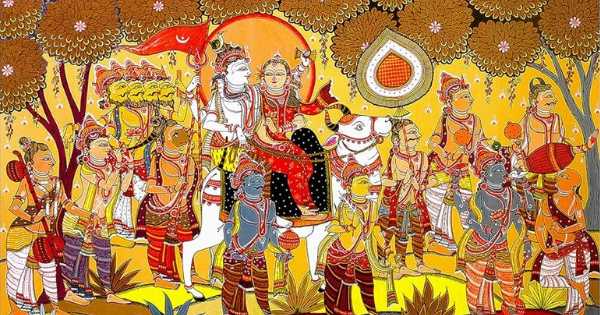
Assam has always possessed a unique religious character that distinguishes it from the rest of the country. The roots of Sanatana Dharma here are not rigid or exclusionary but are instead filtered through the inclusive philosophy of the Neo-Vaishnavite movement led by Srimanta Sankardeva. This version of Hinduism emphasized a casteless society, congregational prayer in Namghars, and a deep respect for all living beings. For centuries, this stayed the guiding light for the Assamese people, creating a social fabric where a Hindu villager and a Muslim neighbor shared a common linguistic and cultural bond. But as the political stakes have risen in recent years, this traditional harmony is being tested by new waves of ideological assertion. There is a growing movement to reclaim and protect the “Sanatani” identity, often framed as a response to perceived threats to the indigenous way of life. This shift is not merely about theology but is a reaction to decades of demographic changes and the lingering anxieties surrounding land and heritage.
During election cycles, these anxieties are often amplified. Political parties recognize that religious identity is a powerful emotional bridge to the voter. You see this in the way candidates visit ancient temples and satras, seeking blessings while signaling their commitment to the preservation of Hindu civilization. The discourse has moved from simple infrastructure promises to more profound discussions about the “civilizational survival” of the Assamese people. In this context, Sanatana Dharma is often presented as the ultimate shield against the erosion of local culture. While this brings a sense of pride and unity to many, it also introduces a layer of complexity to the social atmosphere. The challenge lies in celebrating one’s faith without allowing that celebration to become a tool for creating distance between different communities.
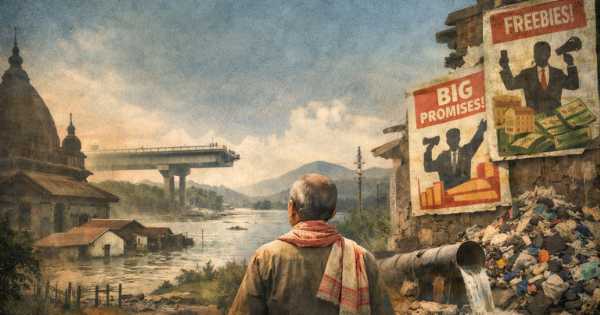
Religious division is an unfortunate byproduct of high-stakes electoral math. In a state with such a diverse population, the temptation to consolidate “vote banks” along communal lines is often too strong for politicians to resist. This leads to a binary narrative where the population is encouraged to see themselves through the lens of their faith first and their citizenship second. The rhetoric used in rallies often focuses on the “other,” creating a sense of competition for resources and recognition. This strategy might yield short-term gains at the ballot box, but it leaves behind a fractured society. When the focus shifts to who belongs more than someone else based on their place of worship, the real issues that affect everyone like the annual devastation of floods, the lack of high-quality jobs for the youth and the need for better healthcare start to fade into the background.
The influence of religious identity on voting patterns is undeniable. In many constituencies, the demographic makeup determines the entire campaign strategy. There is a visible effort to polarize the electorate, where one side claims to be the sole protector of the majority faith while the other positions itself as the guardian of minority rights. This tug-of-war creates a political environment where nuance is lost. A person’s political choice becomes a statement of their religious loyalty rather than an evaluation of a candidate’s competence. This trend is concerning because it moves the democratic process away from accountability and toward identity politics. The essence of Sanatana Dharma, which teaches the oneness of all existence, often gets lost in this scramble for sectarian dominance.
It is important to recognize that the Assamese people have a history of resilience against such divisions. Even when the political rhetoric reaches a fever pitch, the ground reality often tells a different story. In the local markets and the shared spaces of daily life, the bonds of “Bor-Axom” or Greater Assam still hold. People participate in each other’s festivals and share in each other’s sorrows. The Rongali Bihu festival, which coincides with the current election fever, serves as a perfect example of this. Bihu is a secular celebration of nature and the harvest that transcends religious boundaries. It acts as a cooling balm to the heat of political arguments. When the dhul and pepa play, the divisions of the campaign trail seem to lose their sharpness. This cultural unity is the true strength of the state, and it offers a template for how a society can remain rooted in its traditions without becoming intolerant.
The current push for a more assertive Sanatani identity in politics is also linked to the global trend of cultural nationalism. Many young people in Assam feel a desire to reconnect with their Vedic roots and take pride in their Hindu heritage. They see the promotion of Sanatana Dharma not as an act of aggression but as an act of restoration. They want to see their temples renovated and their history taught with a sense of honor. This is a legitimate cultural aspiration. The difficulty arises when this aspiration is weaponized by political entities to suggest that the progress of one group necessitates the marginalization of another. A healthy democracy should be able to accommodate the cultural pride of the majority while ensuring the safety and dignity of all minorities.
As the election progresses, the narrative of religious division often takes the form of debates over legislation and policy. Discussions about the protection of cattle, the management of temple lands, and the regulation of marriage practices are all heavy with religious undertones. These are not just administrative decisions but are seen as symbolic victories in a larger cultural war. For the average voter, these issues can be distracting. While they feel a natural inclination to support their faith, they also face the daily struggle of rising prices and inadequate infrastructure. The art of modern campaigning in Assam involves balancing these spiritual appeals with material promises, though the spiritual ones often leave a more lasting impact on the collective psyche.
The role of spiritual leaders and religious institutions in the electoral process has also become more pronounced. Satradhikars and priests find themselves being courted by leaders from across the political spectrum. Their endorsements are highly valued because they carry a moral authority that politicians lack. When a religious leader speaks, it is seen as a call to the conscience of the devotee. This intersection of the sacred and the profane is a hallmark of the Assamese election. It reminds us that in this part of the world, faith is not a private matter kept behind closed doors but is a public force that shapes the direction of the state.
True leadership in this environment would mean rising above the easy path of division. It would mean invoking the inclusive spirit of the great saints to build a version of Sanatana Dharma that is confident yet compassionate. The history of Assam is a history of integration of the Ahom kings adopting local customs, of the Sufi saints and Vaishnavite gurus finding common ground, and of a people who have always valued their “Assameseness” above all else. If the political class continues to lean too heavily on religious friction, they risk damaging the very culture they claim to protect. A house divided against itself cannot stand, and a society split along religious lines struggles to achieve its full economic and social potential.
The voters of Assam stand at a point where they must decide what kind of future they want. Do they want a state where their religious identity is used as a weapon, or a state where their faith provides the moral compass for a more just and prosperous society? The values of Sanatana Dharma offer a path toward the latter. By focusing on the principles of truth, non-violence, and the welfare of all, the people can demand a politics that is as noble as their heritage. The elections will come and go, the banners will be taken down, and the loud speakers will finally fall silent. What will remain is the people and their relationships with one another.
In the quiet moments after the storm of campaigning, it becomes clear that the soul of Assam lies in its ability to harmonize contradictions. It is a place where a modern election can be fought with the passion of a holy crusade, but also a place where a simple Bihu song can bring everyone together. The challenge for the future is to ensure that the politics of the state reflects its best self—a self that is deeply rooted in the ancient wisdom of Sanatana Dharma but is also wide open to the possibilities of a diverse and inclusive future. The path forward is not found in building walls between communities but in building bridges of understanding. Only then can the true essence of the land be preserved for the generations to come. The beauty of this land is found in its variety, and the strength of its democracy is found in its ability to protect that variety while moving forward as one people. As the sun sets over the Brahmaputra, there is a hope that the spirit of peace will prevail over the noise of division, leading Assam toward a brighter and more unified tomorrow.