
By Dipak Kurmi
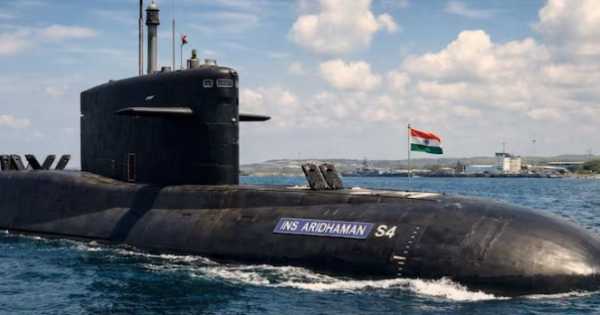
The geopolitical landscape of the Indo-Pacific region witnessed a monumental shift on April 3, 2025, when India formally inducted its third nuclear-powered ballistic missile submarine, INS Aridaman, into the naval fleet. This strategic milestone significantly strengthens the nation’s sea-based nuclear deterrence capabilities, marking a coming-of-age moment for its indigenous defense manufacturing. With the induction of INS Aridaman, the Indian Navy will now have three operational ballistic missile submarines at sea for the very first time. This continuous at-sea presence ensures that the nation maintains a credible and uninterrupted maritime shield against any potential regional aggressors. The ship submersible ballistic nuclear designation represents the absolute pinnacle of naval engineering, combining the stealth of deep-sea operations with the catastrophic power of nuclear weaponry. This massive leap forward ensures that India’s strategic interests are well-guarded across the vast expanses of the Indian Ocean and beyond.
The latest induction will also fundamentally strengthen India’s nuclear triad, elevating its strategic stature on the global stage. India is part of an incredibly select group of countries with nuclear triad capabilities, a prestigious club that includes only the United States, Russia, China, and France. A nuclear triad refers specifically to the military ability to launch nuclear missiles from platforms in the air, on land, and at sea. In the case of India, such destructive missiles, most notably represented by the highly successful Agni series, can be launched effectively from mobile land platforms. For the aerial leg of the triad, advanced fighter aircraft such as the French-origin Rafales, the heavy Russian-built Su-30MKIs, and the veteran Mirage 2000s can deliver nuclear warheads with pinpoint accuracy from the skies. By completing and reinforcing this triad with advanced submarines, the nation ensures that its defensive posture is robust enough to survive any initial onslaught.
Although India’s nuclear doctrine strictly stipulates a strict “no first use” policy, committing the nation to using nuclear weapons solely for deterrence and massive retaliation, these submarines guarantee a devastating second-strike capability. Should an adversary ever deliver a first nuclear strike on India’s vulnerable land and air bases, an isolated and hidden submarine can launch a retaliatory nuclear attack, establishing absolute deterrence. This philosophy is centered on the idea that guaranteed mutual destruction prevents a conflict from escalating to the nuclear level in the first place. The hidden nature of these underwater vessels makes them the most survivable leg of the nuclear triad. While land silos and airbases can be targeted and destroyed in a surprise opening salvo, a submarine lost in the depths of the ocean remains an invisible, looming threat that an enemy cannot easily neutralize.
Examining the specifics about INS Aridaman reveals a massive leap in capability over previous iterations of Indian naval technology. INS Aridaman is a formidable 7,000-tonne vessel that is widely believed to have eight vertical launching system tubes, which is around double the number of its immediate predecessors. This expanded physical capacity means it can carry more K-15 nuclear-capable submarine-launched ballistic missiles, which possess a striking range of more than 700 kilometers. They can also carry the much longer-range K-4 submarine-launched ballistic missiles that are capable of hitting critical strategic targets up to 3,500 kilometers away. Beyond its immense armament, it is also powered by advanced reactors that are understood to be a significant upgrade over the ones that power its predecessors. These upgraded reactors ensure that the massive vessel can remain submerged for longer durations, lasting months together without needing to surface every few days to snorkel for air.
The trajectory of growth does not stop with this third vessel, as a fourth indigenous submarine is also currently under construction to join the fleet. Like the Aridaman, this fourth vessel will also be able to carry more K-4 missiles owing to its larger physical size and modernized hull design. To appreciate the scale of this achievement, one must look back at the history of the INS Arihant and INS Arighaat programs. India’s nuclear-powered submarine project was initiated more than three decades ago, involving both private firms and the Defence Research and Development Organisation, with crucial technical help from Russia. The pioneer vessel, INS Arihant, was launched in 2009 and commissioned into the Navy in 2016 as its very first nuclear-powered submarine. This historic moment provided India with a credible maritime strike capability for the first time in its independent history, moving it away from purely defensive coastal operations.
The operational history of the lead ship is equally impressive and foundational to current maritime strategy. INS Arihant conducted its first deterrence patrol in 2018, thus officially establishing India’s functional nuclear triad in the eyes of international military observers. In October 2022, the Ministry of Defence proudly announced the successful launch, achieved with very high accuracy, of a ballistic missile in the Bay of Bengal by the Arihant. The subsequent induction of the 6,000-tonne INS Arighaat in 2024 was yet another massive boost to this growing nuclear strike capability in the region. Both INS Arihant and INS Arighaat are powered by highly efficient 83 megawatt pressurized light-water nuclear reactors. These reactors allow them to remain submerged and undetected for much longer than conventional diesel-electric submarines, which must regularly expose themselves to recharge batteries.
Among the first two operational vessels, INS Arighaat is significantly more technologically advanced than INS Arihant, according to official statements from the Ministry of Defence. The intensive construction of Arighaat involved advanced design and manufacturing technology, detailed research and development, utilization of special materials, complex engineering, and highly skilled workmanship. Looking at future plans, India is aggressively pursuing a nuclear-powered attack submarine program to complement its ballistic missile fleet. The Indian Navy plans to build two attack submarines indigenously and acquire one on lease from Russia, which is expected to arrive by the 2027 to 2028 timeframe to bridge the capability gap until home-grown boats are ready. Concurrently, India and Germany are finalizing a deal for the Project-75I program, as part of which Germany’s ThyssenKrupp Marine Systems will partner with Mazagon Dock Shipbuilders Limited to construct six advanced air-independent propulsion equipped conventional submarines in India.
While these advanced programs are promising, there is no clarity yet on the plans to get three additional Scorpene-class submarines to further bolster the aging conventional fleet. Assessing India’s current submarine strength reveals a complex picture of modern marvels and legacy systems working together. Aside from the heavy ballistic missile submarines, the Indian Navy currently has 16 conventional submarines in active service. This fleet includes six Kalvari-class attack submarines built at India’s Mazagon Dock in close partnership with France’s Naval Group, four Shishumar class subs, and seven aging Kilo or Sindhughosh class subs. To carry out its full spectrum of operations across two vast oceans, the Navy is officially authorized to have 18 conventional submarines. However, at any given time, around 30 percent of the fleet is under refit for repair and renovation, which brings down the actual strength of operational submarines significantly.
To put these numbers into a broader global context, the competition in the deep oceans is incredibly fierce and dominated by massive fleets. The United States navy currently operates 14 massive Ohio-class ballistic missile submarines and a staggering 53 fast-attack submarines to project power globally. Meanwhile, China has at least 12 nuclear submarines, of which six are dedicated nuclear-powered attack submarines, alongside a rapidly growing fleet of conventional vessels. India’s steady progress in indigenous submarine production represents a measured and highly strategic response to these massive global arrays. By focusing on quality, stealth, and a guaranteed second-strike capability, the Indian Navy is ensuring that its smaller fleet carries a disproportionately heavy deterrent weight in global waters.
(the writer can be reached at dipakkurmiglpltd@gmail.com)