
Kolkata, April 29: West Bengal’s high-stakes assembly elections ended on Wednesday with a massive voter turnout of 91.66 per cent in the second and final phase, capping one of the most intense electoral contests in the recent years and setting the stage for a far-reaching verdict on whether chief minister Mamata Banerjee will continue her dominance or the BJP will break the TMC’s hold in the state.
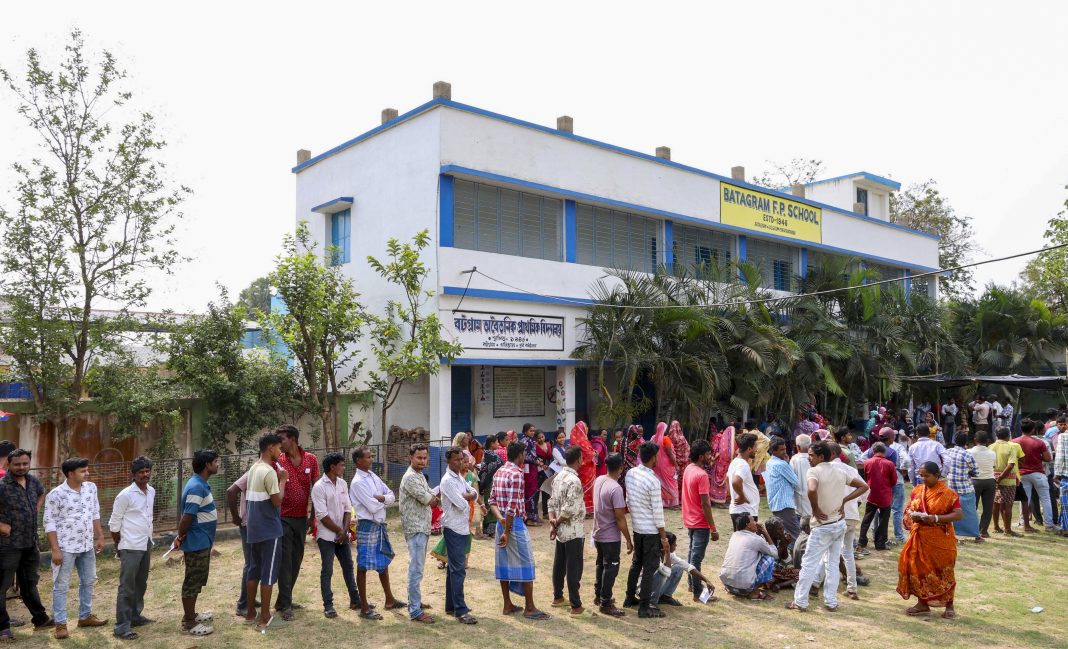
With 91.66 per cent at the closing of the voting, and reportedly lakhs of voters still waiting in queues to cast their ballots, the second phase of polls across 142 constituencies in South Bengal looked poised to match the first phase’s record voter participation of 93.19 per cent.
The metropolis of Kolkata recorded a turnout of around 87 per cent at that time, with Purba Bardhaman district topping the chart at 92.46 per cent.
A communication from the Election Commission said 91.66 per cent turnout was recorded in the second phase of polls till 7.45 pm, putting the combined poll percentage over the two-phases at 92.47 per cent. The first phase of polling was held on April 23 and the counting will be on May 4.
“This is the highest-ever recorded poll-participation since Independence in West Bengal,” it said.
The sheer scale of participation gave the election an immediate political message — voters were not indifferent. They had turned out in numbers large enough to make every narrative contested and every claim of momentum politically loaded.
If the first phase tested whether the BJP could retain its north Bengal citadel, the second and final round was always the real battle for the saffron party on whether it could breach the ruling TMC’s southern fortress of Kolkata, Howrah, Hooghly, Nadia, North and South 24 Parganas and Purba Bardhaman.
At the centre of the larger political fight stood Bhabanipur, no longer merely a south Kolkata constituency but Banerjee’s political refuge, her emotional home turf and the BJP’s chosen psychological battlefield.
Banerjee, 71, seeking a fourth consecutive term after 15 years in power, faced Leader of Opposition Suvendu Adhikari in a prestige battle widely seen as a symbolic rematch of Nandigram, where Adhikari had defeated her in 2021 after crossing over from the TMC to the BJP.
Five years later, the duel shifted to Banerjee’s own bastion. For the TMC, retaining Bhabanipur is about protecting the chief minister’s authority in her own backyard. For the BJP, breaching it would puncture the aura of invincibility around Bengal’s most powerful political figure.
The constituency witnessed nearly 87 per cent polling, sharply up from around 61 per cent in the 2021 assembly polls and 57 per cent in the bypoll that brought Banerjee back to the House.
Banerjee – who usually votes later in the day and prefers staying indoors on the day of polls – broke convention and hit the ground before 8 am, moving through Chetla, Padmapukur and Chakraberia areas following complaints of alleged intimidation of local TMC leaders.
As she sat outside a booth amid heavy deployment of central forces, Adhikari arrived there and declared, “I will not allow any hooliganism.” He opposed Banerjee moving around with “50-60 people” with her.
Banerjee accused the BJP of trying to “rig” the election by using central forces, election observers and officials.
“The BJP wants to rig this election. Polls in Bengal are usually peaceful. Is there a goonda raj here?” she said, alleging intimidation of TMC polling agents and late-night visits by CRPF personnel to party workers’ homes.
“The atrocities by the central forces are unprecedented. What is happening is not at all free and fair polls. But despite all this, we have full faith that we will win,” she said after casting her vote.
Adhikari dismissed the charges as “frustration”, claiming Banerjee had realised that “not a single vote was coming her way”.
Tension flared again in Kalighat when Adhikari visited another booth, and TMC workers raised slogans against him. Police resorted to a lathi-charge to disperse the crowd as BJP supporters answered with counter-slogans.
Reports of sporadic tension were also received from some other areas amid sights of long queues at polling stations, booth-level flare-ups, and political bickering. (PTI)