
Tura, May 21: The state police have admitted intelligence assessment gaps in handling of the recent unrest in Garo Hills over voting right of non-tribals even as pointing out the absence of a dedicated forensic laboratory in Garo Hills.
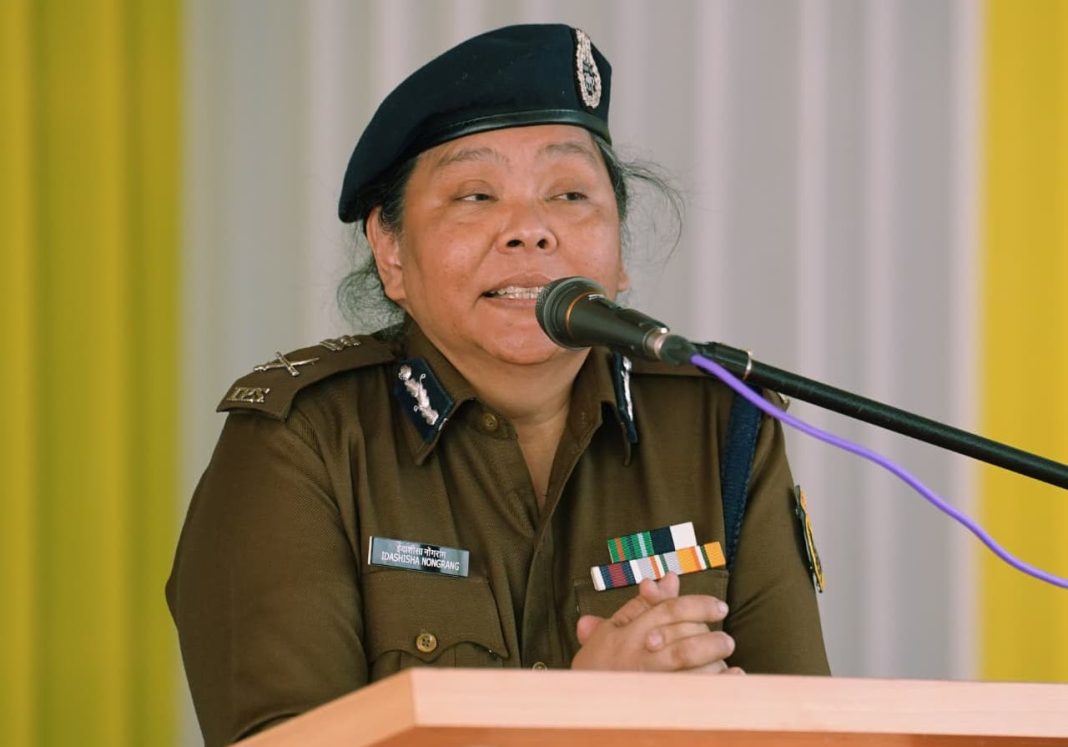
“The events which took place in early March this year… while there were inputs that people were mobilising… we did not really collate them together to give a bigger picture,” Director General of Police (DGP) Idashisha Nongrang said while addressing a state-level police conference in Tura on Thursday.

The DGP brought up the subject of intelligence while reflecting on the disturbances that erupted in Garo Hills in March following protests against a GHADC notification mandating Scheduled Tribe (ST) certificates for candidates contesting the Council elections, effectively barring non-tribal individuals from participating.
The protests had escalated into violence, resulting in two deaths, widespread vandalism in several parts of Garo Hills that forced the State Government to postpone the GHADC elections.
The DGP said the police had received separate intelligence inputs on various issues, including GHADC-related matters, concerns over illegal migrants and labour-related issues.
“In hindsight… while we did have inputs on various aspects, but we did not really collate them together to give a bigger picture,” Nongrang said.
The DGP said an internal review was conducted following the violence.
“We have done what we call… a post-mortem of what caused the things and where we were at fault,” she said.
Acknowledging shortcomings, Nongrang added, “Yes, there were some lapses on our part.”
However, she said coordinated action involving Meghalaya Police, paramilitary forces, the Army and Assam Police helped contain the situation and minimise damage.
The DGP also pointed out at forensic infrastructure challenges in Garo Hills, acknowledging the region currently lacks a dedicated forensic science laboratory.
She said the government has already been apprised of the need for a forensic facility in the region.
She said district headquarters now have mobile crime scene units to strengthen forensic evidence collection and preservation, particularly in cases requiring scientific examination.