
By Dipak Kurmi
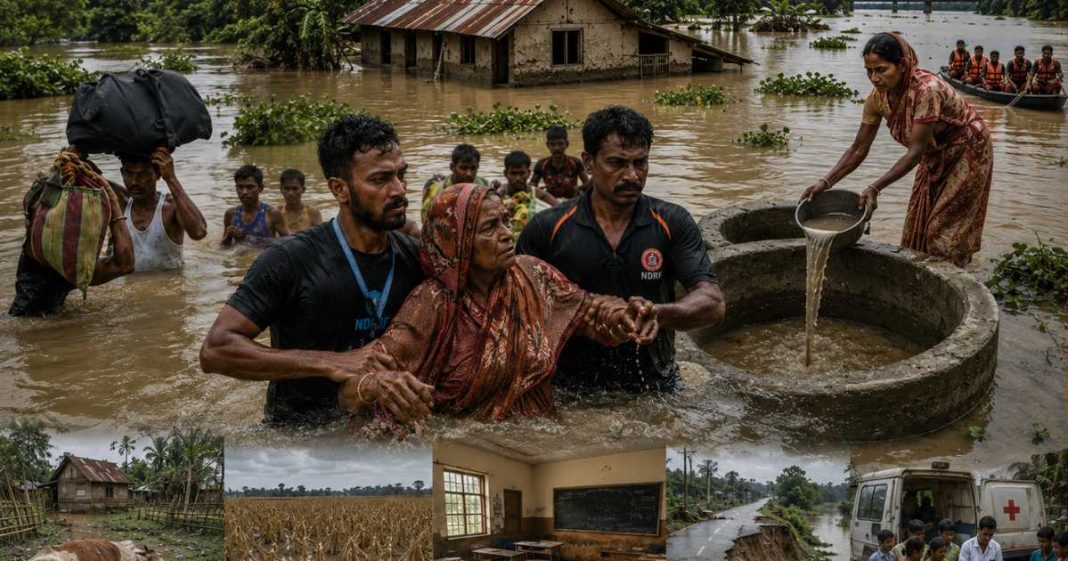
While public attention during Assam’s annual monsoon typically focuses on swirling waters, inundated villages, dramatic rescue operations, and overcrowded relief camps, the most devastating phase of the disaster often begins quietly after the deluge subsides. The immediate media coverage captures a crucial snapshot of physical destruction, yet it routinely obscures the protracted, silent crisis that unfolds when the floodwaters retreat. Once the rivers return to their channels, thousands of displaced families are left to navigate an environment rendered nearly unlivable. Dwellings remain blanketed under thick layers of silt and toxic mud, traditional drinking water sources are contaminated, agricultural lands lie ruined under heavy sand deposits, key transportation networks stand severed, and local health systems are stretched to the point of structural collapse. In regions like Upper Assam—where districts such as Sivasagar, Charaideo, and Jorhat recently experienced rapid inundation caused by cloudbursts and relentless rainfall in neighboring hill states—rivers like the Dikhow, Disang, Jaji, and Bhogdoi breached embankments within hours. These sudden flash surges reflect a dramatic shift driven by climate change, replacing gradual seasonal flooding with unpredictable, high-velocity deluges. However, natural precipitation alone does not account for this escalating human tragedy. Decades of upstream deforestation, unabated encroachment upon natural wetlands and drainage channels, heavy riverbed siltation, unscientific embankment construction, and unplanned urban expansion have collectively converted seasonal river overflows into recurring, structural humanitarian emergencies.
The transition from emergency rescue to the post-flood period marks the emergence of an acute public health and sanitation crisis that is frequently underestimated by disaster management frameworks. As floodwaters recede, open wells, shallow tube wells, and community ponds become heavily polluted by raw sewage, decomposing animal carcasses, and rotting organic waste. Deprived of alternative water supplies, rural households are routinely forced to consume unsafe water, creating ideal conditions for explosive outbreaks of waterborne pathogens such as cholera, dysentery, typhoid, and various diarrheal illnesses. Vulnerable demographics, particularly young children, pregnant women, and elderly individuals with compromised immunity, bear the heaviest burden of these infections. Simultaneously, vast stretches of stagnant water left in low-lying depressions become fertile breeding grounds for mosquitoes, triggering sharp surges in vector-borne diseases including malaria, dengue, and Japanese Encephalitis, all of which historically pose severe public health threats across the Brahmaputra valley. Continuous contact with contaminated sludge also causes widespread fungal skin infections, acute conjunctivitis, and leptospirosis among survivors clearing debris. This health emergency is compounded by the widespread disruption of rural health infrastructure; primary health centers and district hospitals are often submerged, valuable medical equipment is ruined, and road washouts prevent medical personnel and essential pharmaceuticals from reaching isolated hamlets. The collapse of electrical grids further impairs vaccine cold chains and diagnostic services, while damaged sanitation facilities force communities into open defecation, accelerating the cycle of environmental contamination.
The socio-economic repercussions of post-flood inundation extend far beyond immediate physical damage, inflicting deep structural injuries on the rural economy that linger for years after public interest has faded. Agriculture, the primary economic pillar of rural Assam, suffers catastrophic setbacks when standing paddy crops are destroyed and fertile topsoil is covered by thick layers of infertile river sand, rendering agricultural plots unproductive for multiple cultivation cycles. The simultaneous loss of livestock—including cattle, goats, pigs, and poultry—strips farming households of vital financial buffers and secondary income streams. Rural aquaculture similarly faces severe disruption as commercial fish ponds overflow, allowing stock to escape into open river channels. Small township enterprises, weekly rural markets, and local supply chains founder under the combined weight of road damage and reduced purchasing power. Burdened by outstanding agricultural credit and microfinance obligations, many working-age individuals are forced into distress migration toward urban industrial centers and distant states in search of casual labor. Beyond financial ruin, the social fabric endures profound disruption as schools remain closed for months to serve as temporary relief shelters or undergo extensive structural repairs. The resulting loss of instructional time, combined with the destruction of educational materials and uniforms, increases student dropout rates and interrupts youth development. Furthermore, the psychological toll of watching homes, livestock, and lifelong savings vanish within hours leaves enduring emotional scars, manifesting as chronic anxiety and depression among survivors who face the prospect of rebuilding their lives repeatedly without adequate institutional support.
Addressing the crisis of post-flood recovery in Assam requires moving away from reactive emergency relief toward a permanent, scientifically grounded framework of risk reduction and climate adaptation. Sustainable flood mitigation cannot be confined to the monsoon months or limited to the physical construction of earthen embankments, which frequently fail under high hydraulic pressure. Instead, state planning must emphasize year-round river management, including ecologically sound river dredging where hydrologically viable, the aggressive restoration of natural wetlands and floodplains to absorb excess discharge, and strict enforcement of zoning regulations to halt encroachment on natural drainage corridors. Forest conservation in upstream catchment areas is equally vital, as healthy mountain ecosystems moderate surface runoff and reduce downstream sediment loads. Concurrently, leveraging advanced satellite imagery, hydrological modeling, and digital communication networks can establish localized early warning systems that provide vulnerable riverside communities with actionable advance notice. Following flood events, state agencies must institutionalize the rapid deployment of mobile medical vans, veterinary relief units, water purification facilities, and targeted sanitation crews to prevent disease outbreaks. Agricultural recovery requires ensuring that affected farmers receive rapid access to flood-resistant seed varieties, subsidized fertilizers, financial credit relief, and direct compensation through transparent administrative mechanisms. Prioritizing the rapid repair of educational institutions and health centers is essential to maintaining basic social stability in affected districts.
Ultimately, while the geographic reality of the Brahmaputra and Barak river basins makes seasonal flooding an inescapable feature of life in Assam, the severe human suffering that characterizes the post-flood phase is not inevitable. The recurring cycle of disease, economic ruin, and social displacement represents a policy challenge that can be mitigated through sustained political willpower, environmental stewardship, and institutional accountability. Rebuilding damaged roads and earthen dikes is necessary, but true disaster resilience requires empowering local communities, restoring natural ecosystems, and ensuring that post-flood rehabilitation receives the same urgency and financial commitment as emergency rescue operations. By transitioning from short-term crisis response to long-term structural adaptation, Assam can protect its vulnerable populations from the devastating secondary impacts of climate-induced disasters.
(the writer can be reached at dipakkurmiglpltd@gmail.com)