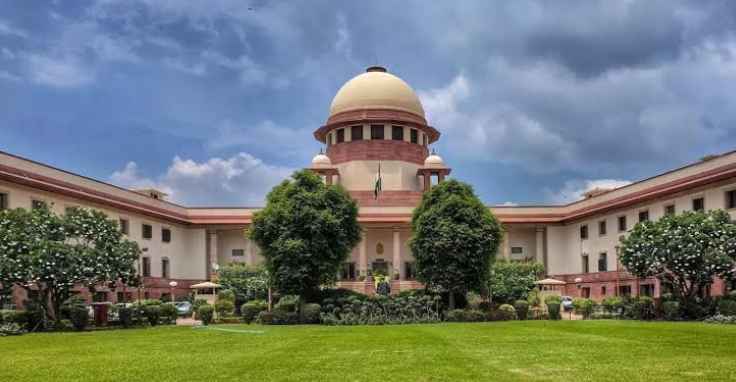

New Delhi, Aug 11: The Supreme Court on Tuesday agreed to hear a PIL alleging that the Odisha government was trying to include a junior officer in the list of probable candidates for the Director General of Police post, in breach of the apex court’s directions in the 2006 Prakash Singh case.
A bench comprising Chief Justice Surya Kant and Justices Joymalya Bagchi and V Mohana was urged by senior advocate P Chidambaram to list the PIL for an urgent hearing.
The incumbent DGP, Y B Khurania, will demit office on August 16 this year.
The 2006 apex court verdict and subsequent directions in the Prakash Singh case had said the DGP of a state shall be “selected by the state government from amongst the three senior-most officers of the department who have been empanelled for promotion to that rank by the UPSC on the basis of their length of service, very good record and range of experience for heading the police force”.
And, once a person has been selected for the job, they should have a minimum tenure of at least two years irrespective of the date of superannuation, it had said.
Chidambaram said the Odisha government was attempting to include an ineligible officer in the panel to be sent to the Union Public Service Commission (UPSC).
“We will list it tomorrow (Wednesday),” the CJI said.
The senior lawyer said the UPSC was scheduled to meet on August 7 to consider a panel of three eligible DGP-level officers for the Odisha appointment, but the state withdrew the list of officers.
“The State of Odisha is breaching the Prakash Singh judgment. On August 7, the UPSC was scheduled to meet to select from among the three DGPs. Odisha withdrew the list. They are now making another list to send,” he said.
He said the state was now attempting to promote an Additional Director General of Police (ADGP) and include the officer in the fresh panel.
“They are trying to promote an ADGP, either today or last night, and then smuggle him into the list and get him considered,” he said.
The CJI said that as per an earlier order, the UPSC is duty-bound to approach the court in case of non-compliance of the directions.
Chidambaram said the bench had previously made it clear that only eligible officers at the requisite level could be included in the panel.
He referred to earlier proceedings in which the UPSC had approached the Supreme Court over states either failing to send panels or sending panels containing ineligible officers.
The lawyer said Odisha had initially sent a panel in April and subsequently withdrew it. A second panel sent in May comprised three DGPs and eight ADGPs.
“On August 7, the UPSC demurred and said, ‘We will only consider the DGP level’,” Chidambaram said, alleging that the state then withdrew the panel around the time of the UPSC meeting and was now “frantically” preparing another panel.
He said the matter was being raised through a Public Interest Litigation (PIL) because serving police officers awaiting appointment as DGP would ordinarily be reluctant to challenge the state government.
“This is a PIL. No serving officer will file a writ petition,” he said.
The CJI said the court would first expect the UPSC to ensure compliance with its directions.
“They are well aware of who is eligible and who can be considered. If a panel of ineligible officers is being sent, we expect the UPSC to act in accordance with our directions,” the CJI said. (PTI)