
By Satyabrat Borah
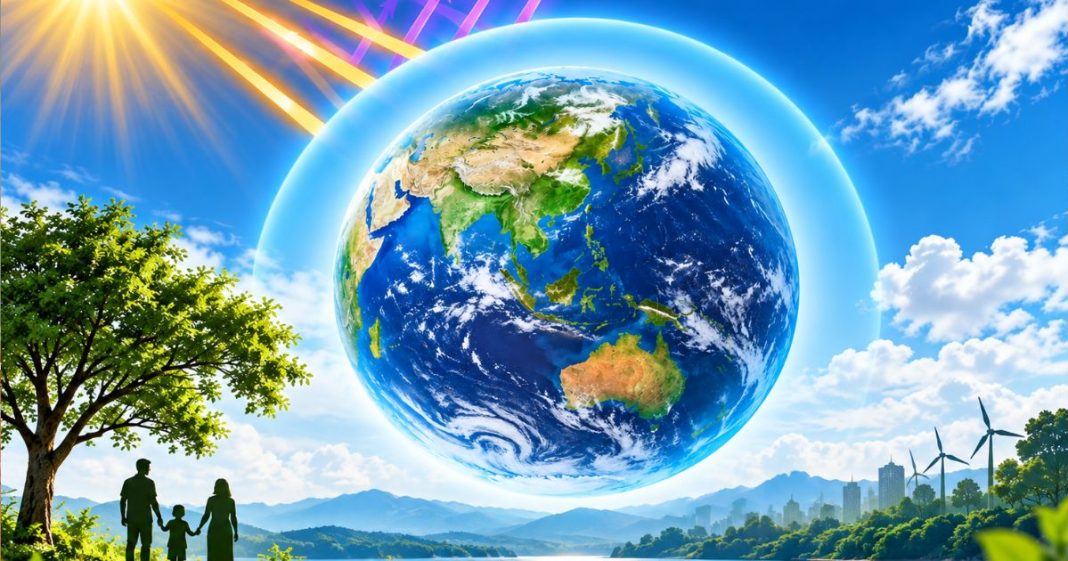
Every year on September 16, people all across the world celebrate World Ozone Day. The official name given to this important date by the United Nations is the International Day for the Preservation of the Ozone Layer. It is a day dedicated to spreading knowledge about a special gas layer high up in our atmosphere. This layer acts as an invisible shield for the entire planet. Without it, life on Earth as we know it would not be able to survive. Celebrating this day helps people remember that human actions can harm the environment, but united human actions can also fix global environmental problems.
To understand why this day is so important, it helps to first understand what the ozone layer is and what it does for our home. Earth is surrounded by layers of gases called the atmosphere. One of these upper layers is called the stratosphere. Inside the stratosphere, floating high above the ground where airplanes fly, there is a thin concentration of a natural gas called ozone. Ozone is made of three oxygen atoms joined together. While ground level ozone can cause bad air quality, the ozone high up in the sky performs a wonderful job. It works like a giant pair of sunglasses for the Earth. The sun gives off light and heat, which are necessary for plants to grow and for people to stay warm. However, the sun also sends out invisible harmful rays called ultraviolet radiation. The stratospheric ozone layer absorbs almost all of these dangerous rays before they reach the surface where humans, animals, and plants live.
If the ozone layer were not there, ultraviolet rays would strike the surface of the Earth directly. For human beings, extra ultraviolet radiation causes serious health conditions. It causes bad sunburns, damages eyes by creating cloudy areas called cataracts, and can lead to dangerous skin cancers. It also weakens human immune systems, making it harder for our bodies to fight off sicknesses. Animals face similar health problems when exposed to too much direct sunlight without protection. Plants suffer as well because excessive light burns their leaves, interfering with photosynthesis and reducing crop harvests. Even ocean life is hurt by intense radiation. Tiny floating organisms called phytoplankton, which form the base of the ocean food chain and produce a large amount of the world’s oxygen, die off when exposed to strong ultraviolet rays. Every living thing relies on the ozone layer to stay safe.
During the middle of the twentieth century, human technology developed rapidly. Factories began making new machines to keep food cold, cool down hot homes, and make daily chores easier. Many of these machines used man made chemicals. A very common group of these artificial chemicals were called chlorofluorocarbons, or CFCs for short. These chemicals were seen as miracle substances because they were cheap, non toxic to touch, did not burn easily, and worked extremely well inside refrigerators, air conditioners, aerosol spray cans, and industrial foam products. For decades, millions of spray cans and cooling units released these invisible gases into the air without anyone realizing the hidden danger.
Scientists in the 1970s began studying what happens to these manufactured chemicals after they float up into the sky. They discovered a alarming truth. CFCs do not break down in the lower atmosphere. Instead, they slowly drift up into the stratosphere over many years. Once they reach the ozone layer, intense sunlight breaks the chemicals apart, releasing chlorine atoms. A single chlorine atom acts like a tiny chemical destroyer. It can attack and break apart thousands of ozone molecules one after another. Because of these chemicals, the ozone layer started growing thinner and weaker across the entire globe.
By the early 1980s, researchers discovered something shocking above the continent of Antarctica. The ozone layer there had become so thin during certain months of the year that it created a massive hole. News of this ozone hole alarmed leaders, scientists, and citizens around the world. People realized that if the destruction continued, skin cancer rates would skyrocket, crops would fail, and ecosystems across the planet would collapse. Human industrial activity was fast destroying the very atmosphere protecting life on Earth.
Recognizing the immense danger, nations came together to find a solution. On September 16, 1987, world leaders and diplomatic representatives gathered in Canada and signed a landmark international agreement called the Montreal Protocol on Substances that Deplete the Ozone Layer. This historic treaty set firm rules requiring countries to stop producing and using ozone damaging chemicals. Wealthy nations agreed to help developing nations switch to safer alternatives so that everyone could work together toward the same environmental goal.
Because the signing of the Montreal Protocol took place on September 16, the United Nations General Assembly officially declared September 16 as International Day for the Preservation of the Ozone Layer. It serves as an annual reminder of the exact date when the global community chose to act as one to heal the atmosphere.
The Montreal Protocol turned out to be one of the most successful international agreements in human history. Almost every nation on Earth signed the treaty and kept its promises. Factories stopped making products with CFCs and developed safer chemical alternatives that did not destroy ozone molecules. Thanks to this disciplined worldwide commitment, the depletion of the ozone layer was successfully stopped.
Scientific measurements now show that the ozone layer is slowly repairing itself. The thinning area over Antarctica is gradually shrinking as the chemical destroyers slowly clear out of the stratosphere over long periods of time. Experts estimate that if countries continue following environmental treaties, the ozone layer will fully recover back to its original healthy state by the middle of the twenty first century. This progress proves that when humanity acknowledges scientific warnings and cooperates globally, massive global environmental disasters can be prevented.
Even though great progress has been made, the story does not end there. Protecting the atmosphere requires ongoing work. When factories replaced ozone damaging chemicals, they introduced alternative chemicals known as hydrofluorocarbons, or HFCs. These replacement chemicals were great for the ozone layer because they contained no chlorine, meaning they did not break down ozone molecules. However, scientists soon noticed a different problem. HFCs are extremely powerful greenhouse gases. While they do not destroy the ozone layer, they trap heat in the atmosphere thousands of times more effectively than carbon dioxide, contributing to global climate change.
To address this new challenge, world leaders met again in 2016 in Kigali, Rwanda. They updated the original agreement with a new agreement called the Kigali Amendment. Under this updated plan, countries agreed to phase out the use of HFCs as well and transition toward green cooling technologies that protect the ozone layer while also helping to stop global warming. This update shows how environmental protection requires constant learning and adaptation. Solving one issue must not lead to creating another environmental crisis.
Each year, World Ozone Day focuses on a special theme chosen by environmental agencies. These annual themes highlight key messages such as climate action, scientific discovery, sustainable cooling, or international cooperation. Schools, universities, community organizations, and government agencies host educational events on September 16. Teachers organize science projects, students draw colorful posters showing a healthy Earth, and experts deliver speeches explaining atmospheric science. The goal of these activities is to teach young people that caring for the environment is an ongoing responsibility shared by every generation.
Every individual can contribute to keeping the atmosphere healthy in daily life. People can choose energy efficient appliances, ensure older refrigerators and air conditioners are serviced by qualified technicians so chemicals do not leak, and dispose of old cooling appliances properly. Using public transit, riding bicycles, or walking reduces general atmospheric pollution. Supporting policies that favor sustainable cooling technology also makes a positive impact.
World Ozone Day is far more than an annual date on a calendar. It stands as a powerful symbol of hope, proof of scientific victory, and a reminder of humanity’s role as caretakers of the Earth. It shows that people from different cultures, political views, and economic backgrounds can unite to solve an invisible global threat. By celebrating this day every September 16, humanity honors the legacy of international cooperation and recommits to preserving the protective shield of our shared home for generations to come.