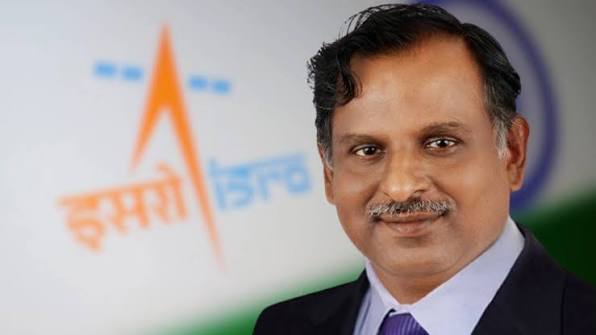

New Delhi, Sep 25: India’s journey towards ‘Viksit Bharat’ is not confined to the boundaries of Earth but is being written in the rockets built on Indian soil and in the cryogenic engines the world once refused to share, ISRO Chairman V Narayanan has said.
Delivering a lecture on “India’s Space Programme: The Challenges and Way Forward” at the Indian Institute of Technology (IIT) here, Narayanan, who is also Secretary, Department of Space, traced India’s space journey from its formal and humble beginning in 1962, when the country was still building its most basic capabilities in food security and literacy, to the present day.
“As India looks towards 2047, its journey towards a Viksit Bharat is not confined to the boundaries of Earth. It is being written in the rockets built on Indian soil, in the cryogenic engines the world once refused to share, and in the young engineers who will carry the country’s ambitions in space still further,” he said.
The Indian Space Research Organisation (ISRO) chief spoke about India’s first rocket launch from Thumba in November 1963, assembled with equipment gathered from across the world, and contrasted it with the country’s current capability to build and launch satellites for other nations on a fully commercial basis.
He spoke about the development of India’s cryogenic propulsion systems, technology that was denied to India in the early 1990s by other countries.
“This technology was denied to India, and today I can inform you that we have developed three cryogenic propulsion systems entirely on our own. When the world denied us the technology, we simply decided we would build it ourselves,” he said.
Narayanan spoke about the success of Chandrayaan-3, which made India the first country to achieve a soft landing near the Moon’s south pole.
He said, “23 August, 2023, was a historic day for India. While only three countries had previously achieved a successful soft landing on the Moon, India became the fourth and the first to successfully land in the lunar south polar region.”
Narayanan outlined India’s roadmap for the coming decade, including the Gaganyaan human spaceflight programme, currently working towards its first uncrewed mission; the Bharatiya Antariksh Station, whose first module has already received project approval ahead of a planned launch by 2028, with subsequent modules to follow by 2035; Chandrayaan-4, designed to bring lunar samples back to Earth; and a Venus mission and a crewed lunar landing targeted for 2040.
He also spoke of the development of a next-generation launch vehicle capable of placing 30,000 kg in low earth orbit and of partially reusable launch vehicle systems currently under development.
Narayanan urged students to look beyond conventional career ambitions and towards national contribution.
“I request all of you just one thing. Your target should not be a job earning (Rs) 2 or 3 lakh. Your target should be to contribute to building a developed India by 2047,” he said. (PTI)