
ROOPAK GOSWAMI
Shillong, Nov 22: Meghalaya’s traditional potato varieties could hold the key to controlling one of the crop’s most destructive pests, with a new study finding that indigenous varieties are considerably more resistant to potato tuber moth than several commercially popular varieties.
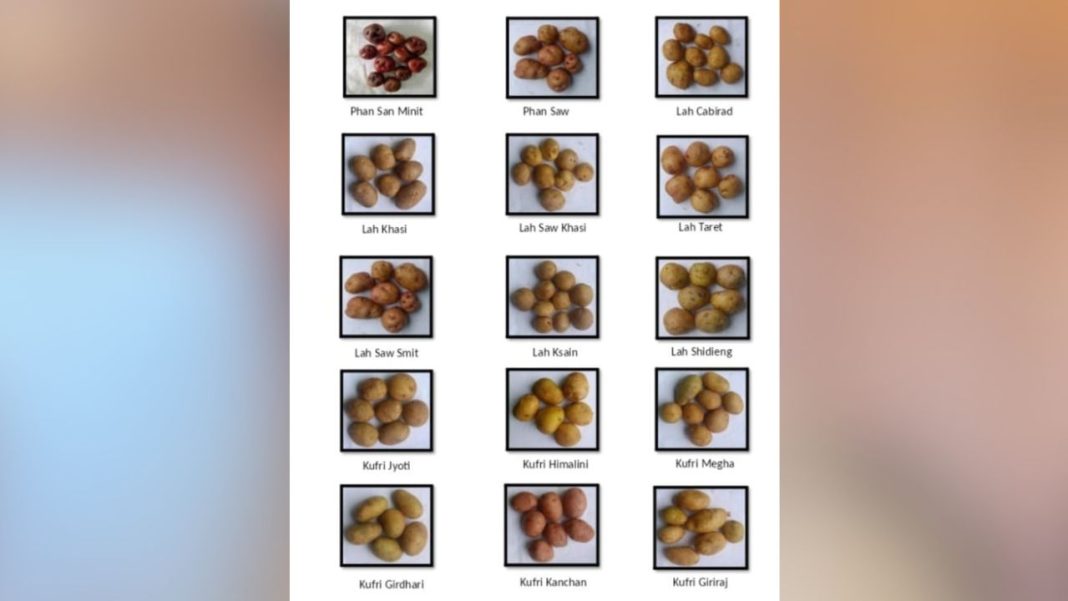
The study, published in Scientific Reports, found that two local varieties, Phan San Minit and Lah Ksain, were significantly less preferred by the potato tuber moth (Phthorimaea operculella) for egg-laying and feeding than commercial varieties such as Kufri Jyoti and Kufri Megha.
The findings are significant for Meghalaya, where potato cultivation is an important component of hill agriculture and farmers continue to face pest-related production losses.
The research was conducted by a team of scientists led by Shashikumar E. Shivannanavara and Kennedy Ningthoujam of the College of Post Graduate Studies in Agricultural Sciences, Central Agricultural University (Imphal), at Umiam in Meghalaya.
The researchers screened 15 potato varieties, comprising nine local and six commercial varieties, to understand why some varieties were less susceptible to the pest.
The results showed a striking difference in the moth’s preference for different varieties. In laboratory choice experiments, Phan San Minit recorded an average of just 1.67 eggs, compared with 19.33 eggs on Kufri Jyoti.
The difference persisted in non-choice experiments. Phan San Minit recorded an average of 13.67 eggs, while Kufri Jyoti registered 54 eggs.
Feeding damage also varied considerably. Phan San Minit, Lah Ksain, Lah Saw Smit and Lah Saw Khasi experienced only slight infestation, with leaf mining affecting 1% or less of the leaf area.
In contrast, Kufri Jyoti, Kufri Megha and Kufri Giriraj were classified as highly susceptible, with severe infestation resulting in leaf rolling.
What makes local varieties resistant?
The researchers found that the resistance was associated with physical and biochemical characteristics of the plants.
One important factor was the presence of tiny hair-like structures on potato leaves, known as trichomes. These structures act as a natural defence against insects by making it difficult for pests to settle, lay eggs and feed.
Phan San Minit recorded the highest density of non-glandular trichomes, with 1,301.22 on the lower leaf surface per 20 square millimetres. It also had the highest density of glandular trichomes, at 1,048 per square centimetre.
By comparison, Kufri Jyoti recorded only 209.44 non-glandular trichomes on the lower leaf surface per 20 square millimetres and 28.11 glandular trichomes per square centimetre.
The study also identified higher concentrations of naturally occurring chemical compounds in the resistant varieties.
Phan San Minit recorded the highest concentration of chlorogenic acid (220.28 mg per 100 g dry weight), caffeic acid (158.03 mg per 100 g) and flavonoids (27.42 mg per 100 g).
These compounds are associated with plant defence and can discourage insect feeding and interfere with insect development.
The researchers also examined glycoalkaloids, particularly α-solanine and α-chaconine, which are naturally occurring defensive compounds in potato plants.
Phan San Minit recorded total glycoalkaloid content of 177.84 mg per 100 g dry weight, substantially higher than Kufri Jyoti, which recorded 55.69 mg per 100 g.
The findings suggest that the combination of dense leaf hairs and higher concentrations of defensive chemical compounds contributes to the ability of indigenous varieties to withstand potato tuber moth attacks.
Interestingly, the study found that total soluble sugars had little significant association with the moth’s egg-laying and feeding preferences.
Implications for Meghalaya farmers
The findings assume importance against the backdrop of potato tuber moth damage reported in Meghalaya, particularly in East Khasi Hills.
The study cites earlier research indicating that infestations in the district could exceed 50% of plants, while tuber damage under indigenous storage conditions used for seed preservation had reached 100%.
The potato tuber moth attacks both standing crops and stored potatoes. Its larvae mine leaves and exposed tubers in the field, while infestation in storage can damage seed potatoes and encourage secondary fungal and bacterial infections, resulting in rotting.
Although chemical pesticides can control the pest, their repeated use raises concerns over environmental contamination, pesticide resistance and risks to growers and consumers.
The researchers argue that identifying and using resistant potato varieties could offer a more sustainable approach to pest management.
They suggest that the resistant local varieties could serve as valuable sources of genetic material for future potato breeding programmes. Their physical and biochemical characteristics could be used to develop commercial varieties with improved resistance.
The study, however, was based on laboratory and polyhouse screening of foliage and does not establish how the varieties would perform against the pest under different field conditions.