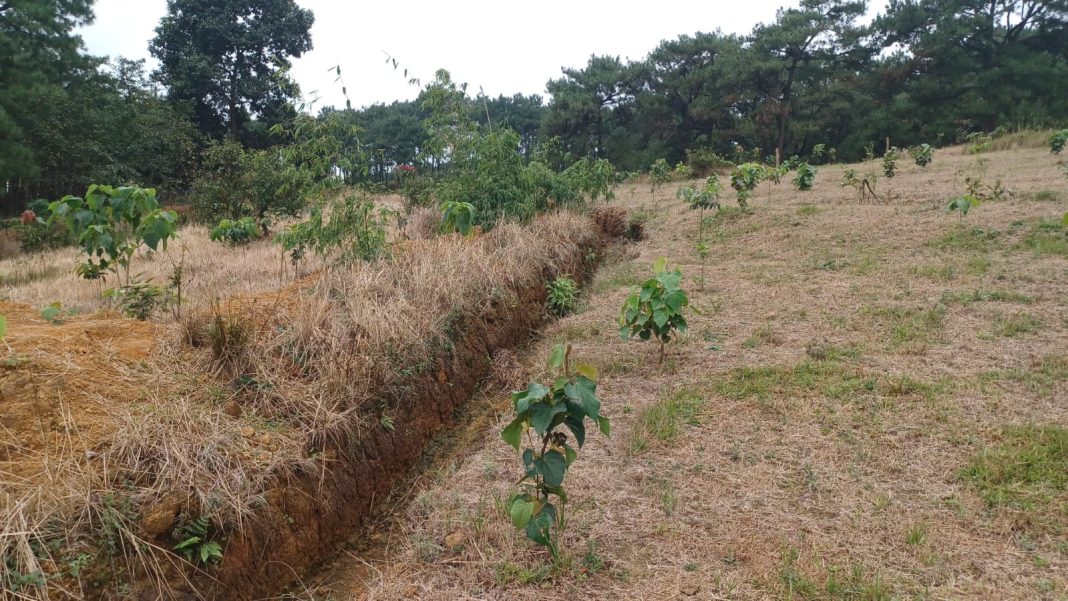

The number of tree species recorded at the site increased to 19, including naturally invading species…Shrub diversity also rose sharply, from 12 to 59 species, while the number of herbaceous species increased from 25 to 80.
ROOPAK GOSWAMI
Shillong, Nov 29: An abandoned coal mining site in Meghalaya’s East Jaintia Hills has recorded a marked increase in plant diversity following ecological restoration efforts, with the number of tree, shrub and herb species rising significantly over three years, according to a new study.
The study, conducted at Latyrke village in Saipung block between 2021 and 2024, found that planting native species, improving soil conditions and introducing beneficial microorganisms helped accelerate the natural regeneration of vegetation on degraded mine land. The study was published in Indian Forester.
Researchers from the ICFRE-Rain Forest Research Institute, Jorhat, Assam, examined changes in vegetation before and after restoration interventions. Their findings suggest that ecological restoration can help abandoned coal mining areas recover by encouraging the natural colonisation of plant species.
Before the restoration work began, the site had only seven tree species. The vegetation was dominated by Khasi pine (Pinus kesiya), followed by Macaranga denticulata and Macaranga peltata.
The researchers also recorded 12 shrub species, with Melastoma malabathricum being the dominant species, and 25 herbaceous species, including grasses such as Oplismenus compositus and Imperata cylindrica.
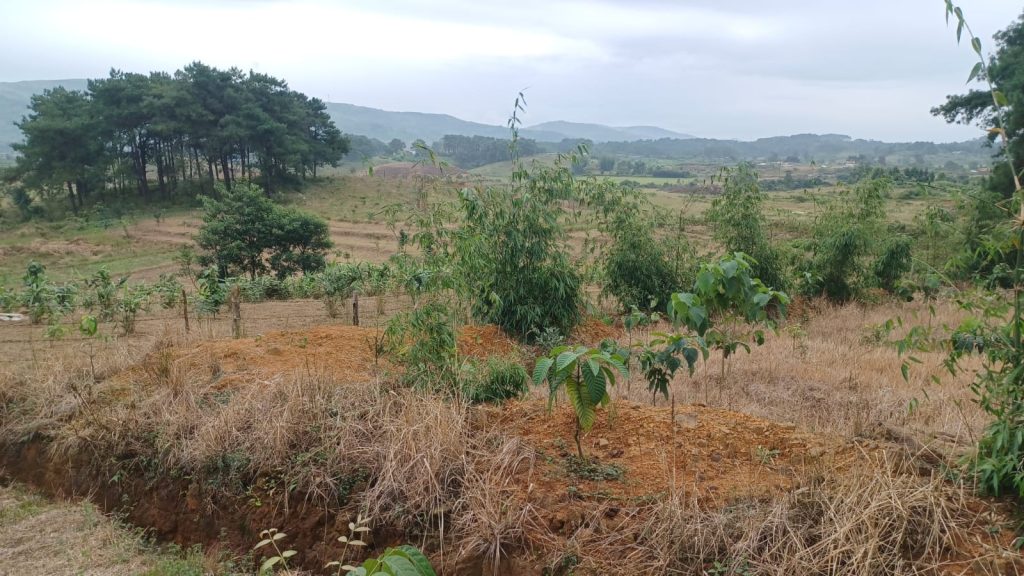
The situation changed considerably after three years of restoration work.
The number of tree species recorded at the site increased to 19, including naturally invading species such as Alnus nepalensis, a nitrogen-fixing pioneer tree, and Callicarpa macrophylla known for its ability to grow under difficult environmental conditions.
Shrub diversity also rose sharply, from 12 to 59 species, while the number of herbaceous species increased from 25 to 80.
Among the dominant grasses in the restored areas were Imperata cylindrica, Paspalum scrobiculatum and Axonopus compressus.
The restoration programme involved planting 30 native plant species, along with the application of microbial inoculants, including arbuscular mycorrhizal fungi (AMF) and plant growth-promoting rhizobacteria (PGPR). Soil amendments were also used to improve conditions for plant growth.
These interventions were aimed not merely at establishing planted vegetation but at creating conditions that would allow other plant species to naturally colonise the degraded landscape.
The increase in naturally invading tree species is particularly significant as it indicates that the restoration measures helped initiate ecological succession — the gradual process through which plant communities establish and develop in a degraded area.
The researchers compared vegetation composition using phytosociological parameters, including the Importance Value Index (IVI), which measures the relative ecological importance of different plant species within a community.
The findings point to the potential of combining native species plantation, biological soil improvement and appropriate site management to restore vegetation on abandoned coal mine spoils.
For Meghalaya, where coal mining has left several areas with degraded landscapes, the study offers evidence of how targeted ecological interventions can support the recovery of damaged ecosystems.
The researchers concluded that planting native species alongside bio-amendments could be an effective approach to accelerating natural succession and improving vegetation recovery in mined-out areas.