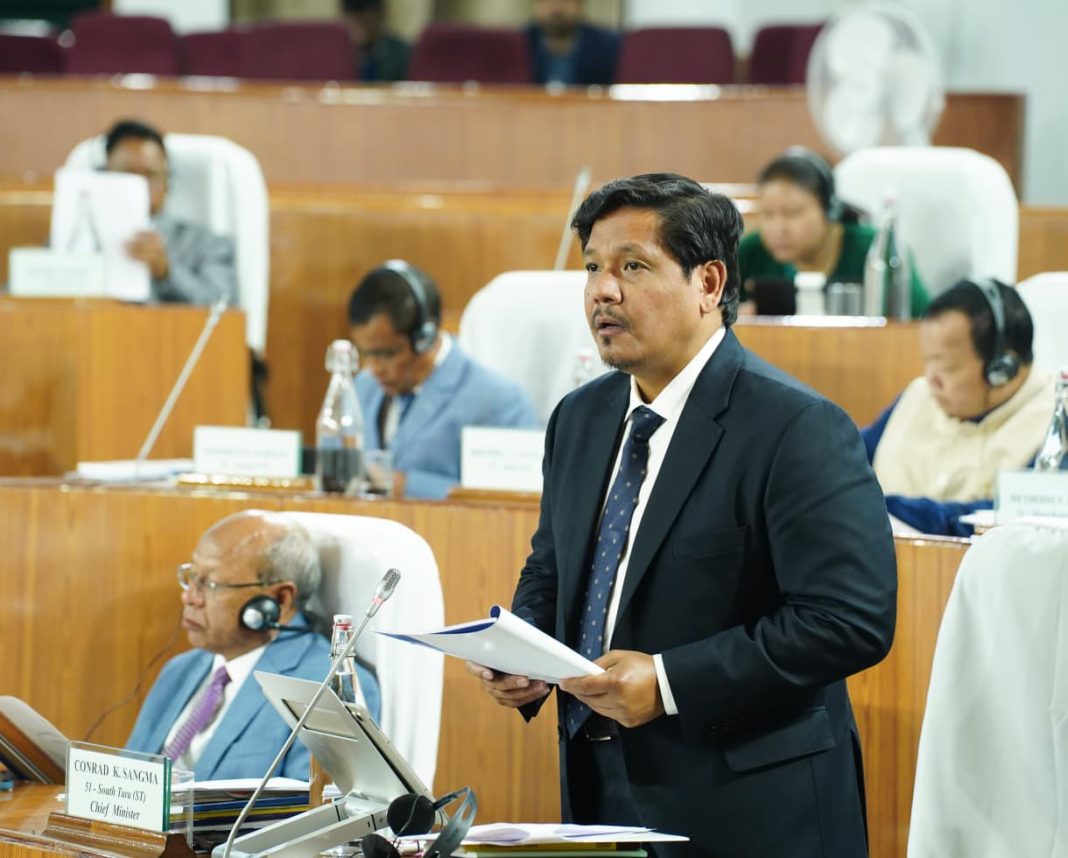

Shillong, Feb 17: Chief Minister Conrad K Sangma has informed the state assembly about the government’s decision to roll out a structured pay framework for SSA and ad-hoc teachers from April 1, 2026, resulting in an additional expenditure of Rs 200 crore per year.
The government now spends Rs 600 crore annually for SSA and ad-hoc teachers in lower and upper primary schools, and they will be benefitted with an increment of 3 per cent under the new system.
“For implementation, the government will annually spend Rs 800 crore. This decision will lead to a kind of structured pay system, which will give a sense of security and increment to teachers,” he said.
Over 23,007 teachers are expected to benefit, the chief minister said, describing it as a “tough decision but…in the right direction” for stabilising teachers’ concerns.
Sangma explained that Meghalaya’s school system is “most complicated” in the region, with government, SSA and ad-hoc schools run largely by private management committees.
“90 percent of ad-hoc and deficit schools are privately owned, not by government. The government has been giving grants as they could not run it,” he said.
Over time, these grants took the shape of salaries, creating expectations that the state would fully bear payment.
“It is government’s direct responsibility in government schools, but ad-hoc schools are run by the private sector. Despite this, we realise the pain of the teachers.”
He stressed the new framework would apply only to SSA and ad-hoc teachers, who have been “stuck with same pay” and organised under FASTOM.
“We are not here to take over the schools,” Sangma said, responding to concerns raised by Leader of Opposition Mukul Sangma. “We are bringing up a structured pay as per their demand.”
The deficit category will be examined separately, he added.
“Deficit is the next step, we are examining. We would like to help everyone, but every decision has financial implication. As of now, we are resolving the issue of ad-hoc and SSA.”
Sangma said Meghalaya, with more than 55,000 teachers and 14,000 schools, face a unique challenge compared to other Northeastern states.
“It has been a long-drawn exercise. We have been taking it up for the past one year.”