
By Dipak Kurmi
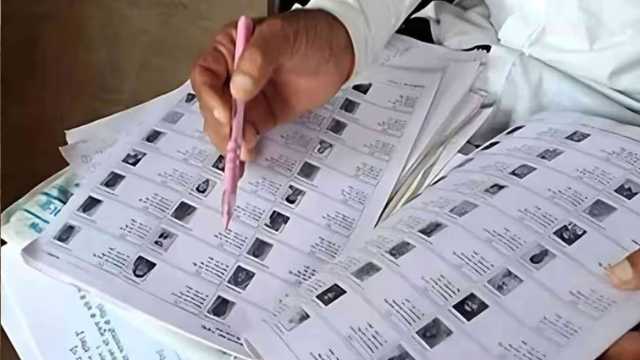
Assam unveiled its final electoral roll following the completion of a statewide Special Revision (SR), a process that election authorities describe as both exhaustive and foundational to the credibility of the 2026 Legislative Assembly elections. The publication marks a decisive administrative milestone at a time when political activity across the state is steadily intensifying ahead of polls expected in March or April. Unlike the Special Intensive Revision conducted in 12 other states and Union Territories, Assam’s exercise was distinguished by its methodology: a door-to-door verification campaign rather than a system dependent primarily on form-filling or document submission. The scale of the operation was formidable, involving 29,656 Booth Level Officers who fanned out across towns, riverine belts, tea garden settlements, char areas and remote habitations to physically verify electors on the ground. In a state where questions of citizenship, migration and demographic change have historically intersected with electoral politics, the emphasis on field verification rather than paperwork carries unmistakable political and institutional significance.
The draft roll published after the Special Revision reflected a total of 2,52,01,624 electors, representing a 1.35 per cent increase from the previous final roll issued in January 2025. Between January 6 and December 27 last year, the exercise recorded 7,86,841 additions and 4,47,196 deletions, figures that illustrate both demographic dynamism and administrative scrutiny. Officials identified 4,78,992 deceased electors, 5,23,680 shifted electors and 53,619 multiple entries during the course of verification. However, the Election Commission clarified that these names would be processed for deletion or shifting only after formal applications are submitted during the claims and objections period, underscoring the legal safeguards embedded within the revision framework. The process thus balances corrective action with procedural fairness, ensuring that changes to the roll are neither arbitrary nor unilateral.
Chief Minister Himanta Biswa Sarma, commenting on the exercise, stated that an “extensive” Special Intensive Revision will be undertaken in Assam after the Assembly elections. His remarks suggest that the current SR is part of a broader, phased approach to electoral purification and consolidation. The announcement of a post-poll SIR carries political resonance in Assam, where electoral rolls have long been at the centre of contentious debates, especially in the aftermath of the National Register of Citizens process and earlier agitations over illegal migration. By sequencing an extensive SIR after the polls, the government appears to be signalling both administrative continuity and political caution, separating immediate electoral preparations from more expansive verification drives that may entail deeper scrutiny.
Simultaneously, the Election Commission has undertaken a comprehensive review of Assam’s preparedness for the upcoming elections. A two-day meeting was convened to assess district-level readiness, security arrangements and coordination with enforcement agencies, indicating that logistical and law-and-order considerations are receiving equal attention alongside roll finalisation. Assam’s electoral landscape is geographically and socially complex, with districts varying sharply in terrain, connectivity and demographic composition. Ensuring that the updated roll translates seamlessly into smooth polling operations requires meticulous coordination between civil administration, police forces and central agencies. The Commission’s review meetings therefore signal an integrated approach, one that recognises the interdependence of accurate voter lists and secure polling conditions.
The process has also unfolded at the district level with a visible emphasis on transparency and stakeholder engagement. In Dhubri district, the final electoral roll was officially released on February 10, marking a crucial checkpoint in the countdown to the 2026 elections. The publication followed the completion of what local authorities described as a Special Amendment process and was unveiled at a high-level meeting held at the office of the Dhubri District Commissioner. District Commissioner Nabadeep Pathak presided over the meeting, which was attended by Additional Commissioner Debajyoti Gogoi, Additional Superintendent of Police Deepjyoti Talukdar, representatives of recognised political parties and members of the media. The presence of political stakeholders and journalists at the release was intended to underscore openness, reflecting the Election Commission’s broader insistence that electoral roll management must withstand public scrutiny.
According to the final figures, Dhubri district now has 12,17,797 registered voters. Officials stated that the numbers reflect an intensive door-to-door verification exercise carried out by Booth Level Officers, aimed at eliminating duplicate and ineligible entries while ensuring that all citizens who attained voting age on or before January 1, 2026 were included. The emphasis on those reaching eligibility by the cut-off date reinforces the forward-looking dimension of the roll, integrating first-time voters into the democratic process. In districts like Dhubri, which occupy a politically sensitive position due to demographic composition and cross-border proximity, the credibility of the voter list carries heightened weight. The administration’s articulation of accuracy and inclusivity appears calibrated to reassure both political actors and ordinary citizens.
The constituency-wise distribution of voters in Dhubri offers further insight into the district’s electoral arithmetic. Golakganj, designated as Assembly constituency number 6, accounts for 2,03,876 voters. Gauripur, constituency number 7, has the largest electorate in the district with 3,10,594 electors. Dhubri constituency itself, numbered 8, records 2,31,136 registered voters, while Birsingh Jarua, constituency number 9, stands at 2,80,461. Bilasipara, constituency number 10, completes the district’s tally with 1,91,730 voters. These figures not only shape campaign calculations but also influence resource allocation, booth management strategies and the deployment of security personnel. Political parties are likely to scrutinise the data closely, mapping demographic trends and recalibrating outreach accordingly.
Addressing the gathering at the roll’s release, District Commissioner Pathak emphasised that the Special Amendment was carried out with the highest standards of accuracy and openness. He noted that the administration worked in close coordination with political parties at every stage to ensure that no eligible voter was excluded, while simultaneously safeguarding the integrity of the roll. Such assertions are particularly salient in Assam’s political context, where allegations of wrongful inclusion or exclusion can quickly acquire communal or regional overtones. By foregrounding collaboration and transparency, district authorities aim to pre-empt controversy and anchor the process within institutional legitimacy.
With the final roll now published, Dhubri district moves formally into the next phase of election preparedness. Copies of the electoral roll have been provided to all political parties, enabling them to scrutinise entries and raise objections where necessary. Voters have been encouraged to verify their details at respective polling stations or through the official Election Commission portal, reflecting a hybrid model that combines physical verification with digital accessibility. The encouragement for citizens to cross-check their particulars underscores an important principle of participatory oversight, where electoral integrity is reinforced not solely by administrative vigilance but also by voter engagement.
At the state level, the completion of the Special Revision represents more than a routine bureaucratic exercise. Assam’s electoral history is inextricably linked with movements over identity, citizenship and representation, from the Assam Agitation of the late 1970s and early 1980s to more recent controversies surrounding the NRC. In this context, the methodology of revision assumes symbolic as well as technical importance. The choice to rely on door-to-door verification through nearly thirty thousand Booth Level Officers signals a deliberate attempt to ground the process in physical presence and direct interaction, rather than relying exclusively on documentation that may be unevenly accessible in rural and marginalised communities. This approach may also serve to build confidence among segments of the electorate that remain wary of bureaucratic opacity.
The 1.35 per cent growth in the electorate, while modest, reflects steady demographic change and the integration of new voters into the democratic fold. The substantial number of additions and deletions illustrates the fluidity inherent in any large and mobile population, particularly in a state marked by internal migration, seasonal labour movement and urban expansion. The identification of deceased, shifted and multiple entries indicates that the revision was not merely additive but corrective, seeking to refine rather than inflate the voter base. Yet the Election Commission’s insistence on processing deletions or shifts only after formal claims during the objections period demonstrates adherence to due process, a safeguard against the risk of erroneous disenfranchisement.
As Assam inches closer to the Assembly elections, the updated roll is poised to influence both political narratives and campaign logistics. Parties will read into the data patterns of growth or contraction in specific constituencies, recalculating electoral prospects accordingly. Meanwhile, the Election Commission’s parallel review of security arrangements and enforcement coordination suggests awareness that accurate rolls must be matched by orderly polling environments. The Chief Minister’s announcement of an extensive Special Intensive Revision after the polls adds another layer to the unfolding electoral calendar, hinting at further scrutiny beyond the immediate contest.
Ultimately, the publication of the final electoral roll after the Special Revision consolidates the administrative groundwork for Assam’s forthcoming democratic exercise. It is a procedural step, yet one freighted with historical memory and contemporary political stakes. In districts like Dhubri and across the state’s diverse constituencies, the updated voter list becomes both a ledger of citizenship and a map of political possibility. As campaigns gather pace and rhetoric sharpens, the integrity of this foundational document will remain central to public confidence. In a democracy as vibrant and contested as Assam’s, the quiet labour of nearly 29,656 Booth Level Officers may prove as consequential as the speeches delivered from campaign stages in the months ahead.
(the writer can be reached at dipakkurmiglpltd@gmail.com)