
ROOPAK GOSWAMI
Shillong, March 12: A rare cave-dwelling insect first discovered in Meghalaya more than a century ago has been rediscovered by scientists, drawing renewed attention to the rich and largely unexplored biodiversity of the state’s cave ecosystems.
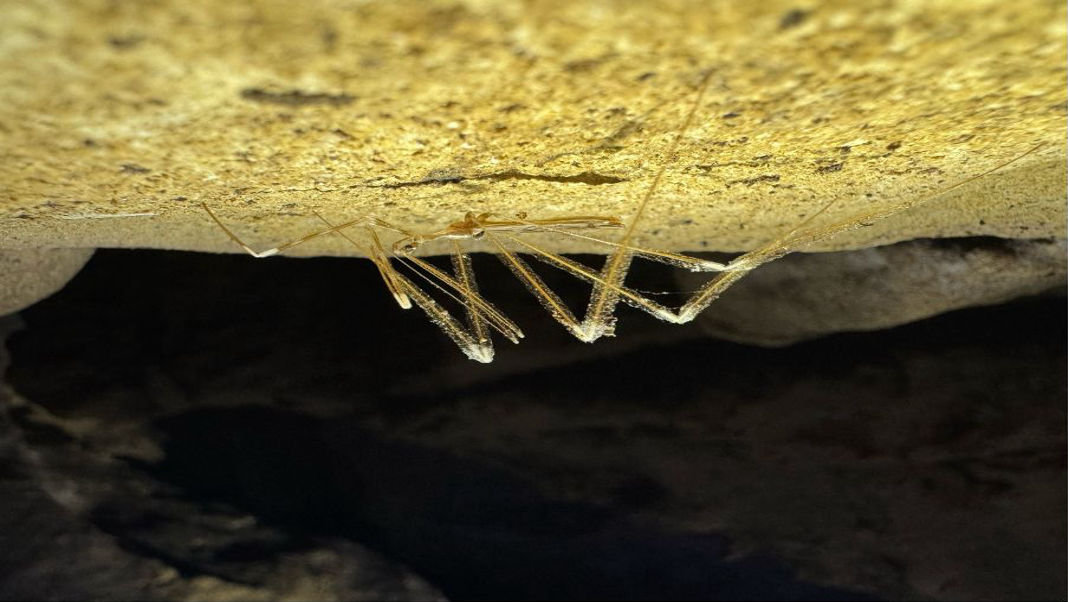
The species, a thread-legged assassin bug ( Myiophanes kempi ), was originally described in 1924 from the famous Siju Cave in Meghalaya, making the cave the type locality of the species.
According to a study published in the journal Subterranean Biology, the insect had not been recorded again for nearly 100 years until researchers rediscovered it during surveys in limestone caves in the Andaman Islands.
The study was conducted by Dhanusha Kawalkar, Pooja Patil, Hemant V. Ghate, and Shirish Manchi of the Sálim Ali Centre for Ornithology and Natural History (South India Centre of Wildlife Institute of India) who documented the rediscovery and provided updated observations on the species. The authors also acknowledged funding support from the Ministry of Environment, Forest and Climate Change (MoEFCC) and The Habitats Trust.
The insect was first described by British entomologist William Edward China in 1924 based on specimens collected from Siju Cave, one of India’s most important cave systems located in the South Garo Hills district of Meghalaya.
Often referred to as the “Bat Cave of Meghalaya,” Siju Cave is known for its extensive limestone formations and diverse subterranean fauna.
For decades after its initial description, Myiophanes kempi remained known only from this single location, and scientists were unable to locate it again.
Thread-legged assassin bugs belong to the family Reduviidae , a group of predatory insects known for their extremely slender bodies and long legs.
These insects are highly specialised predators that hunt other small arthropods in dark cave environments. Because they live in isolated subterranean habitats, they are rarely encountered and remain poorly studied.
During cave surveys in the Andaman Islands in 2019, researchers collected two male specimens which, after detailed examination, were confirmed to be Myiophanes kempi.
The rediscovery not only confirms that the species still exists but also expands its known distribution beyond Meghalaya.
Scientists say the finding underscores the global importance of Meghalaya’s cave ecosystems, particularly Siju Cave, which served as the original discovery site of the species.
The limestone caves of Meghalaya are considered among the richest karst landscapes in South Asia, harbouring unique bats, insects, spiders, and other organisms adapted to life in complete darkness.
However, large parts of these subterranean ecosystems remain scientifically unexplored.
Experts believe that further research in caves such as Krem Liat Prah, Krem Mawmluh, and Siju Cave could reveal many more rare or previously unknown species.
The rediscovery of Myiophanes kempi therefore highlights not only a remarkable scientific finding but also Meghalaya’s continuing importance as a hotspot for subterranean biodiversity.