
By Dipak Kurmi
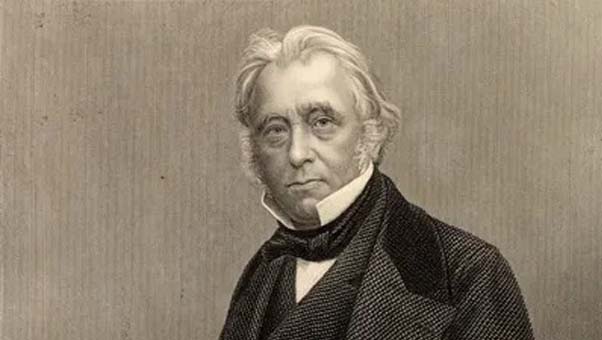
Nearly two centuries after Thomas Babington Macaulay penned his infamous Minutes of 1835, India continues to wrestle with the intellectual and cultural consequences of what was, in essence, a calculated strategy to reshape the consciousness of an ancient civilisation. When the Prime Minister calls upon the nation to fully free itself from the demoralising influence of Macaulay’s framework by the year 2035, he invokes not only a symbolic milestone but a stark reminder of how deeply colonial conditioning still permeates Indian society. That this exhortation is made in all seriousness underscores both the enduring potency of Macaulay’s educational blueprint and the urgent need to dismantle the mindset it entrenched. His strategic planning, conceived to cement British authority by dismantling India’s indigenous knowledge systems, continues to echo through modern educational paradigms, administrative structures, and societal aspirations.
The success of Macaulay’s project is evident in the fact that India, in 2025, must now embark upon a mission-mode journey to purge the lingering sense of cultural inferiority and intellectual dependency that independence and multiple national education policies failed to erase. The National Education Policy of 1968, the revised policy of 1986/92, and even the transformative spirit embedded in NEP 2020 all acknowledged the need to liberate Indian minds from colonial hangovers. Yet the challenge remains unresolved: why could India not wash off the influence of an alien ideological strategy despite clear intentions and decades of discourse on decolonising education? The answer lies in the depth, precision, and psychological shrewdness of Macaulay’s intervention, which was not merely educational but civilisational in scope. His plans were so incisive and widespread that they disrupted the organic transmission of India’s knowledge traditions, distorting global understanding of India’s contributions and diminishing Indians’ pride in their own civilisation.
Macaulay’s Minutes sought to demolish the intellectual foundations upon which Indian civilisation had flourished for millennia. By undermining Sanskrit, Persian, and regional intellectual traditions, and by substituting them with English as the superior medium of knowledge, he ensured that future generations would gradually lose access to their cultural roots. His objective was unambiguous: to create a class of people, Indian in blood and colour but English in opinions, tastes, morals, and intellect. This class would serve as intermediaries—loyal to the colonial state, sceptical of their own heritage, and convinced of Western cultural superiority. The strategy succeeded with clinical precision. Over time, Indians drifted away from the pride once embedded in spiritually enriched traditions that proclaimed the universality of truth and the pluralistic ethos expressed in the ancient maxim that truth is one though the wise describe it in many ways.
The consequences of this engineered psychological rupture continue to manifest today. The casual disdain shown towards Sanatan traditions or the discomfort some express even towards national symbols like Vande Mataram reveal the extent to which Macaulay’s influence lingers in segments of society. This is not merely an ideological divide; it is symptomatic of the erosion of cultural self-respect. The persistence of this colonial legacy presents a profound learning opportunity for contemporary policymakers working in education, culture, social cohesion, and national identity. Macaulay’s success, though injurious, demonstrates how deeply educational structures can influence a society’s self-perception. Policymakers must therefore understand his methods not to emulate them but to reverse their effects through deliberate, structured, and nationwide efforts to re-anchor Indian identity.
The English language remains perhaps the most visible marker of Macaulay’s legacy. Reverence for English permeates every stratum of society, from urban elites to rural families aspiring for upward mobility. English-medium schools are seen as gateways to economic opportunity, social prestige, and modernity. The PM’s emphasis on restoring linguistic pride reflects an understanding that cultural renaissance is impossible without strengthening mother tongues. Yet the ground reality reveals how deeply entrenched the dominance of English has become. In Delhi, admissions to English-medium schools from the first day of schooling continue to increase, reflecting a national urge that education in English is essential for success. The phenomenon is so pervasive that even housemaids in urban homes are preferred when they can place orders in English or read product labels and expiry dates. English has become not merely a language but a social currency that structures opportunity and exclusion.
An illustration of this exclusion surfaced in December 2025 when newspapers reported that for 613 assistant professor posts in Haryana government colleges, 17,195 candidates applied, but merely 151 cleared the required English qualifying test. Only two Scheduled Caste candidates out of sixty passed. Linguistic barriers, shaped by colonial legacy, continue to determine access to positions that should be constitutionally accessible to all. This is just one instance of the suffering inflicted by the continued obsession with English that has persisted unsullied through eight decades of independence despite consistent policy assurances regarding the primacy of the mother-tongue medium.
The yearning for English-medium private schools and the social upliftment they promise is a nationwide phenomenon. Urbanisation has generated socio-cultural expectations in which English proficiency is synonymous with modernity, intelligence, and social mobility. This societal psychology is not accidental; it is a direct continuation of the architecture Macaulay designed. The compulsions of the English medium were felt by generations of students during the twentieth century, often hindering genuine comprehension and driving learners towards rote memorisation. Scholars who transitioned into educational fields inevitably found themselves revisiting Macaulay’s work, recognising how expansively he influenced curriculum design, teacher training, policy formulations, and institutional structures. In academic meetings, conferences, and policy circles, Macaulay became a convenient symbol to blame for intergenerational educational misalignments, yet his system remained largely intact because the country never fully restructured the foundations he laid.
Macaulay’s doctrines, once implemented ruthlessly, entrenched Western literature, Western norms, and Western civilisational frameworks as the benchmarks of intellectual refinement. Advocates for Sanskrit, Arabic, and indigenous knowledge systems were sidelined, often dismissed under financial arguments or the supposed lack of contemporary relevance. The enduring acceptance of Western cultural superiority across social segments continues to impede the full realisation of India’s intellectual independence. As a result, even today, many Indians perceive progress as synonymous with Westernisation rather than rooted advancement.
The PM’s call for a decisive departure from this legacy can make a meaningful difference only if institutional reforms are undertaken in mission mode. NEP 2020 provides a robust foundation to achieve this within a decade, but its success hinges on systemic transformations. Regulatory mechanisms must be cleaned up to eliminate bureaucratic inertia and corruption. Teacher recruitment systems must be streamlined to ensure merit, transparency, and professionalism. Vacant teaching positions across levels must be filled without delay to prevent academic decline. Leadership transitions in educational institutions should be seamless, with successors appointed before incumbents relinquish charge. Moreover, a strict ban on irregular, low-honorarium teaching arrangements is essential to restore dignity to the teaching profession and build credible learning environments.
For India to reclaim its intellectual sovereignty, the transformation must be profound, continuous, and rooted in cultural confidence. It requires not a rejection of English or Western knowledge but the rebalancing of priorities so that Indian languages, traditions, and epistemologies regain their rightful place. Only when India nurtures an education system that draws strength from its civilisational richness while engaging with global knowledge on equal footing will the nation truly overcome the shadow of Macaulay’s legacy.
The year 2035 presents not just a symbolic deadline but a historic opportunity to reshape India’s educational and cultural narrative. If India succeeds in this endeavour, it will mark not merely the undoing of a colonial strategy but the beginning of an intellectual renaissance grounded in self-respect, pluralism, and civilisational continuity.
(the writer can be reached at dipakkurmiglpltd@gmail.com)