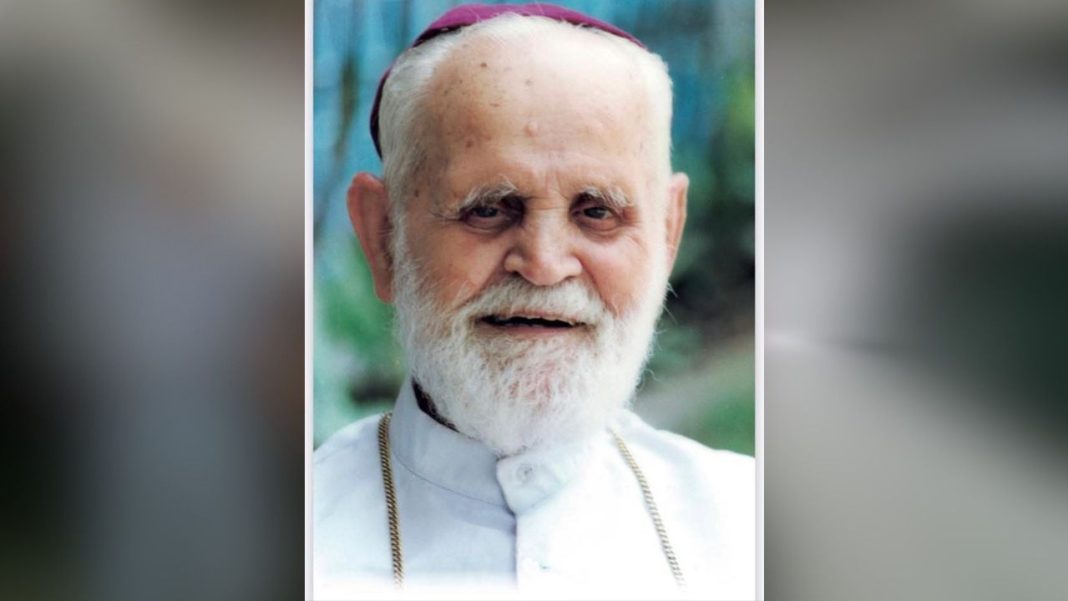

Vatican City, Oct 24: Pope Leo XIV has recognised the heroic virtues of Bishop Oreste Marengo, the Italian-born Salesian missionary who gave more than half a century to the Church in northeast India. He is remembered above all for his decades of service to the Garos of the Garo Hills, a commitment he kept until his death in Tura, where he was laid to rest. The Servant of God is now Venerable.
Bishop Marengo is one of six Servants of God declared Venerable in the same decree. The others are Bishop Friedrich Kaiser Depel of Peru, Margarita Bavosi of the Focolare Movement, Fr Domenico Pogliani, Fr Alessandro Vitetti, and Capuchin Brother Daniele of San Giovanni Rotondo.
The Pope authorised the decrees during an audience on Saturday with Cardinal Marcello Semeraro, Prefect of the Dicastery for the Causes of Saints.
Venerable is a major step on the path to beatification and sainthood.
A “foreigner” embraced by India
Marengo was born on 29 August 1906 in Diano d’Alba, in Italy’s Cuneo province, to a farming family of strong Christian faith. At 13, he moved to Turin to begin his Salesian formation, where he met some of the earliest members of the congregation founded by Saint John Bosco.
In 1923, he travelled to north-eastern India with eight other novices. While studying philosophy, he worked in villages, preparing catechumens and supporting the first Catholic communities. He was ordained a priest on 2 April 1932.
In 1951, he was appointed the first Bishop of the newly established Diocese of Dibrugarh, and was ordained a bishop in Turin’s Basilica of Mary Help of Christians on 27 December that year. He led the diocese until 1964, when he became Bishop of Tezpur. He established mission centres and helped people fleeing Pakistan during its war with India. To address the shortage of priests, he welcomed clergy from other parts of the country, including Kerala.
Bishop Marengo gave decades of service to the Garo people and to the Church in the Garo Hills, and he never stopped serving them until his death. He travelled the region’s remote hill communities, strengthening the first Catholic communities and supporting the priests, sisters and lay faithful who served them. He served as Apostolic Administrator of Tura, from 1969 until a bishop was appointed for the diocese in 1979. The Diocese of Tura covers the entire Garo Hills- comprising of East and West, North and South, and South West Garo Hills districts of Meghalaya.
His service did not end with his office. He stayed to help the new Bishop of Tura, raising funds for the diocese, and remained available for various tasks until his death in Tura.
Marengo died on 30 July 1998 surrounded by the Garo people he had served. He was laid to rest in Tura, among the people he had given decades of his life to.
That bond carried special weight at a time when foreigners in India could face suspicion or rejection. He encouraged vocations to the priesthood and recognised the vital contribution of laypeople in spreading the faith.
Five others also declared Venerable
In the same audience, Pope Leo XIV recognised the heroic virtues of five other Servants of God:
Friedrich Kaiser Depel (1903–1993), the first Territorial Prelate of Caravelí, Peru, founder of the Missionary Sisters of Jesus, Word and Victim, and a pioneer of the biblical apostolate in Peru.
Margarita Bavosi, “Luminosa” (1941–1985), a consecrated laywoman of the Focolare Movement, born in Buenos Aires, who died at 43.
Domenico Pogliani (1838–1921), a priest of the Archdiocese of Milan who founded a care home housing 400 people by the First World War.
Alessandro Vitetti (1915–1995), a priest of the Diocese of Rossano-Cariati, remembered for the words “I cannot see, I cannot hear, but I believe.”
Daniele of San Giovanni Rotondo (1919–1994), a Capuchin lay brother and spiritual son of Saint Pio of Pietrelcina.