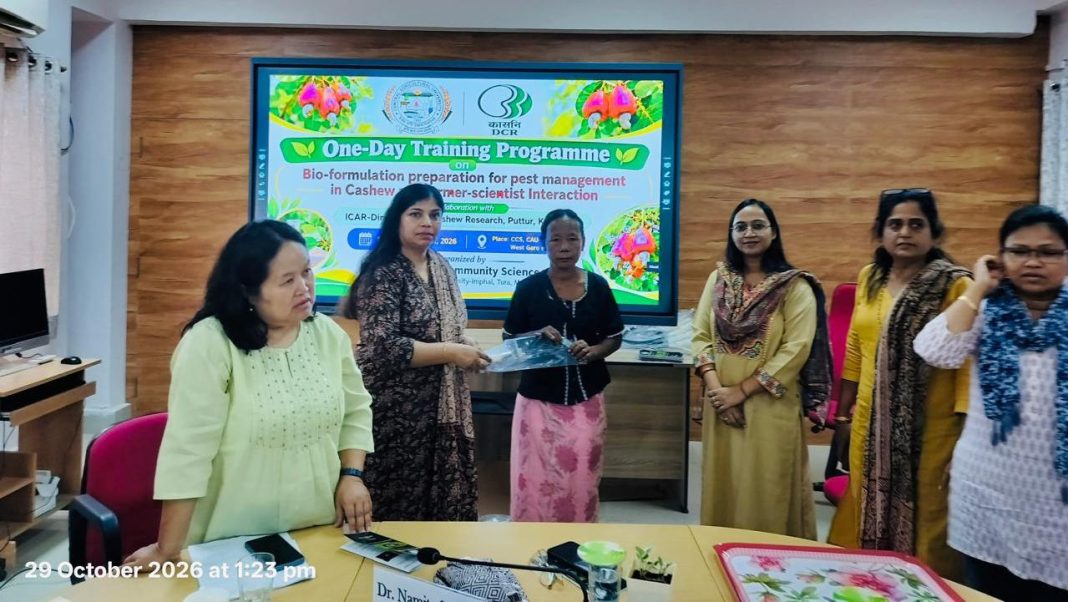

Tura, Nov 1: Cashew cultivation in Meghalaya, especially in Garo Hills, has been put in focus for making improvements by equipping farmers with required trainings for turning it into a sustainable practice.
In one such initiative, cashew farmers underwent training in preparing bio-formulations for pest management organised by the College of Community Science, Central Agricultural University (CAU-I), Tura in collaboration with ICAR-Directorate of Cashew Research (DCR), Puttur.
In bio-formulations, naturally occurring microorganisms and plant-based products are used to control crop pests and reduce dependence on synthetic chemical pesticides.
It is an alternative approach to conventional chemical pest control.
Depending on the formulation, they may contain beneficial fungi and bacteria that suppress insect pests or plant extracts, such as neem, which can repel insects, interfere with feeding and disrupt their development.
In cashew plantations, such biological approaches can be relevant in managing pests such as tea mosquito bugs, leaf miners and mealybugs, although different pests require different control measures.
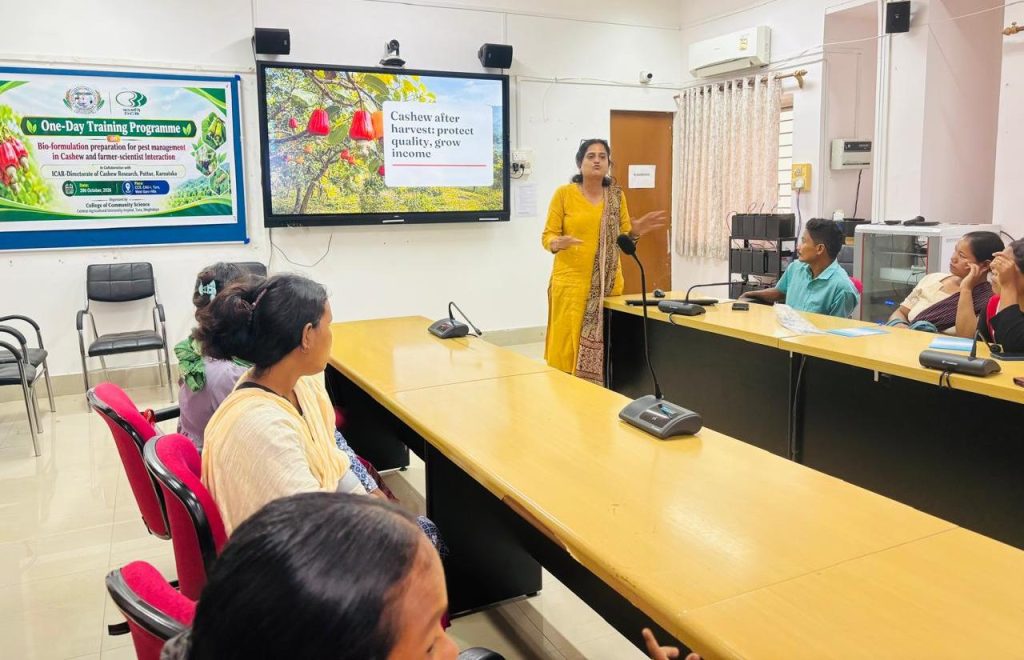
The training focused on equipping farmers with practical knowledge of bio-formulation preparation and application, alongside pest management, post-harvest handling and value addition in cashew.
The farmer–scientist interaction also provided an opportunity to discuss field-level challenges and sustainable crop-management practices.
Sickles were distributed among participating farmers under the ICAR-DCR project to support agricultural activities.
The programme was coordinated by Dr Priyadarshani P Mohapatra, Assistant Professor, along with Dr Bijayalaxmi Sahu, Associate Professor, Dr Niranjan S, Assistant Professor, and Cassandra H Ch Marak, Farm Assistant, under the guidance of Dr Jyoti V Vastrad, Dean of the College of Community Science, CAU-I, Tura.