
Shillong, Nov 24: Deputy Commissioner of North Garo Hills, MSN Marak, has called for a joint effort involving government departments, community leaders and grassroots organisations to improve the district’s HPV vaccination coverage, which currently stands at just 3 per cent.
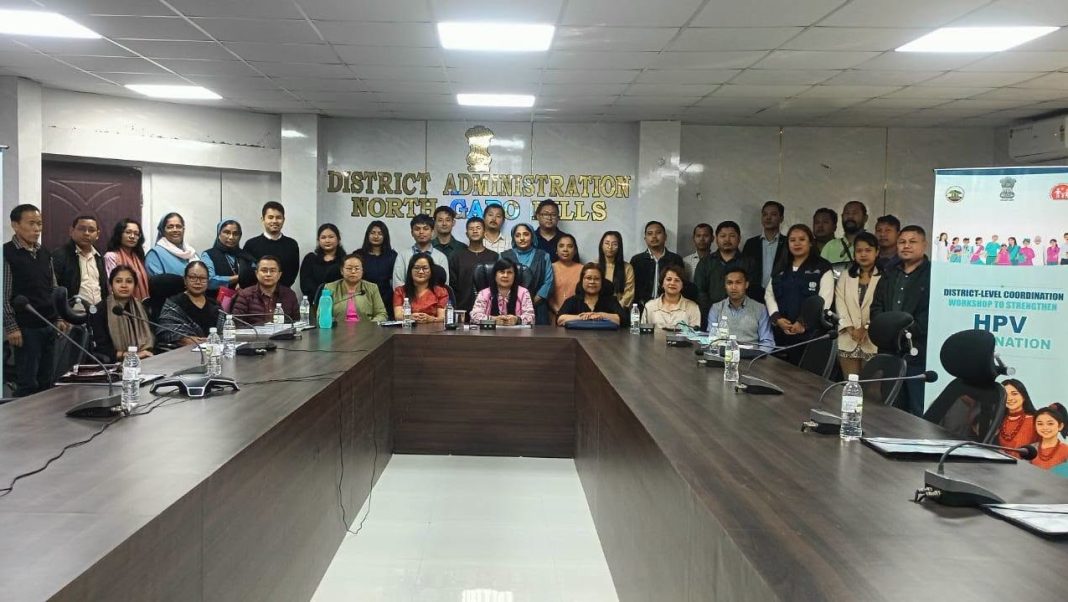
Addressing a district-level coordination workshop on HPV vaccination at the Deputy Commissioner’s Conference Hall on Tuesday, Marak stressed the need for greater participation from government departments, community leaders and local organisations to reach more eligible girls.
She also called for closer coordination among the departments and grassroots-level groups, adding that a follow-up meeting would be convened to assess the progress made and address the gaps in implementation.
The workshop was organised by the Office of the District Medical and Health Officer, North Garo Hills, in collaboration with state-level officials of the Directorate of Health Services. Officials from Medical, Education, Social Welfare, Meghalaya State Rural Livelihoods Society and Block Administration, along with faith-based organisations, community representatives and other stakeholders, discussed strategies to improve coverage through coordinated efforts and greater community participation.
BR Marak, Joint Director of Health Services (MCH and FW) and State Immunisation Officer, while speaking on the objectives of the workshop, said outreach must be strengthened and coverage expanded across the state, including North Garo Hills.
She stressed the need to address implementation challenges and work collectively to improve the district’s vaccination status.
Marak underlined the importance of HPV vaccination in preventing cervical cancer, describing it as a major public health concern affecting women. She said HPV is a common viral infection linked to cervical cancer and vaccination at the recommended age gives effective protection against HPV-related diseases.
“Cervical cancer is among the few cancers that can be significantly prevented through timely vaccination,” she said.
The workshop highlighted that the vaccine is being provided free of cost to eligible adolescent girls aged 14 to 15 years. It also emphasised parental consent and support, noting that informed parents and guardians play a vital role in building confidence, addressing concerns and encouraging eligible girls to avail the service.