
ROOPAK GOSWAMI
Shillong, Feb 13: Urbanisation and rapid population growth are driving an unprecedented surge in construction and demolition (C&D) waste across India.
While municipal solid waste (MSW) management has long been studied and incorporated into state guidelines, C&D waste — especially in smaller municipalities — has only recently begun to draw attention as landfill space shrinks.
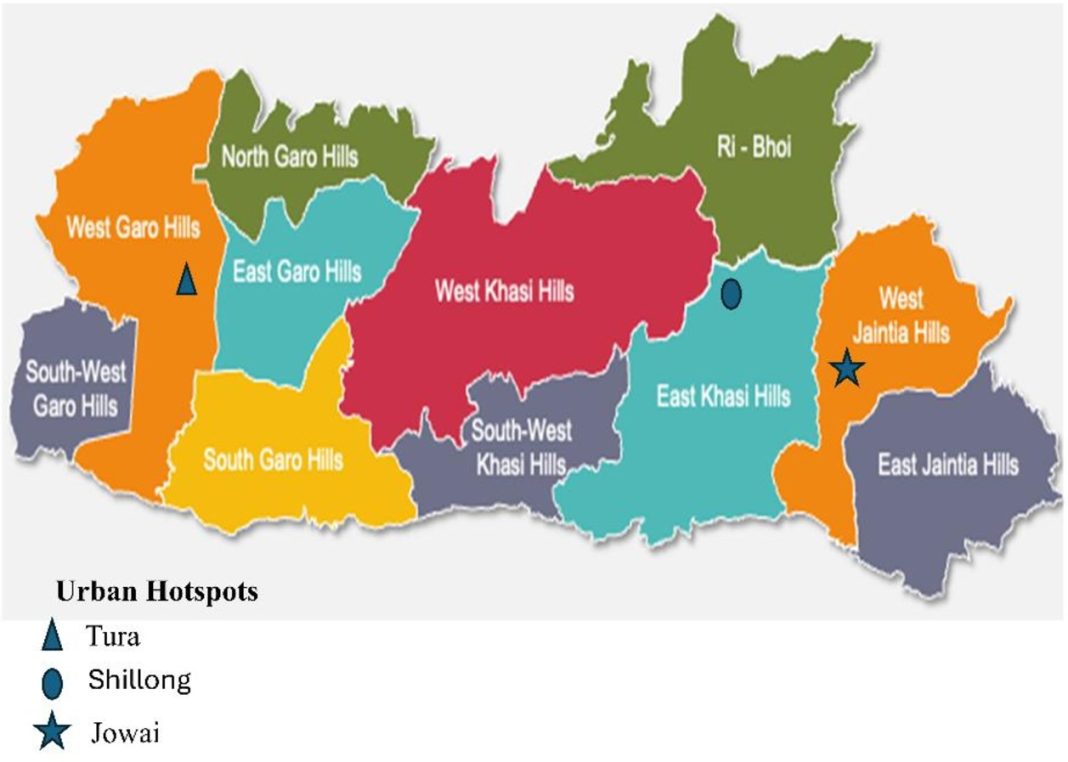
Now, the first scientific assessment of building-related debris in Meghalaya has revealed that three major urban centres — Shillong, Tura and Jowai — together generate nearly 130 tonnes of construction and demolition waste every day.
The study, authored by Sonia Raj Gurung and Susmita Sharma of the Department of Civil Engineering, NIT Meghalaya, has been published in the Journal of Material Cycles and Waste Management.
It marks the first systematic attempt to quantify C&D waste in the state, coming shortly after Meghalaya notified its Construction & Demolition Waste Policy (2024).
Using residential building permit data from the Briks portal of the Ministry of Housing and Urban Affairs for the period 2013–2023, the researchers estimate that the three towns generate approximately 47,446 tonnes of C&D waste annually, averaging 75.67 kg per person per year.
The findings point to sharply divergent urban growth patterns.
Tura has recorded a 77.2% increase in C&D waste generation over the past decade, underscoring rapid infrastructure expansion and its growing role as a regional hub in the Garo Hills. In contrast, Shillong saw a 75.16% decline, while Jowai registered a 9.6% decrease during the same period.
The study notes that demolition waste constitutes the overwhelming majority of debris generated, significantly outweighing fresh construction waste.
Importantly, the authors estimate that C&D waste adds an additional 41–56% burden to Meghalaya’s overall solid waste stream, substantially intensifying pressure on existing waste management systems.
“In the absence of proper recycling and disposal infrastructure, much of this debris risks ending up in landfill sites,” the study warns.
At present, Meghalaya does not have a dedicated C&D waste recycling facility. The lack of baseline data has historically constrained planning efforts. Gurung and Sharma argue that quantifying waste generation is a critical first step toward building an integrated and sustainable waste management framework.
With the state policy mandating the establishment of recycling facilities within two years, the study offers crucial baseline figures to guide implementation.
The researchers recommend the creation of a dedicated C&D waste database, identification of suitable sites for recycling plants, improved segregation at collection points, and annual monitoring of waste generation trends.
As Meghalaya’s towns continue to expand, the study cautions that unmanaged construction debris could soon emerge as a major environmental challenge unless proactive systems are put in place.