
Mojtaba Khamenei and Iran’s Existential Choice
By Dipak Kurmi
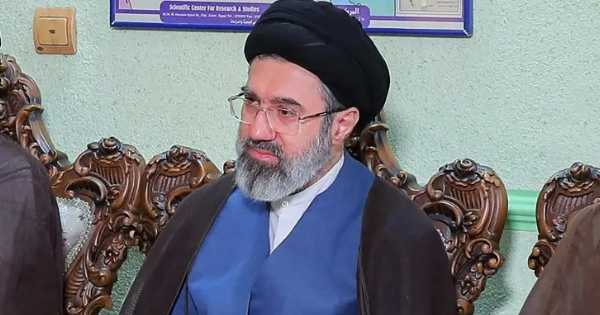
The recent election of 56-year-old Mojtaba Khamenei as Iran’s new Supreme Leader by the 88-member Assembly of Experts marks a decisive and historic pivot in the ongoing conflict ravaging the Middle East. This transition represents the first significant blow to the long-standing American and Israeli objective of engineering a regime change within the Islamic Republic. By elevating the son of the late Ayatollah, the Iranian leadership has effectively dashed the aspirations of US President Donald Trump, who has frequently expressed a desire to influence the selection of a successor following the onset of hostilities. While Russian President Vladimir Putin has welcomed the appointment as a stabilizing move for a strategic ally, the Israeli military establishment has signaled a far more aggressive posture, indicating its intent to target the newly elevated leader as the war enters a more personalized and perilous phase.
The assassination of the elder Ayatollah Ali Khamenei, rather than fracturing the state, appears to have profoundly galvanized both the Iranian regime and its populace, hardening their collective resolve against the American and Israeli war machine. This phenomenon brings to mind the astute observations of McGeorge Bundy, the National Security Advisor to former US President Lyndon B. Johnson, who noted during the Vietnam War that the most surprising element of the conflict was the “endurance of the enemy.” The rise of Mojtaba Khamenei is a potent modern symbol of that endurance, a psychological and political factor that the leadership in Washington and Jerusalem seemingly failed to weigh before committing to a full-scale war. In this context, the war has ceased to be a mere tactical engagement and has instead become a struggle for the very survival of a national identity forged in resistance.
Noted Iran expert Vali Nasr has pointed out that Bundy’s cautionary tales regarding the limits of military power were considered essential reading within the White House as recently as 2009. However, these historical lessons appear to have been largely disregarded by the current Trump administration in its pursuit of a definitive victory. For Israeli Prime Minister Benjamin Netanyahu, the drive toward a direct war against Iran has been a consistent four-decade ambition, leading many international observers to characterize the present conflict less as a strategic necessity for the United States and more as “Bibi’s War.” This shift in perception suggests that the geopolitical goals of the coalition are increasingly viewed through the lens of regional ideological triumph rather than global stability or nuclear non-proliferation.
In a recent press briefing, President Trump hinted at the complexity of the ground reality by indicating that while he had considered several potential figures to lead a post-war Iran, many of those candidates had been “killed as well.” It remains a matter of intense debate whether these preferred Western-friendly figures fell victim to the indiscriminate bombing campaigns or were systematically purged by the loyal army and intelligence apparatus of the late Ali Khamenei. If the latter is true, it demonstrates an incredibly high level of vigilance and internal cohesion within the Iranian regime against the American and Israeli post-war project. Furthermore, with less than 1,500 reported killed in Iran after eleven days of intense warfare, the vast majority of the Islamic Revolutionary Guard Corps (IRGC) and other ground forces remain standing and largely unharmed, suggesting that a prolonged conflict might result in an outcome even more bitter and costly than the previous interventions in Iraq or Afghanistan.
The decision to elect the son of Ayatollah Khamenei as his successor presents a fascinating ideological irony for a revolutionary regime whose founding objective in 1979 was to end dynastic rule in Iran. This move appears, at first glance, to run counter to the very spirit of the revolution that overthrew the Pahlavi monarchy. Yet, there is little historical evidence to suggest that the elder Khamenei sought a hereditary path for his son during his lifetime. Instead, the Assembly of Experts’ decision seems to be a product of raw strategic necessity, an attempt to ensure that the “Khamenei chapter” of the Iranian Revolution is not forcibly closed by foreign powers. By choosing a figure of continuity, the regime has opted for a fortress-like stability over the uncertainties of a more traditional religious succession.
Before his elevation, Mojtaba Khamenei operated largely in the shadows, serving as a critical gatekeeper for his father and earning a reputation in US diplomatic cables released by WikiLeaks as “the power behind the robes.” Without the catalyst of his father’s assassination, his path to the Supreme Leadership might have taken a significantly different and perhaps more contested shape. However, in the current vacuum of war, he has emerged as a living symbol of defiance against the Western plan for a restructured Iran. Regarding the nation’s future, former US Secretary of State Henry Kissinger famously remarked in 2008 that “Iran will have to decide whether it is a nation or a cause.” By electing Mojtaba, Tehran has signaled its absolute determination to be both simultaneously, merging national sovereignty with a revolutionary mission.
The stance of the new Supreme Leader on key issues will now dictate the ultimate fate of the war and the degree of global suffering it unleashes, with the nuclear question standing as the most urgent concern. As recently as 2012, the elder Khamenei maintained a religious fatwa stating that the possession of nuclear weapons was a “great sin.” Yet the devastation currently unfolding inside the country may discourage his successor from foreclosing the nuclear option permanently as a matter of survival. It is vital to remember that Iran’s nuclear ambitions were not originally a product of the 1979 Revolution; they were initiated in the 1970s by the pro-American Shah regime, which built the first nuclear plant in Bushehr and established research facilities in major universities. The current regime simply inherited and expanded upon this pre-existing scientific infrastructure.
With Russia and China acting as increasingly vocal allies, there is a substantial chance that the new Iranian regime will explore every available alternative to realize its nuclear ambitions sooner rather than later. The current war has likely convinced the leadership of the existential indispensability of a nuclear deterrent. History provides a precedent for this type of strategic shift, as it was China, rather than a known Western ally, that provided the critical assistance for Pakistan to obtain its nuclear capabilities. If Mojtaba Khamenei decides that the “sin” of a nuclear weapon is outweighed by the necessity of national preservation, the geopolitical map of the Middle East will be permanently altered, potentially leading to a new and more dangerous nuclear age in the region.
Despite the current climate of total war, it is worth noting that US-Iran relations have not always been defined by unyielding confrontation; there have been significant moments of tactical cooperation. For example, Iran provided crucial airbases and logistical support for America’s fight against the Taliban in Afghanistan and assisted in tracking and eliminating high-level Al-Qaeda leaders. Furthermore, in 2003, Iran submitted a detailed written proposal offering to end its support for Palestinian militant groups and to persuade Hezbollah to lay down its arms in exchange for a normalization of relations. The American leadership at the time chose to ignore this proposal, a decision that many historians now point to as a missed opportunity for a durable peace. As the new Supreme Leader takes the helm, the global community waits with bated breath to see which direction he will swing. For the sake of a post-war peace that can actually endure, establishing clarity on these volatile issues must be the priority for any diplomat seeking an end to the bloodshed.
(the writer can be reached at dipakkurmiglpltd@gmail.com)