
By Satyabrat Borah
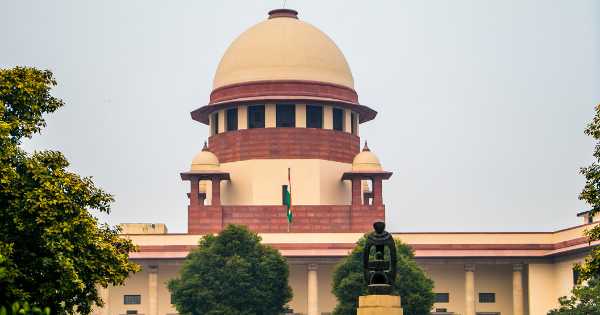
The Supreme Court of India recently stepped back into a long standing and deeply sensitive debate regarding the intersection of religious identity and social affirmative action. By confirming that the benefits of being part of a Scheduled Caste are reserved specifically for those who identify as Hindu, Sikh, or Buddhist, the court touched upon a nerve that has been exposed since the dawn of the Indian Republic. This specific legal position traces back to the Constitution Scheduled Castes Order of 1950 which remains a foundational piece of the country’s anti discrimination framework. The recent case involved a Christian pastor from Andhra Pradesh who sought the protection of the Scheduled Castes and Scheduled Tribes Prevention of Atrocities Act. He argued that his social origin as a member of a Dalit community should entitle him to legal safeguards regardless of his faith. The court disagreed and stayed firm on the principle that once an individual leaves the three faiths mentioned in the 1950 Order, they effectively exit the legal category of Scheduled Caste. This decision brings to light a question that many activists and scholars find unsettling. Can a person’s social reality and the history of their ancestors be erased by a change in their personal theology.
To understand why this distinction exists we must look back at the minds of the early architects of modern India. Leaders like Jawaharlal Nehru and Vallabhbhai Patel viewed the practice of untouchability as a specific and unique pathology of the Hindu social order. Their logic was built on the idea that since Christianity and Islam are built on a theological foundation of equality and brotherhood, the transition into these faiths should theoretically liberate a person from the shackles of caste. In their view the state was stepping in to fix a specific historical wrong rooted in Hindu practice. If a person chose to move to a religion that did not recognize caste, it was assumed that the stigma of their birth would vanish. This assumption formed the basis of the 1950 Order which originally limited Scheduled Caste status only to Hindus. Time and political pressure eventually forced the boundaries of this definition to expand. In 1956 the government included Sikhs and in 1990 it included Buddhists. These expansions were justified by arguing that Sikhism and Buddhism are branches of the broader Indic civilizational tree. They are often seen as being within the cultural orbit of Hinduism which allowed the legal system to extend protections to them while keeping the door closed to what are considered Abrahamic faiths.
The life and choices of Dr. B.R. Ambedkar provides a fascinating perspective on this religious and legal puzzle. Ambedkar was the primary architect of the Constitution and a fierce critic of the caste system. He famously declared that though he was born a Hindu he would not die one. In 1956 he led a massive movement of Dalit people toward Buddhism. His choice of Buddhism was a calculated act of social and political autonomy. He wanted a faith that offered a moral compass without the hierarchy of the caste system. It is a striking irony of history that the very year he converted to Buddhism the state recognized Sikhs as eligible for Scheduled Caste benefits but he and his followers had to wait until 1990 for the same recognition. This delay shows how the legal definition of identity in India is often a product of political negotiation and social movements rather than pure logical consistency. For many people today the act of conversion is still seen as a way to reclaim dignity. It is a way to say that they no longer accept the status assigned to them by a traditional social hierarchy.
The central friction in this debate lies in the difference between religious theory and social practice. While it is true that the Bible and the Quran do not advocate for a caste system, the reality on the ground in South Asia tells a different story. Centuries of social stratification do not disappear simply because a community changes its place of worship. In many parts of India there are separate graveyards for Dalit Christians and their counterparts from upper caste backgrounds. Marriage alliances and social interactions within Indian Christian and Muslim communities often mirror the same caste lines found in Hindu society. This suggests that the experience of being an outcast is not purely a religious phenomenon but a deep seated cultural one.
When the court says that a person ceases to be an SC member upon conversion it is following the letter of the law but it is also ignoring the sociological evidence that the person might still be treated as an untouchable by their neighbors and even by members of their new faith. This creates a situation where a person is caught between two worlds. They are not Hindu enough to get state benefits and they are not treated as equal enough within their new religion to escape the old stigma.
Critics of the current system argue that the 1950 Order is discriminatory because it uses religion as a filter for social justice. They suggest that if the goal of the Scheduled Caste category is to provide relief to those who have suffered the historical burden of untouchability then the only metric should be whether that suffering continues. If a Dalit Christian is still barred from a village well or is still subjected to physical violence because of their ancestry then the protection of the law should remain available to them. The counter argument often heard in political circles is that including Christians and Muslims in the Scheduled Caste list would shrink the pool of resources for those who stayed within the Hindu fold. Many Dalit activists who have not converted are wary of this change. They fear that better educated or more socially organized groups within the Christian and Muslim communities might take over the limited number of seats in government jobs and universities. This creates a horizontal conflict between different groups of marginalized people which makes a political resolution even more difficult to reach.
The legal system currently offers a partial compromise. Many converts to Christianity and Islam are classified under the Socially and Educationally Backward Classes or the Other Backward Classes category. This allows them to access some form of reservation in education and employment. It does not provide them with the specific and much stronger legal protections of the SC/ST Atrocities Act. This Act is designed to provide a shield against the specific types of humiliation and violence that are unique to the experience of caste. For a pastor who is attacked in a rural setting the difference between being an OBC and an SC is not just a label. It is the difference in how the police investigate the crime and how the state compensates the victim. The court’s recent stance maintains that the legislature must be the one to change this. The judiciary sees itself as an interpreter of the existing rules and those rules are currently tied to a specific list of religions.
The government has appointed a commission headed by former Chief Justice K.G. Balakrishnan to look into this exact issue. This commission is tasked with determining if the social and educational backwardness of Dalit converts is significant enough to warrant their inclusion in the Scheduled Caste category. The findings of this commission will likely be a turning point in Indian social policy. If the commission finds that the stigma of untouchability survives the process of conversion it will put immense pressure on the parliament to amend the 1950 Order. Such a move would be politically explosive. It would challenge the long held narrative that caste is a problem exclusive to the Hindu religion. It would also require the state to rethink how it defines identity in a secular republic.
The current legal framework assumes that a person’s identity is fixed and categorized by the state. This does not always match the fluid way people live their lives. A person might practice several different traditions or might find solace in a new faith while still being tied to their old community. By making the Scheduled Caste status contingent on religion the state is essentially penalizing those who choose to exercise their fundamental right to freedom of conscience. It creates a coercive environment where a person must choose between their spiritual path and their constitutional rights to social justice. This is a profound dilemma for a country that prides itself on being both a secular democracy and a champion of the oppressed. The court’s decision is a reminder that laws are often rigid structures that lag behind the shifting sands of social reality.
As the debate continues it is clear that the solution will not be found in a courtroom alone. It requires a deep and honest conversation about the nature of prejudice in India. If we admit that caste exists within all religions in the subcontinent we must also admit that our current tools for social justice are incomplete. The exclusion of certain groups based on their faith seems to contradict the spirit of Article 15 of the Constitution which prohibits discrimination on the basis of religion. The 1950 Order remains a major exception to this rule. The logic of the court is that this exception is necessary to protect the specific group for whom the category was created. While this is legally sound under the current regime it leaves a large number of citizens feeling like their pain is being ignored because they chose to pray to a different god.
The path forward is likely to be long and filled with administrative hurdles. The state must balance the needs of the existing Scheduled Caste communities with the demands for inclusion from those who have been left out. There is also the concern of how such a change would impact the census and the distribution of political power. Reserved seats in the parliament and state assemblies are tied to the Scheduled Caste population. If the definition of an SC person changes the entire map of political representation in India would have to be redrawn. This is perhaps one of the reasons why successive governments have been hesitant to touch this issue. It is a Pandora’s box of legal and electoral consequences.
The recent judgment serves as a status quo marker. It tells us that for now the old rules still apply. It tells the Christian pastor and others like him that their social origin is not enough to bridge the gap created by their choice of faith. This ensures that the question of who is a Dalit remains one of the most contested topics in the country. It is a struggle for the soul of the constitution. On one side is the vision of a state that fixes a religious wrong. On the other side is the vision of a state that protects its citizens from social hierarchy no matter where they find themselves. The fact that this issue is still being debated decades after independence shows how deeply the roots of caste are buried in the soil of the nation. It suggests that names and labels may change but the underlying structures of power and exclusion are much harder to dismantle.
The political process is now the only avenue for those seeking change. This means that the conversation will move from legal briefs to public rallies and committee reports. It will involve listening to the voices of those who live on the margins of the margins. These are the people who are often forgotten in the grand debates about theology and constitutional law. For them the question is not about the civilizational universe of Hinduism or the theological defenses of Islam. For them the question is whether they can walk through their village with their heads held high and whether the law will stand by them if they are attacked for who their parents were. The answer to that question should be simple in a modern democracy but as the Supreme Court’s recent decision shows the answer is still tangled in the complex history of faith and identity in India.
The court has effectively passed the ball to the politicians. By stating that the current scheme is appropriate under existing law it has signaled that it will not engage in judicial activism to redefine the Scheduled Caste category. This places a heavy responsibility on the legislative branch to look at the data and decide if the time has come to evolve. The Balakrishnan Commission has a difficult job ahead. It must look past the political rhetoric and find the human stories of discrimination that persist in the shadows of religious conversion. If it finds that the social death associated with untouchability follows a person into the church or the mosque it will be hard for the state to continue its policy of exclusion.
In the coming years we may see a shift in how India understands the relationship between birth and belief. The current system treats religion as a terminal point for social identity. It assumes that once you cross the threshold of a new faith your old life is gone. A more nuanced approach would recognize that social identity is a complex web of history, culture, and perception. A person’s identity is not a light switch that can be flipped on and off. It is a narrative that continues through generations. If the law is to be truly just it must learn to read that narrative in all its complexity. For now the gate remains closed to many but the pressure on that gate is growing every day. The debate over the 1950 Order is not just a matter of law. It is a mirror reflecting the ongoing struggle of a nation trying to reconcile its ancient social divisions with its modern democratic aspirations. Whether the state chooses to open that gate or keep it locked will define the future of social justice in India for a long time.
The pastor in Andhra Pradesh might have lost his case in the court but his plea has highlighted a fundamental truth about Indian society. That truth is that caste is a shadow that follows the body. It does not matter if that body is standing in a temple, a church, or a stupa. The shadow remains. Until the law acknowledges the presence of that shadow for every citizen who suffers under it the promise of equality will remain unfulfilled for a significant part of the population. The court’s reliance on the legislative route is a call for a national consensus. It is a call for a dialogue that goes beyond religious boundaries and looks at the shared human experience of those at the bottom of the social ladder.
Only through such an inclusive and empathetic process can India hope to truly move towards a society where your faith does not determine your right to protection and your birth does not determine your destiny. The legal and theological arguments will continue to be debated in academic circles but the real work lies in the villages and towns where the legacy of the past still shapes the reality of the present. This is where the true test of the Indian Constitution lies. It is a test of whether the state can see a citizen as a whole person rather than a collection of categories. The recent judgment is a chapter in a long book and the final pages are yet to be written by the people of India and their representatives.