
By Satyabrat Borah
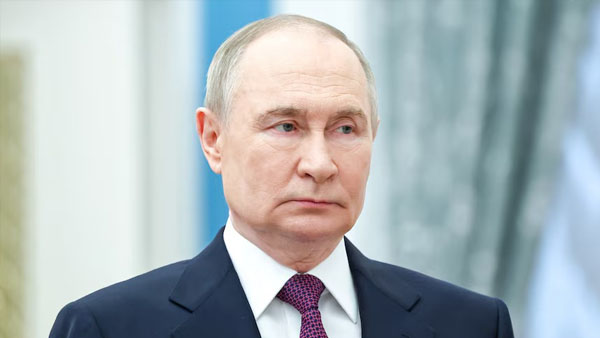
On December 29, 2025, Russian Foreign Minister Sergei Lavrov made a startling announcement that Ukraine had launched a massive drone assault targeting one of President Vladimir Putin’s official residences in the Novgorod region, northwest of Moscow. According to Lavrov, 91 long-range drones were deployed in the overnight attack on December 28-29, all of which were intercepted and destroyed by Russian air defense systems, resulting in no damage or injuries. The residence in question is widely believed to be the secretive Valdai estate, also known as Dolgiye Borody, a lavish compound on the shores of Lake Valdai that has long been associated with Putin. Lavrov described the incident as an act of state terrorism and warned that such reckless actions would not go unanswered, hinting at potential retaliation while asserting that Russia would revise its negotiating position in ongoing peace talks but remain engaged in diplomacy.
The timing of the allegation raised immediate suspicions, coming just hours after Ukrainian President Volodymyr Zelenskyy had concluded a meeting with U.S. President Donald Trump in Florida, where progress was reported on efforts to end the nearly four-year war. Putin himself discussed the claimed attack during a phone call with Trump on December 29, informing the American leader that Russia would reassess certain agreements in light of the incident. Trump, in public remarks, expressed anger, stating he was very upset upon hearing about it from Putin directly and calling it inappropriate amid delicate negotiations. He emphasized that attacking a leader’s home crossed a line, though he later acknowledged the possibility that the event might not have occurred, saying intelligence would clarify the matter.
Ukraine swiftly and categorically denied any involvement. Zelenskyy labeled the Russian claim a complete fabrication designed to sabotage diplomatic momentum and provide pretext for further aggression against Ukrainian cities, including potential strikes on government buildings in Kyiv. Ukrainian Foreign Minister Andrii Sybiha pointed out that nearly a day after the announcement, Moscow had provided no plausible evidence, such as footage of drone interceptions, debris, or damage. Independent analysts and observers echoed this skepticism. The Institute for the Study of War noted inconsistencies, including Lavrov’s figure of drones downed over Novgorod clashing with the Russian Defense Ministry’s own report of far fewer interceptions in the area. Local residents in the nearby town of Valdai reported hearing no explosions, air defense activity, or alerts, despite the scale of the alleged assault requiring significant defensive operations. No geolocated evidence, smoke plumes, or resident accounts emerged to corroborate the story, leading many to conclude it was a manufactured narrative.
This is not the first time Russia has accused Ukraine of targeting Putin personally. In May 2023, drones struck the Kremlin dome in Moscow, an event Russia called an assassination attempt but which independent experts often viewed as a possible false flag to justify escalation. The pattern repeated here, with the claim surfacing precisely when U.S.-led peace initiatives appeared to gain traction under the Trump administration. Trump had been pushing for a resolution, meeting Zelenskyy and speaking with Putin, focusing on thorny issues like territorial control and security guarantees. By alleging an attack on Putin’s residence, Moscow appeared to test Trump’s resolve, portray Ukraine as intransigent, and create justification for hardening its demands or delaying concessions.
The international community responded with caution and calls for restraint. U.S. officials noted the positive tone of Trump’s call with Putin but awaited verification. European leaders, including those in Germany and France, expressed concern that the allegation could serve as a pretext for Russian escalation, while urging de-escalation. Among non-Western powers, reactions highlighted strategic alignments. Indian Prime Minister Narendra Modi voiced deep concern over the reports, urging all parties to exercise restraint and prioritize dialogue as the path to stability. India’s position reflects its balanced diplomacy, maintaining strong ties with Russia for energy and defense while supporting peace efforts. China, Russia’s closest strategic partner, emphasized that dialogue and negotiation remain the only viable solution to the Ukraine crisis. Beijing’s foreign ministry spokesperson called for avoiding battlefield spillover and escalation, aligning with its consistent advocacy for political settlement without directly endorsing Moscow’s narrative.
The broader impact of this disputed incident could be significant for the trajectory of the war and global geopolitics. If perceived as credible, even partially, it risks derailing the fragile U.S.-brokered peace process. Trump’s administration has prioritized ending the conflict quickly, viewing it as a drain on resources and a distraction from other priorities like China. The allegation allowed Putin to signal toughness without fully abandoning talks, potentially extracting concessions on issues like Donbas control or neutrality for Ukraine. For Kyiv, it underscores the challenge of negotiating while under military pressure, as Russia continues advances in eastern regions and strikes Ukrainian infrastructure.
Geopolitically, the episode reinforces divisions. Allies of Ukraine see it as propaganda to justify prolonged conflict, while nations like India and China, wary of Western dominance, advocate neutrality and diplomacy, avoiding condemnation of Russia. Economically, lingering uncertainty sustains high energy prices and food insecurity, as the war disrupts global markets. Militarily, it may embolden Russia to intensify operations, claiming defensive necessity, or prompt Ukraine to escalate long-range strikes if peace stalls.
In the absence of evidence, the alleged drone attack appears more as a diplomatic maneuver than a verified event. It illustrates the information warfare that has defined the conflict, where narratives shape perceptions as much as battlefield outcomes. As 2025 draws to a close, the incident serves as a reminder that peace remains elusive, dependent not only on military realities but on trust, verification, and the willingness of major powers to bridge deep divides. With Trump pushing for resolution, Modi and Beijing calling for talks, and no concrete proof emerging, the world watches warily, hoping rhetoric does not spiral into renewed violence. The true casualty may be momentum toward ending a war that has claimed countless lives and reshaped international relations. Ultimately, sustained dialogue, backed by verifiable actions, offers the best hope for de-escalation, but incidents like this highlight how fragile that path remains.