
Guwahati, Dec 10: The Zoological Survey of India (ZSI) has announced the discovery of two new species of jumping spiders in Meghalaya, adding to the growing list of little-known wildlife emerging from the state’s forests and village landscapes.
The species—Asemonea dentis and Colyttus nongwar—were described in the latest issue of the taxonomic journal Zootaxa, and both were collected during recent field surveys across Ri Bhoi and East Khasi Hills. The discovery once again highlights Northeast India’s importance within the Indo-Burma mega biodiversity hotspot.
Asemonea dentis: A Rare Find from Ri Bhoi
Asemonea dentis was found near Umran Dairy village and Anderson Tea Estate in Ri Bhoi. It is only the third species of the genus Asemonea recorded from India, a group that remains sparsely studied.
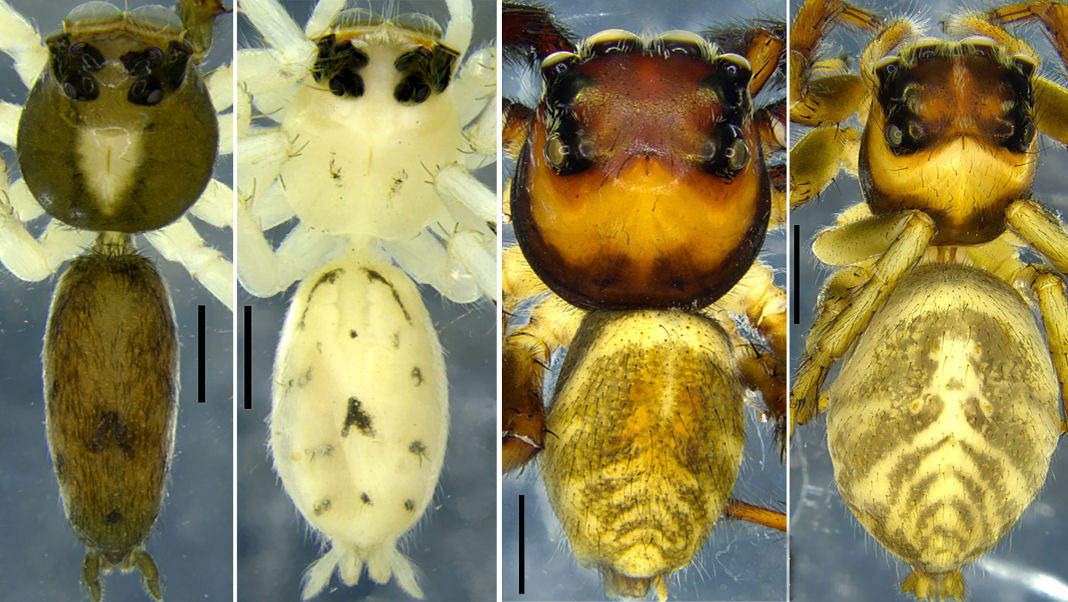
The species gets its name from a tooth-like projection on the male’s palpal femur—an anatomical detail crucial for spider identification. Males have a greenish-brown body with a faint inverted V marking on the abdomen, while females are creamy white with black patches.
Colyttus nongwar: A New Species Named After a Khasi Village
In East Khasi Hills, researchers recorded Colyttus nongwar from Nongwar village in Laitkynsew. It is only the second known Indian species of the otherwise poorly documented Oriental genus Colyttus.
Both sexes share a striking reddish-brown carapace and a light-brown abdomen marked with a creamy band in front and five chevron-shaped white patches toward the rear. These features, along with distinct reproductive structures, confirmed it as a species new to science.
Lead researcher Dr. Souvik Sen, who worked with Dr. Puthoor Pattammal Sudhin, said the discoveries point to how much of Meghalaya’s spider life remains undocumented.
“Very few systematic surveys have been carried out here, and many more species are undoubtedly waiting to be found,” Dr. Sen said.
Dr. Dhriti Banerjee, Director of ZSI, said the findings underline the need for wider biodiversity surveys in the Northeast. She noted that Meghalaya’s forests, sacred groves and cliffs continue to yield species that are unknown elsewhere.
The study also emphasises the challenges of studying spiders in the region—steep terrain, difficult access and limited surveys—while noting that such conditions also help preserve a wealth of undiscovered wildlife.
Both new species are known only from their type localities, making their habitats particularly significant. The researchers have credited the Meghalaya Forest Department, Meghalaya Biodiversity Board, local field assistants, and village guides for enabling the surveys.
The ZSI has urged continued fieldwork to better understand and protect the fauna of the “abode of clouds,” where even small pockets of vegetation—tea estates, village edges, and wooded slopes—continue to reveal surprises.