
By Satyabrat Borah
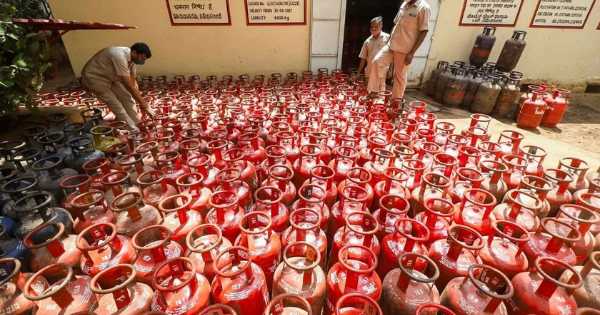
A quiet shortage can sometimes reveal more about a system than a loud crisis. Gas cylinders sitting in kitchens across India rarely attract attention until they become difficult to find. Cooking gas is one of those everyday necessities that quietly supports the rhythm of life. Families cook breakfast before work and school. Street vendors prepare snacks. Restaurants feed crowds. Small eateries provide meals to workers who cannot cook at home. When the supply of LPG begins to tighten, the disruption spreads quickly through households, businesses, and entire neighbourhoods.
Official announcements continue to say that there is no shortage of LPG. Government records may show that supply is being managed and that cylinders are reaching consumers. Still, stories from the ground tell a different story. In many places people are whispering about cylinders being sold at twice the official price. The moment something essential begins to sell for double its price, it signals that a black market has quietly appeared. Such markets rarely appear without a reason. They usually grow when the gap between demand and legal supply becomes large enough to invite middlemen.
The present situation has been shaped by restrictions on LPG supply to commercial kitchens. Restaurants, roadside eateries, tea stalls, catering services, and small food businesses have suddenly found their access to cooking gas reduced. From the government’s perspective the decision carries a clear logic. Energy supplies have been shaken by tensions around the Strait of Hormuz, one of the world’s most critical routes for oil and gas shipments. India imports a large share of its energy needs, and any disruption in shipping lanes creates uncertainty. When supply looks uncertain, the first instinct of policymakers is to protect essential domestic consumption. Families must be able to cook their daily meals.
The reasoning sounds sensible. Households depend on LPG for daily survival. A family cannot easily replace cooking gas with another fuel in a modern city apartment. A shortage inside homes could create panic. So the state has tried to make sure that domestic consumers continue receiving their cylinders. That decision has pushed a different part of the economy into trouble.
Commercial kitchens feed millions of people every single day. The small restaurant that serves lunch to office workers is as important to urban life as the stove inside a family kitchen. Street vendors who sell breakfast items in the early morning provide food to workers heading to construction sites or factories. Many students and migrant workers depend entirely on these small eateries for their daily meals. When gas supply to commercial kitchens slows down, their ability to cook slows down as well.
These kitchens also employ lakhs of people. Waiters, cooks, helpers, cleaners, delivery workers, and suppliers all depend on these businesses. A restaurant cannot operate without cooking gas. Electric cooking equipment cannot replace large LPG burners easily in many setups. So when legal gas supply becomes limited, owners begin searching for alternatives.
That search often leads to informal channels. Cylinders that were meant for domestic use slowly begin to find their way into commercial kitchens. Agents, transporters, and middlemen step into the gap. A cylinder that officially costs a certain price suddenly costs double in the shadows of the market. People know it is illegal. They also know they have little choice if their business depends on that cylinder.
This is how a black market grows. It does not start with a dramatic announcement. It begins quietly with one or two transactions. A restaurant owner pays extra to secure a cylinder because the kitchen must remain open. Word spreads that cylinders are available if someone is willing to pay more. Soon a network of unofficial suppliers begins moving cylinders around cities.
Administrators understand this pattern well. India has lived through shortages before. Many people still remember stories from the 1970s and 1980s when waiting lists defined everyday life. Families applied for LPG connections and waited years. Parents often booked connections for their daughters when they were born so that the connection would arrive by the time the daughter got married. The same happened with scooters. Booking a Bajaj scooter meant entering a queue that stretched for years.
That era also saw rationing of many daily goods. Rice, sugar, kerosene, and cooking oil were often controlled and distributed through ration shops. The prices were fixed and supply was limited. People knew that the same goods could be found outside the ration system at higher prices. Everyone understood that a parallel market existed. It was an open secret across the country.
India slowly moved away from that environment after economic reforms. Markets opened. Supply chains expanded. Waiting lists for basic goods disappeared. LPG connections became widely available. Scooters and motorcycles filled showrooms. Younger generations grew up in a country where shortages of essential consumer goods were rare.
That is why the present situation feels unusual. The year is 2026. India has one of the world’s largest economies. Technology connects markets faster than ever. Online ordering systems track deliveries. A country with such infrastructure should not easily slip into the conditions that once defined the 1970s.
Part of the answer lies in the sudden shock to global supply. When shipping routes face threats or disruptions, energy markets react quickly. Gas shipments may slow down. Import contracts become uncertain. Governments respond by protecting domestic reserves. This explains why policymakers feel the need to ration supply between domestic and commercial consumers.
Another part of the story lies in the structure of the market itself. When supply is limited and the government fixes prices for certain groups of consumers, the system creates opportunities for unofficial trade. Commercial kitchens still need gas. Their demand does not disappear just because supply has been reduced. When legal channels cannot meet that demand, the demand moves underground.
Economists often describe markets in simple terms. When supply falls and demand remains strong, prices rise. Higher prices encourage suppliers to bring more goods into the market. The price eventually stabilizes when supply and demand reach a balance. A free market allows that adjustment to happen naturally.
A government cannot always allow such adjustments for essential goods. Cooking gas touches the lives of poor households. If the price of a cylinder suddenly increases by four hundred or five hundred rupees, millions of families would struggle. A government must consider the political and social consequences of such a decision.
So the state keeps domestic LPG prices relatively controlled. That decision protects households. It also creates a price gap between the official price and the value of the cylinder in the market where supply is scarce. The gap attracts middlemen.
A middleman who sells a cylinder illegally takes a risk. Authorities monitor distributors and agencies. Penalties for diversion of domestic cylinders are strict. Licenses can be cancelled. Fines can be heavy. Criminal cases may follow. Because the work is risky, the middleman adds a risk premium to the price.
The customer paying for that cylinder ends up paying a high amount. The price includes the official cost, the scarcity premium created by limited supply, and the risk premium charged by those handling illegal distribution. The result is a cylinder that costs far more in the black market than it might cost in an open market where prices adjust freely.
This creates an ironic situation. Efforts to suppress illegal trade can sometimes increase its profitability. When enforcement becomes strict, the risk for middlemen increases. They respond by charging even higher prices. The black market becomes more expensive but does not disappear because demand remains strong.
Authorities face a difficult choice. If they ignore the black market, illegal trade could become normalized. Distributors might quietly divert cylinders knowing that enforcement is weak. Consumers would gradually accept higher unofficial prices as a normal part of the system.
If authorities crack down aggressively, prices in the black market could rise even more as risk increases. Small restaurants would struggle to survive if they must pay extremely high prices for gas. Workers in those businesses would suffer. Customers who rely on affordable meals would also feel the impact.
The situation calls for careful management rather than simple enforcement. The first step is to increase the supply of LPG as quickly as possible. India already imports a large share of its cooking gas. Government companies can explore additional suppliers and accelerate purchases from global markets. Strategic reserves may also play a role in stabilizing supply during temporary disruptions.
The second step involves a difficult conversation about pricing. Cooking gas is not diesel or petrol in terms of its influence on inflation. A moderate increase in LPG prices would not ripple through transport costs the way diesel prices do. A small price adjustment may help reduce the gap between official prices and black market prices. When that gap narrows, the incentive for illegal trade also weakens.
Price adjustments can also help public sector oil companies recover costs. Higher revenue allows them to purchase additional supplies from global markets. That money returns to the energy system rather than flowing into the pockets of middlemen.
Transparency can serve as a powerful tool as well. Many modern industries use digital dashboards to track inventory and supply in real time. Gas agencies could adopt similar systems. If every distributor shows current stock levels online, consumers and regulators gain a clear view of the supply situation. Suspicious patterns become easier to identify.
Public access to such information can build trust. A restaurant owner checking an online dashboard could see which nearby agencies have available cylinders. Regulators could monitor sudden drops in inventory that suggest diversion. Technology cannot eliminate every illegal activity. It can make the system more visible and accountable.
Auditing distributors also becomes important. Random inspections and digital tracking of cylinder movement can reduce diversion. Each cylinder already carries identification numbers. Linking those numbers with delivery records creates a trail that investigators can follow if irregularities appear.
The goal is not to punish distributors who are trying to manage a difficult supply situation. The goal is to protect the integrity of the system so that cylinders reach the consumers they are meant for. Honest distributors also benefit from such measures because they no longer compete with illegal operators who exploit shortages.
Public communication plays a role as well. When people understand why supply is tight and what steps are being taken to address the issue, panic reduces. Silence creates rumours. Rumours encourage hoarding. Hoarding makes shortages look worse than they actually are.
Restaurants and small food businesses should also be part of the conversation. Policymakers often divide consumers into domestic and commercial categories. Real life is more complex. A street food vendor feeding hundreds of workers each day provides a service that is deeply connected to social welfare. Policymakers must consider how such businesses can continue operating during supply disruptions.
Temporary support measures may help. Limited allocations for small commercial kitchens or priority supply for community kitchens could prevent large disruptions in food services. Such policies acknowledge that cooking gas supports not only households but also an entire ecosystem of livelihoods.
India’s economic history shows that markets function best when supply flows freely and information flows openly. The country has moved a long way from the shortage economy of earlier decades. Shelves are full in most markets. Delivery services bring goods to doorsteps within hours. The current LPG tension reminds us how quickly supply disruptions can revive old patterns.
Energy security will remain a central challenge for any country that imports large quantities of fuel. Global politics, shipping routes, and market fluctuations all influence availability. Strengthening domestic storage capacity, diversifying import sources, and encouraging alternative energy technologies can reduce vulnerability over time.
For now the immediate challenge is to keep kitchens running across the country. A cylinder sitting quietly in a kitchen corner may appear ordinary. It carries the ability to cook meals, run businesses, and sustain livelihoods. When supply becomes uncertain, the effects travel through every layer of society.
A thoughtful response from policymakers can prevent the situation from sliding into a full scale shortage economy. Increasing supply, adjusting prices carefully, strengthening transparency, and supporting small food businesses can restore balance. The goal is simple. Cooking gas should remain available through legal channels at prices people can understand and afford.
When that balance returns, the quiet rhythm of everyday cooking will continue without interruption. Families will light their stoves each morning. Restaurants will open their doors to customers. Street vendors will prepare meals that keep cities moving. And the shadow of a black market will fade back into memory where it belongs.